Sharing Traditional Holiday Experiences
分享傳統節日經歷
Participants are talking about their favorite traditional holidays, explaining the customs, foods, and family activities associated with them in their home countries.
參與者正在談論他們最喜歡的傳統節日,解釋在各自國家與之相關的習俗、食物和家庭活動。
對話8
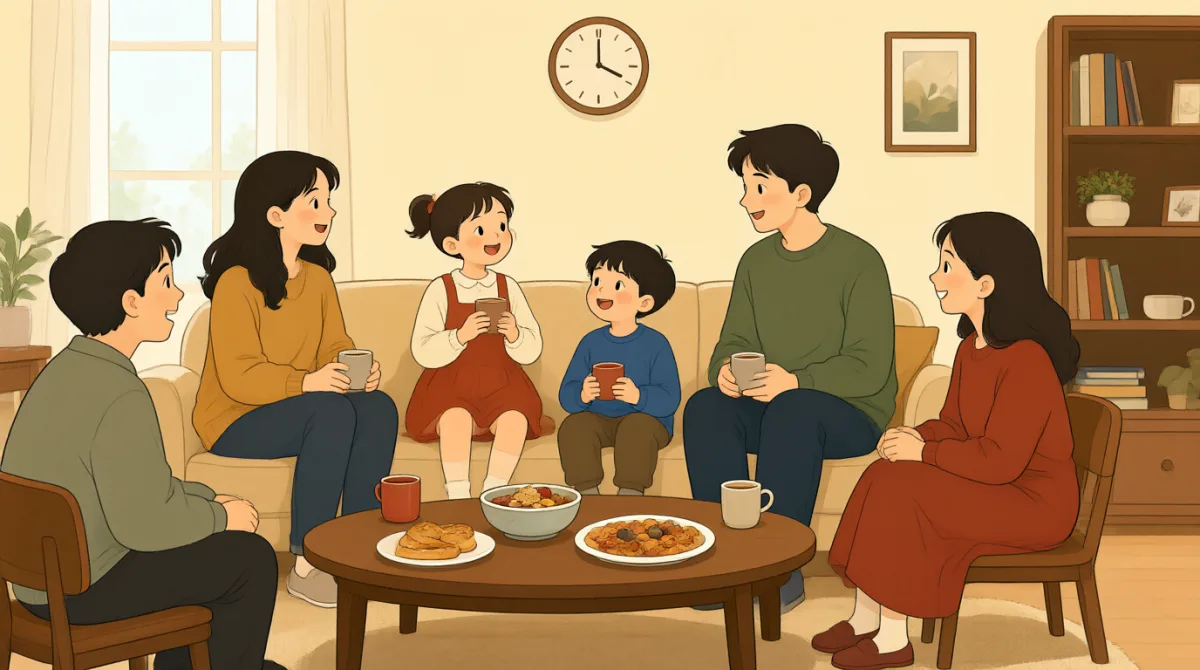

It's so interesting how different cultures celebrate holidays. What's your favorite traditional holiday from your home country, Jack?
不同的文化慶祝節日的方式真是太有趣了。傑克,你家鄉你最喜歡的傳統節日是什麼?

That's a great question, Emma! I'd have to say Christmas. It's a huge family gathering, and we have so many traditions.
這是個好問題,艾瑪!我得說是聖誕節。這是一個大型的家庭聚會,我們有如此多的傳統。

Oh, Christmas is lovely! What kind of traditions do you have? Over here, for Chinese New Year, we always have a huge reunion dinner with dumplings and fish.
哦,聖誕節很美好!你們有什麼樣的傳統呢?在我們這裡,春節的時候,我們總是會有一個盛大的團圓飯,吃餃子和魚。
For Christmas, we usually open presents in the morning, then have a big roast turkey dinner with all the trimmings. My aunt always bakes a special fruitcake too. It's a lot about family and togetherness.
聖誕節的時候,我們通常早上開禮物,然後享用一頓豐盛的烤火雞大餐,配上各種配菜。我阿姨也總是烤一個特別的水果蛋糕。這很大程度上是關於家庭和團聚的。
That sounds delicious and heartwarming! In my country, the Day of the Dead is very significant. We build altars for loved ones, decorate them with marigolds, and offer their favorite foods.
那聽起來既美味又溫馨!在我的國家,亡靈節非常重要。我們為逝去的親人搭建祭壇,用萬壽菊裝飾,並獻上他們生前最喜歡的食物。
That's fascinating, Emma! Is it a sad holiday, or more of a celebration of life?
那真是太棒了,艾瑪!這是一個悲傷的節日,還是更多地是對生命的慶祝呢?
It's definitely a celebration! We believe their spirits return to visit, so it's a joyful time to remember them, share stories, and play music. It's not somber at all.
這絕對是一場慶祝!我們相信他們的靈魂會回來探望,所以這是一個愉快的時間,來緬懷他們、分享故事和演奏音樂。一點也不沉悶。
Wow, that's a beautiful way to honor the past. It sounds very different from Christmas, but the emphasis on family and sharing seems to be a common thread across all our holidays.
哇,那是一種紀念過去的絕妙方式。這聽起來和聖誕節很不一樣,但對家庭和分享的強調似乎是我們所有節日的共同主線。
詞彙7
- traditions傳統
Customs or practices that are passed down through generations, often during holidays or family events. For example, opening presents on Christmas is a tradition.
指代代相傳的習俗或做法,常見於節日或家庭活動中。比如,聖誕節開啟禮物就是一種傳統。
- celebrate慶祝
To mark a special event with activities, food, or gatherings. You can say, 'We celebrate holidays with family dinners.'
透過活動、美食或聚會來紀念一個特別的日子。你可以說:'We celebrate holidays with family dinners.'(我們和家人一起吃團圓飯來慶祝節日。)
- reunion團聚
A gathering of family or friends who have been apart. It's common in holidays like Chinese New Year, as in 'a huge reunion dinner.'
分開一段時間的家人或朋友聚在一起。春節等節日裡常有這種團聚,比如 'a huge reunion dinner'(一頓盛大的團圓飯)。
- togetherness團聚的溫馨
The feeling of closeness and unity among people, especially family. Use it to describe holidays: 'Christmas is about family togetherness.'
指人們之間親密、團結的感覺,尤其是家人之間的情誼。可以用它來形容節日,比如:'Christmas is about family togetherness.'(聖誕節講究的是家人團聚。)
- altars祭壇
Special tables or structures set up for honoring people or spirits, often decorated with flowers or food, like in Day of the Dead celebrations.
為紀念或敬奉逝者、靈魂而設定的桌子或裝置,常用鮮花或食物裝飾,比如亡靈節慶祝活動中的祭壇。
- honor緬懷;致敬
To show respect or remembrance for someone or something important. For example, 'We honor our loved ones by sharing stories.'
表達對重要的人或事物的尊重或懷念。比如:'We honor our loved ones by sharing stories.'(我們透過分享故事來緬懷親人。)
- common thread共同點
A shared idea or theme that connects different things. In conversations, say 'Family is the common thread in all our holidays.'
把不同事物聯絡起來的共同想法或主題。在交談中可以說:'Family is the common thread in all our holidays.'(家庭是我們所有節日的共同主題。)
關鍵句6
- 1
What's your favorite traditional holiday from your home country?
你們國家最喜歡的傳統節日是什麼?
This is a polite question to ask about someone's personal preferences in cultural discussions. It uses 'what's your favorite' for opinions and 'from your home country' to specify origin. Great for starting conversations about traditions.
這是在談論文化時詢問對方個人喜好的禮貌說法。句中用 'what's your favorite' 來詢問對方最喜歡什麼,用 'from your home country' 來說明要問的是對方家鄉的節日。很適合用來開啟關於傳統習俗的對話。
- 2
That's a great question!
問得真好!
A friendly way to respond positively to a question, showing appreciation. It's useful in dialogues to keep the conversation flowing smoothly without directly answering right away.
這是對問題表示讚賞的一種友好回應。它能讓對話順暢地繼續下去,也不必馬上直接回答問題。
- 3
What kind of traditions do you have?
你們有什麼樣的傳統?
This asks for details about customs using 'what kind of' to specify types. It's practical for learning more about someone's culture and encourages sharing examples.
這句話用 'what kind of' 詢問習俗的具體型別。瞭解他人的文化時,這種問法很實用,也能鼓勵對方分享具體的例子。
- 4
That sounds delicious and heartwarming!
聽起來既美味又溫馨!
An expression of positive reaction to a description, combining 'sounds' for imagined experience with adjectives like 'delicious' for food and 'heartwarming' for emotional warmth. Use it to show interest in others' stories.
這是對他人描述作出積極回應的說法。這裡用 'sounds' 表達想象中的感受,用 'delicious' 形容食物,用 'heartwarming' 形容令人感到溫暖的情景。可以用它來表達你對他人分享的故事很感興趣。
- 5
It's definitely a celebration!
這絕對是一場慶祝!
This emphasizes a point strongly with 'definitely' (meaning certainly) and clarifies the nature of an event. Helpful for correcting misconceptions or highlighting positive aspects in cultural talks.
這句話用 'definitely'(肯定地)來強調觀點,並說明一場活動的性質。談論文化時,可以用它來糾正誤解或強調積極的一面。
- 6
It sounds very different from Christmas, but the emphasis on family and sharing seems to be a common thread across all our holidays.
這聽起來和聖誕節很不一樣,但對家庭和分享的重視似乎是我們所有節日的共同點。
This sentence compares cultures using 'different from' and 'but' to find similarities with 'common thread' (shared element). The structure shows contrast and connection, ideal for cross-cultural discussions.
這句話用 'different from' 來比較不同文化,再用 'but' 引出相似之處,並透過 'common thread' 表達共同點。這種結構既能展現差異,也能找到聯絡,很適合跨文化交流。