Describing Festive Food & Drinks
توصیف خوراکیها و نوشیدنیهای جشن
The conversation shifts to the culinary aspects of the holiday, with the native speaker explaining traditional dishes, special ingredients, and the significance of certain foods, perhaps even inviting the listener to try some.
گفتوگو به جنبههای خوراکی این تعطیلات میپردازد و گویشور بومی دربارهٔ غذاهای سنتی، مواد اولیهٔ ویژه و اهمیت بعضی خوراکیها توضیح میدهد و شاید حتی از شنونده دعوت کند که آنها را امتحان کند.
گفتوگو9
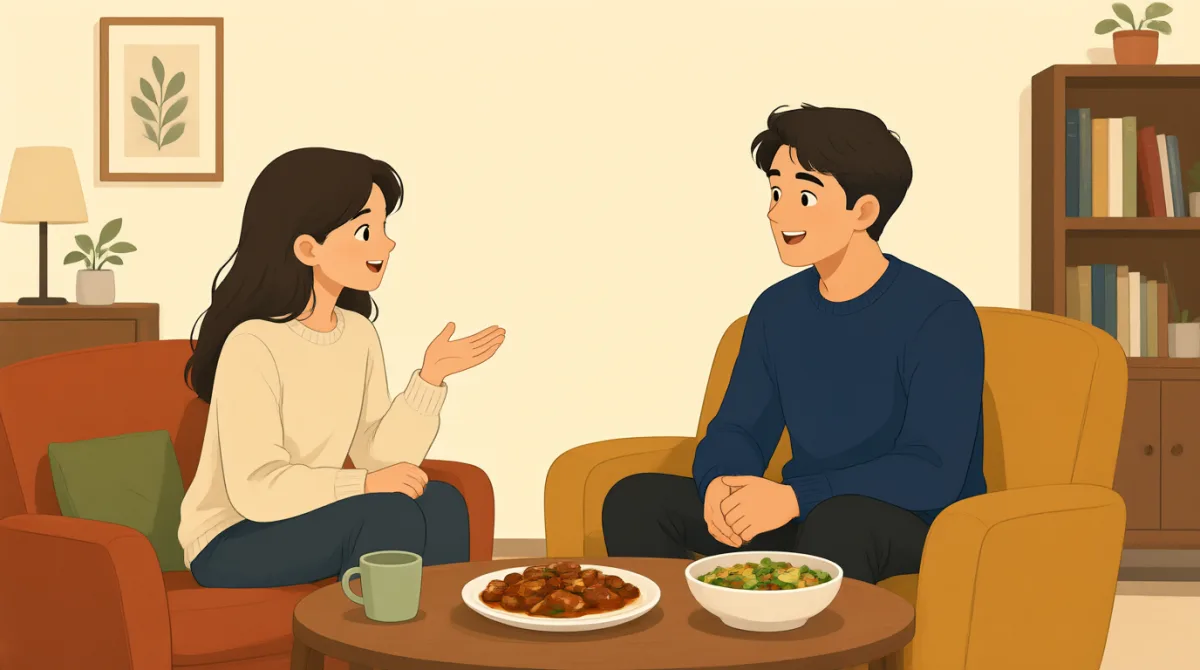

So, you were telling me about Lunar New Year earlier. What kind of special food do you typically eat during the celebrations?
خب، چند وقت پیش داشتی دربارهٔ سال نوی قمری برام میگفتی. معمولاً توی جشنها چه غذاهای خاصی میخورید؟

Oh, the food is a huge part of it! We have so many traditional dishes, each with symbolic meaning. For example, fish is a must-have because the Chinese word for fish, 'yu,' sounds like the word for 'surplus' or 'abundance.'
آره، غذا بخش خیلی مهمی از این جشنه! کلی غذای سنتی داریم که هرکدوم معنای نمادین خاصی دارن. مثلاً ماهی حتماً باید سر سفره باشه، چون واژهٔ چینیِ ماهی، «یو»، شبیه واژهٔ «مازاد» یا «فراوانی» تلفظ میشه.
That's fascinating! So, it's not just about taste, but also what the food represents. Are there any other dishes with interesting meanings?
چه جالب! پس فقط مزهٔ غذا مهم نیست، بلکه چیزی هم که غذا نمادشه اهمیت داره. غذای دیگهای هم هست که معنای جالبی داشته باشه؟
Absolutely! We also eat a lot of dumplings. They're shaped like ancient Chinese gold ingots, so eating them is believed to bring wealth and good fortune in the coming year. Families usually gather to make them together, which is a lovely tradition.
حتماً! دامپلینگ هم زیاد میخوریم. شکلشون شبیه شمشهای طلای باستانی چینیه، برای همین باور دارن خوردنشون توی سال پیش رو ثروت و خوششانسی میاره. خانوادهها معمولاً دور هم جمع میشن و با هم درستشون میکنن؛ رسم قشنگیه.
That sounds like a lot of fun, and delicious! What about sweets? Is there anything special for dessert?
خیلی خوشمزه و سرگرمکننده به نظر میاد! دسر چی؟ شیرینی خاصی هم دارین؟
For sweets, glutinous rice cake, or 'nian gao,' is really popular. 'Nian gao' sounds like 'higher year,' symbolizing progress and prosperity. And of course, we drink a lot of tea, and sometimes special alcoholic beverages for toasting.
برای شیرینی، کیک برنج چسبناک یا «نیان گائو» خیلی محبوبه. «نیان گائو» شبیه عبارت «سال بالاتر» به گوش میرسه و نماد پیشرفت و رفاهه. البته چای هم زیاد مینوشیم و گاهی برای نوشیدن به سلامتی، نوشیدنیهای الکلی خاصی میخوریم.
It's amazing how much thought goes into each dish. I'd love to try some of these. Do you ever make these dishes yourself?
باورنکردنیه که برای هر غذا اینهمه فکر میکنین. خیلی دوست دارم بعضیهاشون رو امتحان کنم. خودت هم این غذاها رو درست میکنی؟
I do! My family has some great recipes. In fact, if you're free sometime closer to Lunar New Year next year, you should definitely come over and try some of my mom's homemade dumplings. They're incredible!
آره! خانوادهمون چندتا دستور پخت عالی داره. راستش، اگه سال آینده، نزدیک سال نوی قمری، یه وقت آزاد داشتی، حتماً بیا خونهمون و از دامپلینگهای خونگی مامانم امتحان کن. حرف ندارن!
That sounds wonderful, I'd love to! I'm already looking forward to it. Thanks for explaining all this, it makes the holiday even more vivid.
چه عالی، خیلی دوست دارم! از همین حالا مشتاقشم. ممنون که همهٔ اینها رو برام توضیح دادی؛ باعث شد این تعطیلات رو بهتر تصور کنم.
واژگان8
- symbolicنمادین
Meaning something represents a deeper idea or wish, like good luck. In cultural talks, use it to explain why food has special meanings, e.g., 'This dish is symbolic of prosperity.'
یعنی چیزی نمایانگر یک مفهوم یا آرزوی عمیقتر است؛ مثلاً خوششانسی. در صحبت دربارهٔ فرهنگها، از این واژه برای توضیح معنای ویژهٔ غذاها استفاده میکنیم؛ مثلاً: 'This dish is symbolic of prosperity.' (این غذا نماد رفاه است.)
- abundanceفراوانی
A large amount or plenty of something. In holidays, it often means wishing for wealth. Say, 'We hope for abundance in the new year.'
یعنی مقدار زیاد یا وفور چیزی. در مناسبتهای جشن، اغلب منظور آرزوی ثروت و فراوانی است. میتوانی بگویی: 'We hope for abundance in the new year.' (امیدواریم سال نو سالی پربرکت باشد.)
- dumplingsدامپلینگ؛ خمیرِ شکمپر
Small pockets of dough filled with meat or vegetables, boiled or fried. Common in Chinese culture for festivals. You can say, 'We make dumplings for Lunar New Year.'
لقمههای کوچکی از خمیر که با گوشت یا سبزیجات پر میشوند و آبپز یا سرخ میشوند. در جشنهای فرهنگ چینی رایجاند. میتوانی بگویی: 'We make dumplings for Lunar New Year.' (برای سال نوی قمری دامپلینگ درست میکنیم.)
- ingotsشمشها
Ancient gold or silver bars shaped like boats, symbolizing wealth in Chinese tradition. Use in context: 'Dumplings look like ingots to bring good fortune.'
قطعههای طلا یا نقره که در گذشته به شکل قایق ساخته میشدند و در سنت چینی نماد ثروتاند. در این بافت میتوانی بگویی: 'Dumplings look like ingots to bring good fortune.' (دامپلینگها شبیه شمشهایی هستند که خوششانسی میآورند.)
- glutinousچسبناک
Sticky or glue-like, describing rice that holds together well. In food: 'Glutinous rice is used in nian gao for Lunar New Year.'
یعنی چسبمانند؛ برای توصیف برنجی به کار میرود که دانههایش به هم میچسبند. در زمینهٔ غذا: 'Glutinous rice is used in nian gao for Lunar New Year.' (برای تهیهٔ نیان گائو در سال نوی قمری از برنج چسبناک استفاده میشود.)
- prosperityرفاه
Success, wealth, and good fortune. Often used in holiday wishes: 'May the new year bring prosperity to your family.'
یعنی کامیابی، ثروت و خوشاقبالی. این واژه اغلب در آرزوهای سال نو به کار میرود: 'May the new year bring prosperity to your family.' (امیدوارم سال نو برای خانوادهات رفاه به همراه بیاورد.)
- toastingبه سلامتی نوشیدن؛ جام زدن
Raising glasses with drinks to celebrate or wish well. Common at parties: 'We do toasting with special wine during festivals.'
بالا بردن جامهای نوشیدنی برای جشن گرفتن یا آرزوی خیر کردن. در مهمانیها رایج است: 'We do toasting with special wine during festivals.' (در جشنها با شراب مخصوص به سلامتی هم جام میزنیم.)
- homemadeخانگی
Made at home, not bought. Shows personal touch: 'My mom's homemade dumplings are the best.'
چیزی که در خانه درست شده، نه چیزی که خریدهاند. این واژه حس شخصی و صمیمی بودن را میرساند: 'My mom's homemade dumplings are the best.' (دامپلینگهای خانگی مامانم از همه بهترن.)
جملات کلیدی8
- 1
The food is a huge part of it!
غذا بخش خیلی مهمی از این جشنه!
This expresses that something is very important in an event. Useful for emphasizing key aspects in conversations about traditions. 'Huge part' is informal for 'big role'; use it to engage listeners about holidays.
این عبارت میگوید چیزی در یک مراسم یا رویداد اهمیت زیادی دارد. برای تأکید بر جنبههای مهم سنتها کاربرد دارد. 'Huge part' شکل محاورهایِ 'big role' است و میتوانی با آن توجه مخاطب را به اهمیت تعطیلات جلب کنی.
- 2
Fish is a must-have because the Chinese word for fish, 'yu,' sounds like the word for 'surplus' or 'abundance.'
ماهی حتماً باید سر سفره باشه، چون واژهٔ چینیِ ماهی، «yu»، شبیه واژهٔ «مازاد» یا «فراوانی» تلفظ میشه.
Explains a reason with 'because' clause. 'Must-have' means essential. Great for describing cultural symbols; teaches homophones (words that sound alike). Use when sharing why something is traditional.
این جمله با بند 'because' دلیل میآورد. 'Must-have' یعنی چیزی که حتماً باید باشد. برای توضیح نمادهای فرهنگی مفید است و واژههای همآوا، یعنی واژههایی که شبیه هم تلفظ میشوند، را هم نشان میدهد. وقتی میخواهی بگویی چرا چیزی رسم شده، از این ساختار استفاده کن.
- 3
That's fascinating!
چه جالب!
A response showing interest and surprise. Simple exclamation; useful in dialogues to keep conversation flowing. Say it when learning new cultural facts to show engagement.
این واکنش علاقه و شگفتی را نشان میدهد. جملهای کوتاه و هیجانانگیز است که به ادامه پیدا کردن گفتوگو کمک میکند. وقتی چیز تازهای دربارهٔ یک فرهنگ یاد میگیری، برای نشان دادن علاقهات بگو 'That's fascinating!'.
- 4
We also eat a lot of dumplings.
ما دامپلینگ هم زیاد میخوریم.
Describes habitual actions with 'eat a lot of' for quantity. 'Also' adds information. Practical for talking about food customs; use in present simple tense for general truths about celebrations.
برای گفتن کاری که بهطور معمول انجام میشود، از 'eat a lot of' استفاده میکنیم. 'Also' هم اطلاعاتی به گفتههای قبلی اضافه میکند. این جمله برای صحبت دربارهٔ رسمهای غذایی کاربردی است؛ زمان حال ساده برای بیان عادتهای کلی در جشنها به کار میرود.
- 5
Eating them is believed to bring wealth and good fortune in the coming year.
باور دارن خوردنِ اونها توی سال پیش رو ثروت و خوششانسی میاره.
Uses passive voice ('is believed') for general beliefs. 'Bring' means cause. Useful for explaining superstitions; helps with passive structures in cultural explanations.
در این جمله برای بیان یک باور کلی از ساختار مجهول ('is believed') استفاده شده است. 'Bring' یعنی باعث شدن یا به همراه آوردن. این ساختار برای توضیح باورهای عامیانه مفید است و نمونهای از کاربرد مجهول در توضیحات فرهنگی است.
- 6
For sweets, glutinous rice cake, or 'nian gao,' is really popular.
برای شیرینی، کیک برنج چسبناک یا «نیان گائو» خیلی محبوبه.
Introduces a topic with 'For [category],' and uses appositive ('or') for explanation. 'Really popular' shows high preference. Ideal for listing foods; use when describing options in a meal.
عبارت 'For [category],' موضوع را معرفی میکند و 'or' توضیح دیگری برای همان چیز میآورد. 'Really popular' یعنی خیلی محبوب. این ساختار برای نام بردن از خوراکیها و توصیف گزینههای یک وعدهٔ غذایی مناسب است.
- 7
I'd love to try some of these.
خیلی دوست دارم بعضیهاشون رو امتحان کنم.
'I'd love to' politely expresses strong interest or desire. Conditional for hypothetical wishes. Common in invitations; use to show enthusiasm about trying new things.
'I'd love to' علاقه یا تمایل زیادی را مؤدبانه بیان میکند. این ساختار شرطی برای گفتن خواستههای احتمالی به کار میرود. در پاسخ به دعوتها رایج است و اشتیاق به امتحان کردن چیزهای تازه را نشان میدهد.
- 8
You should definitely come over and try some of my mom's homemade dumplings.
حتماً بیا خونهمون و از دامپلینگهای خونگی مامانم امتحان کن.
Gives strong advice with 'should definitely.' 'Come over' means visit casually. Useful for inviting friends; imperative form for suggestions in friendly talks.
در این جمله 'should definitely' توصیهای محکم و دوستانه میدهد. 'Come over' یعنی به خانهٔ کسی سر زدن، معمولاً بهشکلی خودمانی. این عبارت برای دعوت دوستان کاربردی است و در گفتوگوی صمیمی پیشنهاد میدهد کاری انجام دهند.