Understanding Entry Requirements
瞭解入場要求
A potential swimmer asks about requirements for entry, such as swim cap mandates, age restrictions for children, or health declarations.
一位潛在的游泳者詢問入場要求,例如是否需要戴泳帽、兒童的年齡限制或健康申報。
對話10
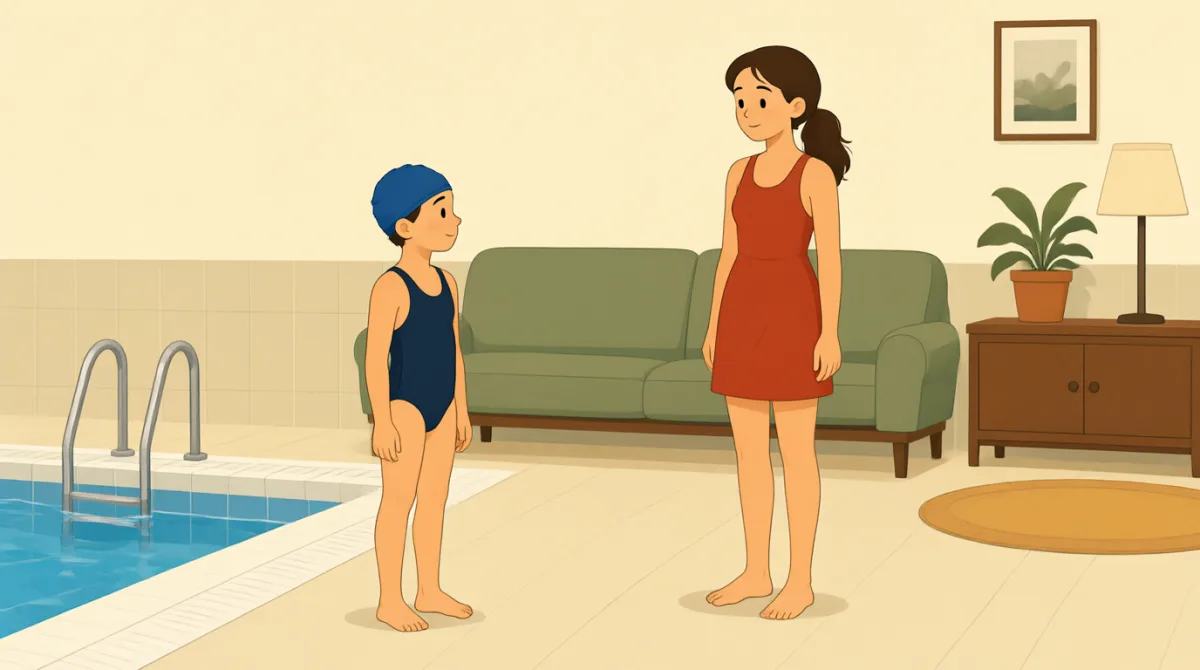

Hi there! I'm planning to use the pool today and had a few questions about the entry requirements.
你好!我今天打算使用游泳池,想問一下關於入場要求的一些問題。

Certainly, I can help with that. What would you like to know?
當然,我能幫你。你想知道什麼?
First, is a swim cap mandatory here? And do you have any age restrictions for children, especially if they're not strong swimmers?
首先,這裡強制要求戴泳帽嗎?還有,對於兒童,尤其是那些不擅長游泳的孩子,有什麼年齡限制嗎?
Yes, a swim cap is mandatory for all swimmers. As for children, those under 12 must be accompanied by an adult, and children under 6 must be within arm's reach of a supervising adult at all times.
是的,所有游泳者都必須戴泳帽。至於兒童,12歲以下必須有成人陪同,6歲以下兒童在任何時候都必須在有監督的成人可觸及的範圍內。
Okay, got it. No problem with the swim cap. What about any health declarations or forms to fill out before entering?
好的,明白了。泳帽沒問題。在入場前需要填寫健康宣告或表格嗎?
No specific health declarations are required for general entry. However, if you have any pre-existing medical conditions, we do encourage you to consult with a lifeguard or staff member for advice.
普通入場不需要特殊的健康宣告。但是,如果您有任何既往病史,我們建議您諮詢救生員或工作人員的建議。
That's good to know. And are there any other general rules I should be aware of, like showering before entering the pool?
瞭解了。還有其他我應該注意的普遍規則嗎,比如入池前淋浴?
Always. A thorough rinse in the showers is required before entering the pool. And just a reminder, no diving in the shallow end, and please follow all posted rules around the pool deck.
是的,每次都是。入池前必須徹底在淋浴間沖洗。另外提醒一下,淺水區禁止跳水,並請遵守泳池甲板周圍張貼的所有規則。
Perfect, that covers all my questions. Thanks so much for the information!
太好了,我的問題都解決了。非常感謝這些資訊!
You're very welcome. Enjoy your swim!
不客氣。祝您游泳愉快!
詞彙8
- mandatory強制的
Mandatory means something is required by rule or law; you must do it. For example, 'Wearing a helmet is mandatory when riding a bike.' It's useful when asking about rules in places like pools or gyms.
Mandatory表示某件事是規則或法律要求的,也就是你必須這樣做。例如,'Wearing a helmet is mandatory when riding a bike.'(騎腳踏車時必須戴頭盔。)在詢問游泳池或健身房等場所的規定時,這個詞很有用。
- accompanied有人陪同的
Accompanied means being with someone else, often for safety or supervision. For example, 'Children must be accompanied by an adult.' This word is common in rules for public places like pools or museums.
Accompanied表示和其他人在一起,通常是為了安全或有人照看。例如,'Children must be accompanied by an adult.'(兒童必須由成人陪同。)這個詞常見於游泳池或博物館等公共場所的規定中。
- supervising監督
Supervising means watching over someone to ensure they are safe or following rules. For example, 'Parents are supervising their kids at the park.' It's practical for talking about childcare or safety in facilities.
Supervising表示照看某人,以確保對方安全或遵守規定。例如,'Parents are supervising their kids at the park.'(父母正在公園裡照看孩子。)在談論照顧孩子或場所安全時,這個詞很實用。
- declarations申報
Declarations are official statements or forms where you provide information, like health details. For example, 'Fill out the health declaration before entering.' Useful in travel or entry situations like airports or pools.
Declarations指提供相關資訊的正式宣告或表格,例如健康資訊。例如,'Fill out the health declaration before entering.'(入場前填寫健康申報表。)在機場或游泳池等涉及旅行或入場的場合,這個詞很有用。
- pre-existing既往的
Pre-existing means something that already exists before a certain time, like a medical condition. For example, 'Tell us about pre-existing conditions.' It's important for health-related conversations in medical or recreational settings.
Pre-existing表示在某個時間點之前就已經存在的事物,例如既往病症。例如,'Tell us about pre-existing conditions.'(請告知我們您以前就有的病症。)在醫療或休閒場所的健康相關對話中,這個詞很重要。
- thorough徹底的
Thorough means complete and detailed, leaving nothing out. For example, 'Give the room a thorough clean.' In pools, it means a full rinse to stay hygienic.
Thorough表示完整而細緻,不遺漏任何部分。例如,'Give the room a thorough clean.'(把房間徹底打掃一下。)在游泳池的規定中,它表示為了保持衛生而進行充分沖洗。
- rinse沖洗
Rinse means to wash something lightly with water, often to remove soap or dirt. For example, 'Rinse your hair after shampooing.' Common in hygiene rules for pools or bathrooms.
Rinse表示用水簡單沖洗某物,通常是為了去除肥皂或汙垢。例如,'Rinse your hair after shampooing.'(用洗髮水洗頭後衝洗頭髮。)這個詞常見於游泳池或浴室的衛生規定中。
- shallow end淺水區
The shallow end is the part of a swimming pool where the water is not deep, safer for beginners. For example, 'Kids should stay in the shallow end.' Essential for pool safety discussions.
The shallow end指游泳池中水不深的部分,對初學者來說更安全。例如,'Kids should stay in the shallow end.'(孩子們應該待在淺水區。)在討論游泳池安全時,這個詞非常重要。
關鍵句8
- 1
Hi there! I'm planning to use the pool today and had a few questions about the entry requirements.
你好!我今天打算使用游泳池,想問一下關於入場要求的一些問題。
This is a polite way to start a conversation when seeking information. 'Hi there' is a friendly greeting, and 'had a few questions' uses past tense to introduce inquiries. Useful for asking about rules in public places like pools or events; it shows you're prepared and respectful.
這是尋求資訊時禮貌開啟對話的一種方式。'Hi there'是友好的問候語,而'had a few questions'使用過去時來引出問題。在詢問游泳池或活動場所的規定時,這種說法很有用,能體現出你的準備和禮貌。
- 2
Certainly, I can help with that. What would you like to know?
當然,我能幫你。你想知道什麼?
This sentence offers help politely. 'Certainly' means 'of course' for agreement, and 'would you like' is a conditional polite form. It's a common customer service response; use it when someone asks for information to keep the conversation open and helpful.
這句話禮貌地表示願意提供幫助。'Certainly'表示“當然”,用於表達同意;'would you like'是一種禮貌的條件表達。客服人員經常這樣回應詢問資訊的人,可以讓對話繼續進行,並體現出樂於助人的態度。
- 3
First, is a swim cap mandatory here?
首先,這裡強制要求戴泳帽嗎?
This asks about a specific rule using 'first' to organize questions. 'Is...mandatory' is a yes/no question structure for requirements. Practical for inquiring about necessities in facilities; it helps learners practice question order and rule-related vocabulary.
這句話用'first'來組織問題,詢問一項具體規定。'Is...mandatory'是詢問某項要求的“是或否”疑問句結構。在詢問場所規定的必需事項時,這種表達很實用,也能幫助你練習疑問句語序和與規定相關的詞彙。
- 4
Yes, a swim cap is mandatory for all swimmers.
是的,所有游泳者都必須戴泳帽。
This confirms a rule clearly. The structure 'is mandatory for [group]' states obligations. Useful for explaining policies; intermediate learners can use it to respond to questions about what's required, emphasizing inclusivity with 'all'.
這句話清楚地確認了一項規定。'is mandatory for [group]'這個結構表示某個群體必須做某事。在解釋政策時,這種表達很有用;中級學習者可以用它來回答有關必需事項的問題,並透過'all'強調規定適用於所有人。
- 5
Those under 12 must be accompanied by an adult.
12歲以下必須有成人陪同。
This uses 'must' for strong obligation and 'those under [age]' to specify groups. It's a conditional rule sentence. Great for safety instructions; practice it when discussing age limits in places like pools, parks, or transportation.
這句話使用'must'表示強烈的義務,並用'those under [age]'來指明特定群體。這是一個條件規則句。在討論游泳池、公園或交通工具中的年齡限制時,可以練習使用這種安全提示表達。
- 6
No specific health declarations are required for general entry.
普通入場不需要特殊的健康申報。
This denies a requirement using 'no...are required' in passive voice for formal rules. 'For general entry' adds context. Useful in service dialogues to clarify what's not needed; helps learners understand negation in policy explanations.
這句話用被動語態中的'no...are required'來否定一項要求,適合用於正式規定。'For general entry'補充了適用情境。在服務對話中說明某項內容不需要時,這種表達很有用,也能幫助你理解政策說明中的否定形式。
- 7
A thorough rinse in the showers is required before entering the pool.
入池前必須在淋浴間徹底沖洗。
This states a hygiene rule with passive 'is required' and time adverb 'before'. It teaches sequencing actions. Practical for facility rules; use similar structures for instructions like 'Wash hands before eating' to build routine descriptions.
這句話用被動結構'is required'和時間詞'before'說明衛生規定,同時表達動作的先後順序。在描述場所規定時,這種結構很實用。你也可以用類似的表達練習日常要求,例如'Wash hands before eating'。
- 8
You're very welcome. Enjoy your swim!
不客氣。祝您游泳愉快!
This is a polite closing response. 'You're very welcome' responds to thanks, and 'Enjoy your [activity]' wishes well. Common in service interactions; it's useful for ending conversations positively, reinforcing good manners in English.
這是一種禮貌的結束語。'You're very welcome'用於回應感謝,'Enjoy your [activity]'用於祝對方活動愉快。這些表達常見於服務場景,適合在對話結束時保持友好,並體現良好的禮貌。