Troubleshooting Plant Problems
解決植物問題
A gardener is showing a struggling plant (e.g., wilting, yellowing leaves, pests) to another more experienced gardener, who then offers advice on diagnosing the issue and suggesting solutions.
一位園丁向另一位更有經驗的園丁展示一株狀況不佳的植物(例如,枯萎、葉子發黃、蟲害),後者則提供診斷問題和建議解決方案的意見。
對話10
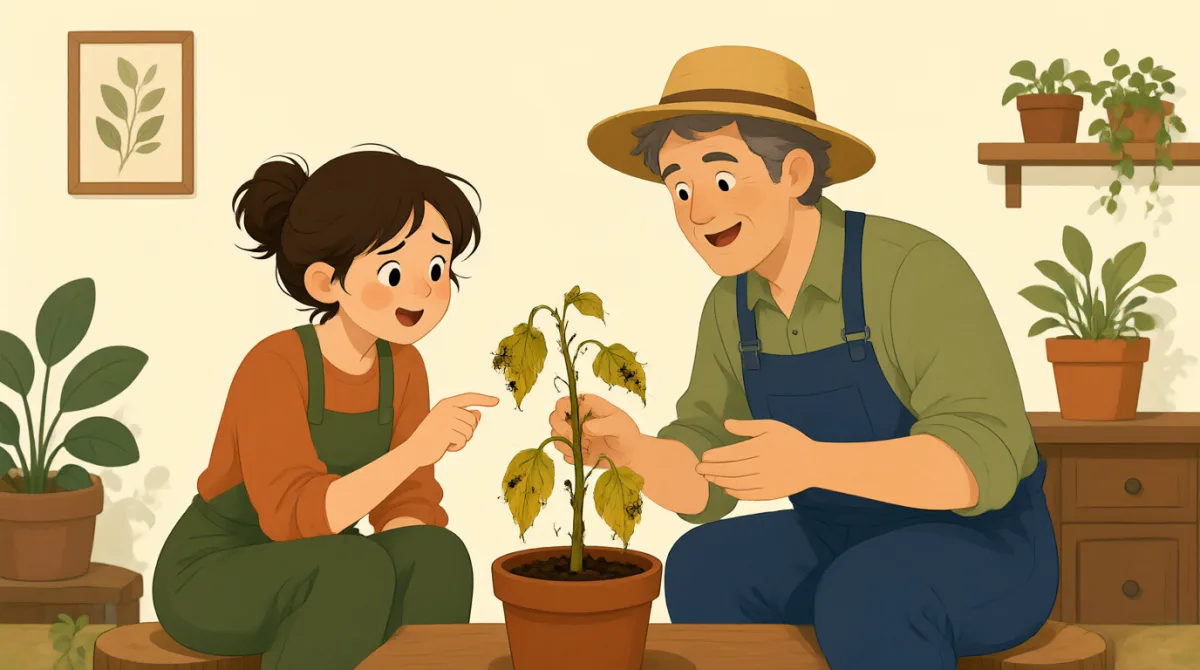

Hey David, do you have a minute? I'm having a real problem with my basil plant, and I was hoping you could take a look.
嘿,大衛,你現在有空嗎?我的羅勒出了大問題,希望能讓你幫我看看。

Of course, Emma! Bring it over. Let's see what's going on. What kind of symptoms are you noticing?
當然,艾瑪!拿過來吧。我們來看看是怎麼回事。你發現了什麼症狀?
Well, the leaves are yellowing quite a bit, especially the lower ones, and some are starting to curl. It also just looks generally droopy, not as vibrant as it used to be. I water it regularly, so I don't think it's underwatering.
嗯,葉子黃得很厲害,尤其是下面的,有些還開始捲曲。整個看起來也蔫蔫的,不如以前那麼有活力。我定期澆水,所以我覺得不是缺水的問題。
Hmm, yellowing lower leaves can often point to a nutrient deficiency, specifically nitrogen. But droopiness along with yellowing can also be a sign of overwatering, even if you water regularly. How's the drainage in the pot? And how often is 'regularly'?
嗯,下部葉片發黃通常表明缺乏營養,特別是氮。但葉片下垂伴隨發黃也可能是澆水過多的跡象,即使你定期澆水。花盆的排水狀況如何?“定期”是多久一次?
It's in a terracotta pot with a drainage hole, so I thought that was good. I usually water it when the top inch of soil feels dry, which is about every other day right now because it's so warm.
它在一個陶土盆裡,有排水孔,所以我認為這沒問題。我通常在土壤表面一英寸感覺乾燥時澆水,現在天氣很熱,大約每隔一天澆一次。
Okay, terracotta is good for drainage. 'Every other day' might still be a bit too much for basil, especially if the soil isn't drying out completely between waterings. Basil prefers consistently moist but not soggy soil. Let's dig in a bit, literally. Feel the soil deeper inside, say, 2-3 inches down. Is it still damp?
好的,陶土盆排水很好。但“每隔一天”對羅勒來說可能還是有點多,特別是如果兩次澆水之間土壤沒有完全乾透的話。羅勒喜歡持續溼潤但不潮溼的土壤。我們挖深一點,字面意義上的。感覺一下深層土壤,比如2-3英寸深。還溼潤嗎?
Oh, wow, it is. It's quite wet down there. I guess I was definitely overwatering then. What should I do now?
哦,天哪,是的。下面還挺溼的。看來我肯定是澆水過多了。現在我該怎麼辦?
First, let's let it dry out thoroughly. Don't water again until the top few inches are completely dry to the touch. You might even want to gently tip the pot and check for standing water if you haven't already. Once it recovers a bit, I'd suggest watering less often but more deeply, so the roots get a good soak, and then let it dry out properly before the next watering cycle. Also, make sure it's getting plenty of direct sunlight.
首先,讓它徹底乾透。在大約幾英寸深的土層完全乾燥之前都不要再澆水。如果你還沒這麼做,甚至可以輕輕傾斜花盆檢查是否有積水。等它稍微恢復後,我建議你減少澆水頻率,但每次澆水要更深一些,讓根部充分吸收水分,然後在下一次澆水週期前讓它徹底乾燥。另外,確保它能獲得充足的陽光直射。
That makes so much sense! I was so focused on keeping it 'moist' that I probably drowned it. Thank you so much, David! This is incredibly helpful.
這太有道理了!我以前太專注於讓它保持“溼潤”,可能把它淹死了。太感謝你了,大衛!這簡直太有幫助了。
You're very welcome, Emma! It's a common mistake, especially with herbs. Just keep an eye on it, and feel free to ask if you notice anything else. Happy gardening!
不客氣,艾瑪!這是個常見錯誤,尤其是對香草類植物來說。多觀察它,如果發現其他問題隨時問我。祝你園藝愉快!
詞彙8
- basil羅勒
A popular herb plant used in cooking, like in Italian food. It's easy to grow at home but sensitive to watering.
一種很受歡迎的香草植物,常用於烹飪,比如義大利菜。它容易在家種植,但對澆水比較敏感。
- yellowing發黃
The process of leaves turning yellow, which often means the plant is unhealthy, like from too much water or lack of nutrients.
葉子變黃的過程,通常意味著植物不太健康,可能是澆水過多或缺乏養分造成的。
- droopy蔫軟下垂的
Describes something hanging down limply, not standing straight. For plants, it shows they might be thirsty or overwatered.
形容東西軟綿綿地垂下來,而不是挺立著。用來形容植物時,說明它可能缺水或澆水過多。
- vibrant生機勃勃的
Full of life and energy, bright and healthy-looking. A healthy plant looks vibrant with green leaves.
充滿生氣和活力,看起來鮮亮、健康。健康的植物有著綠色的葉子,看起來生機勃勃。
- overwatering澆水過多
Giving a plant too much water, which can harm the roots. It's a common mistake for new gardeners.
給植物澆了太多水,可能會損傷根部。這是新手園丁常犯的錯誤。
- drainage排水
The way water flows out of soil or a pot to prevent it from staying too wet. Good drainage is key for healthy plants.
水從土壤或花盆中流出去的情況,可以避免土壤一直過溼。良好的排水對植物健康很重要。
- terracotta陶土
A type of clay pot that's porous and helps with drainage because it allows air and water to pass through.
一種多孔的陶土花盆,空氣和水分可以透過,因此有助於排水。
- soggy溼透的
Very wet and heavy, like soil that's soaked with water. Plants don't like soggy soil as it can cause root rot.
非常溼、沉甸甸的,比如被水浸透的土壤。植物不喜歡土壤溼透,因為這可能導致爛根。
關鍵句8
- 1
I'm having a real problem with my basil plant, and I was hoping you could take a look.
我的羅勒出了大問題,希望能讓你幫我看看。
This is a polite way to ask for help. 'Having a real problem' emphasizes the issue, and 'hoping you could' is a soft request. Use it when seeking advice from friends or experts.
這是一種禮貌的求助方式。'Having a real problem'(遇到了大問題)強調問題很嚴重,'hoping you could'(希望你能)則讓請求聽起來比較委婉。向朋友或有經驗的人請教時可以這樣說。
- 2
What kind of symptoms are you noticing?
你發現了什麼症狀?
A question to gather details about a problem. 'Symptoms' is used for signs of illness in plants or people. It's useful in troubleshooting situations, like doctor visits or plant care.
這是為了瞭解問題細節而提出的問題。'Symptoms'(症狀)既可以指植物出現的問題,也可以指人的病症。在排查問題時很實用,比如看醫生或照料植物時。
- 3
The leaves are yellowing quite a bit, especially the lower ones, and some are starting to curl.
葉子黃得很厲害,尤其是下面的,有些還開始捲曲。
Describes plant issues with specific details. 'Quite a bit' means a lot, and 'starting to' shows a process beginning. Great for explaining observations in gardening or health talks.
這句話用具體細節描述植物的問題。'Quite a bit'(很厲害)表示程度較深,'starting to'(開始)則表示某個過程剛剛出現。談論園藝或健康問題時,這種表達很有用。
- 4
Yellowing lower leaves can often point to a nutrient deficiency, specifically nitrogen.
下部葉片發黃通常表明缺乏營養,特別是氮。
Gives advice based on symptoms. 'Point to' means indicate or suggest, and 'specifically' adds detail. Use this pattern for diagnosing problems, like in advice-giving conversations.
這句話根據症狀提出判斷。'Point to'(表明、暗示)用來說明某種跡象指向什麼原因,'specifically'(特別是)則用於補充具體資訊。給別人排查問題、提出建議時,可以使用這個表達方式。
- 5
I usually water it when the top inch of soil feels dry, which is about every other day right now.
我通常在土壤表面一英寸感覺乾燥時澆水,現在大約每隔一天澆一次。
Explains a routine. 'Usually' shows habit, 'which is' connects ideas, and 'every other day' means alternate days. Helpful for describing schedules in daily care activities.
這句話是在說明日常習慣。'Usually'(通常)表示習慣,'which is'(也就是)用來連線相關資訊,'every other day'(每隔一天)指隔一天做一次。描述日常照料安排時很實用。
- 6
First, let's let it dry out thoroughly. Don't water again until the top few inches are completely dry to the touch.
首先,讓它徹底乾透。在土壤表面幾英寸完全乾燥之前,不要再澆水。
Offers step-by-step advice. 'Let it dry out' is imperative for instructions, and 'until' shows condition. Use for giving practical solutions in problem-solving dialogues.
這句話一步步給出建議。'Let it dry out'(讓它乾透)是用於指示的表達,'until'(直到)則說明需要滿足的條件。解決問題時,可以用這種方式給出實際建議。
- 7
That makes so much sense!
這太有道理了!
Expresses understanding and agreement. It's a common idiomatic response to good advice. Use it to show appreciation in conversations, making you sound natural and engaged.
這句話用來表示理解和贊同,是聽到好建議時很常見的地道回應。這樣說既能表達感謝,也能讓對話聽起來自然、投入。
- 8
You're very welcome! It's a common mistake, especially with herbs.
不客氣!這是個常見錯誤,尤其是對香草類植物來說。
A polite reply to thanks, with reassurance. 'Very welcome' is formal politeness, and 'common mistake' comforts the listener. Ideal for ending helpful talks positively.
這是對別人道謝的禮貌回應,同時也帶有安慰的意味。'Very welcome'(非常樂意、不客氣)表達禮貌,'common mistake'(常見錯誤)則讓對方不必太自責。用它來積極地結束一段互相幫助的對話很合適。