Troubleshooting Plant Problems
पौधों की समस्याओं का पता लगाना
A gardener is showing a struggling plant (e.g., wilting, yellowing leaves, pests) to another more experienced gardener, who then offers advice on diagnosing the issue and suggesting solutions.
एक माली अपने खराब हालत वाले पौधे—जैसे मुरझाए हुए पौधे, पीली पड़ती पत्तियों या कीड़ों से प्रभावित पौधे—को एक अनुभवी माली को दिखाता है। अनुभवी माली समस्या का कारण पहचानने और समाधान सुझाने में मदद करता है।
संवाद10
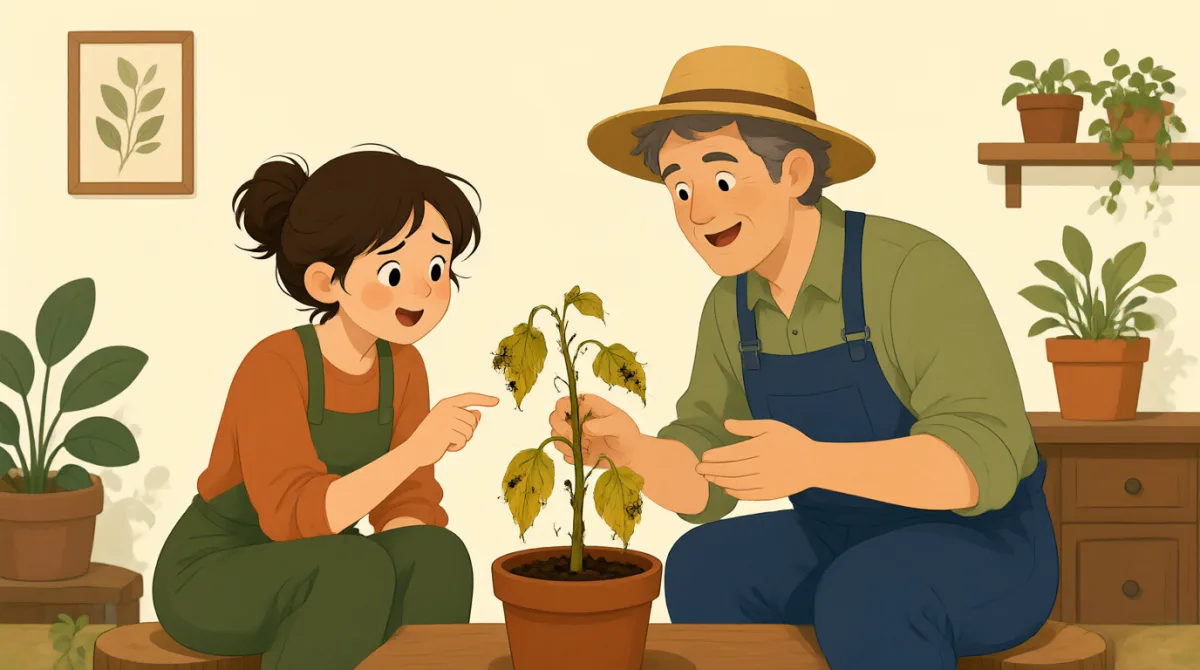

Hey David, do you have a minute? I'm having a real problem with my basil plant, and I was hoping you could take a look.
अरे डेविड, क्या तुम्हारे पास एक मिनट है? मेरे तुलसी के पौधे में सचमुच एक समस्या हो रही है। सोच रही थी कि तुम एक नज़र डाल सको।

Of course, Emma! Bring it over. Let's see what's going on. What kind of symptoms are you noticing?
बिल्कुल, एमा! इसे यहाँ ले आओ। देखते हैं क्या बात है। तुम्हें इसमें किस तरह के लक्षण दिख रहे हैं?
Well, the leaves are yellowing quite a bit, especially the lower ones, and some are starting to curl. It also just looks generally droopy, not as vibrant as it used to be. I water it regularly, so I don't think it's underwatering.
हाँ, इसकी पत्तियाँ काफ़ी पीली पड़ रही हैं, खासकर नीचे वाली, और कुछ मुड़ने भी लगी हैं। कुल मिलाकर यह मुरझाया हुआ भी लग रहा है, पहले जैसा हरा-भरा नहीं। मैं इसे नियमित रूप से पानी देती हूँ, इसलिए नहीं लगता कि इसे पानी कम मिल रहा है।
Hmm, yellowing lower leaves can often point to a nutrient deficiency, specifically nitrogen. But droopiness along with yellowing can also be a sign of overwatering, even if you water regularly. How's the drainage in the pot? And how often is 'regularly'?
हम्म, नीचे की पत्तियों का पीला पड़ना अक्सर पोषक तत्वों की कमी की ओर इशारा करता है, खासकर नाइट्रोजन की। लेकिन पत्तियों का मुरझाना और पीला पड़ना, नियमित पानी देने पर भी, ज़्यादा पानी देने का संकेत हो सकता है। गमले से पानी निकलने की व्यवस्था कैसी है? और तुम इसे कितनी बार पानी देती हो—'नियमित रूप से' से तुम्हारा क्या मतलब है?
It's in a terracotta pot with a drainage hole, so I thought that was good. I usually water it when the top inch of soil feels dry, which is about every other day right now because it's so warm.
यह टेराकोटा के गमले में है, जिसमें पानी निकलने के लिए छेद भी है, तो मुझे लगा था कि यह ठीक है। आम तौर पर मैं इसे तब पानी देती हूँ जब मिट्टी की ऊपरी एक इंच परत सूखी लगे। अभी मौसम इतना गर्म है कि ऐसा लगभग हर दूसरे दिन होता है।
Okay, terracotta is good for drainage. 'Every other day' might still be a bit too much for basil, especially if the soil isn't drying out completely between waterings. Basil prefers consistently moist but not soggy soil. Let's dig in a bit, literally. Feel the soil deeper inside, say, 2-3 inches down. Is it still damp?
ठीक है, टेराकोटा पानी निकालने के लिए अच्छा होता है। फिर भी तुलसी के लिए 'हर दूसरे दिन' शायद थोड़ा ज़्यादा हो, खासकर अगर पानी देने के बीच मिट्टी पूरी तरह सूखती न हो। तुलसी को लगातार नम मिट्टी पसंद है, लेकिन पानी से लथपथ मिट्टी नहीं। चलो, थोड़ा अंदर तक जाँचते हैं—सचमुच मिट्टी खोदकर। मिट्टी को थोड़ा गहराई में, मान लो दो-तीन इंच नीचे छूकर देखो। क्या वह अभी भी गीली है?
Oh, wow, it is. It's quite wet down there. I guess I was definitely overwatering then. What should I do now?
अरे, सच में! नीचे मिट्टी काफ़ी गीली है। लगता है, मैं सचमुच इसे ज़रूरत से ज़्यादा पानी दे रही थी। अब मुझे क्या करना चाहिए?
First, let's let it dry out thoroughly. Don't water again until the top few inches are completely dry to the touch. You might even want to gently tip the pot and check for standing water if you haven't already. Once it recovers a bit, I'd suggest watering less often but more deeply, so the roots get a good soak, and then let it dry out properly before the next watering cycle. Also, make sure it's getting plenty of direct sunlight.
सबसे पहले इसे अच्छी तरह सूखने देते हैं। जब तक ऊपर की कुछ इंच मिट्टी छूने पर पूरी तरह सूखी न लगे, इसे दोबारा पानी मत देना। अगर तुमने अब तक नहीं देखा है, तो गमले को हल्का-सा झुकाकर देख सकती हो कि उसमें पानी तो जमा नहीं है। थोड़ा ठीक होने के बाद, इसे कम बार लेकिन अच्छी तरह पानी देना। इससे जड़ों को भरपूर पानी मिलेगा। फिर अगली बार पानी देने से पहले मिट्टी को ठीक से सूखने देना। और यह भी पक्का करना कि इसे भरपूर सीधी धूप मिले।
That makes so much sense! I was so focused on keeping it 'moist' that I probably drowned it. Thank you so much, David! This is incredibly helpful.
अब बात समझ में आ गई! मैं इसे 'नम' रखने पर इतना ध्यान दे रही थी कि शायद इसे पानी में डुबो ही दिया। बहुत-बहुत शुक्रिया, डेविड! यह सलाह सचमुच बहुत काम की है।
You're very welcome, Emma! It's a common mistake, especially with herbs. Just keep an eye on it, and feel free to ask if you notice anything else. Happy gardening!
कोई बात नहीं, एमा! यह आम गलती है, खासकर जड़ी-बूटियों के साथ। बस इस पर नज़र रखो, और कुछ और दिखे तो बेझिझक पूछ लेना। बागवानी का मज़ा लो!
शब्दावली8
- basilतुलसी
A popular herb plant used in cooking, like in Italian food. It's easy to grow at home but sensitive to watering.
खाना पकाने में इस्तेमाल होने वाला एक लोकप्रिय सुगंधित पौधा, जैसे इतालवी खाने में। इसे घर पर उगाना आसान है, लेकिन इसे पानी देने के मामले में सावधानी रखनी पड़ती है।
- yellowingपीला पड़ना
The process of leaves turning yellow, which often means the plant is unhealthy, like from too much water or lack of nutrients.
पत्तियों के पीली पड़ने की प्रक्रिया। अक्सर इसका मतलब होता है कि पौधा स्वस्थ नहीं है, जैसे उसे बहुत ज़्यादा पानी मिल रहा हो या पोषक तत्वों की कमी हो।
- droopyमुरझाया हुआ
Describes something hanging down limply, not standing straight. For plants, it shows they might be thirsty or overwatered.
किसी ऐसी चीज़ का वर्णन करता है जो ढीली होकर नीचे लटक रही हो, सीधी न खड़ी हो। पौधों में यह इस बात का संकेत हो सकता है कि उन्हें प्यास लगी है या बहुत ज़्यादा पानी मिला है।
- vibrantहरा-भरा
Full of life and energy, bright and healthy-looking. A healthy plant looks vibrant with green leaves.
जीवन और ऊर्जा से भरपूर, चमकीला और स्वस्थ दिखने वाला। स्वस्थ पौधा अपनी हरी पत्तियों के साथ हरा-भरा दिखता है।
- overwateringज़रूरत से ज़्यादा पानी देना
Giving a plant too much water, which can harm the roots. It's a common mistake for new gardeners.
पौधे को बहुत अधिक पानी देना, जिससे उसकी जड़ों को नुकसान पहुँच सकता है। नए बागवानों से यह गलती अक्सर होती है।
- drainageजल-निकास
The way water flows out of soil or a pot to prevent it from staying too wet. Good drainage is key for healthy plants.
मिट्टी या गमले से पानी के बाहर निकलने का तरीका, जिससे मिट्टी बहुत ज़्यादा गीली नहीं रहती। पौधों को स्वस्थ रखने के लिए अच्छा जल-निकास ज़रूरी है।
- terracottaटेराकोटा
A type of clay pot that's porous and helps with drainage because it allows air and water to pass through.
एक तरह का छिद्रयुक्त मिट्टी का गमला, जो हवा और पानी को आर-पार जाने देता है और इस तरह जल-निकास में मदद करता है।
- soggyपानी से लथपथ
Very wet and heavy, like soil that's soaked with water. Plants don't like soggy soil as it can cause root rot.
बहुत ज़्यादा गीला और भारी, जैसे पानी में भीगी हुई मिट्टी। पौधों को ऐसी मिट्टी पसंद नहीं, क्योंकि इससे जड़ें सड़ सकती हैं।
मुख्य वाक्य8
- 1
I'm having a real problem with my basil plant, and I was hoping you could take a look.
मेरे तुलसी के पौधे में सचमुच एक समस्या हो रही है, और सोच रही थी कि तुम एक नज़र डाल सको।
This is a polite way to ask for help. 'Having a real problem' emphasizes the issue, and 'hoping you could' is a soft request. Use it when seeking advice from friends or experts.
मदद माँगने का यह एक विनम्र तरीका है। 'Having a real problem' से समस्या पर ज़ोर दिया जाता है, और 'hoping you could' अनुरोध को नरम बनाता है। दोस्तों या विशेषज्ञों से सलाह लेते समय यह वाक्य इस्तेमाल करें।
- 2
What kind of symptoms are you noticing?
तुम्हें इसमें किस तरह के लक्षण दिख रहे हैं?
A question to gather details about a problem. 'Symptoms' is used for signs of illness in plants or people. It's useful in troubleshooting situations, like doctor visits or plant care.
किसी समस्या के बारे में ज़्यादा जानकारी पाने के लिए यह सवाल पूछा जाता है। 'Symptoms' शब्द का इस्तेमाल पौधों या लोगों में बीमारी के संकेतों के लिए होता है। डॉक्टर से मिलने या पौधों की देखभाल जैसी समस्या सुलझाने वाली स्थितियों में यह उपयोगी है।
- 3
The leaves are yellowing quite a bit, especially the lower ones, and some are starting to curl.
इसकी पत्तियाँ काफ़ी पीली पड़ रही हैं, खासकर नीचे वाली, और कुछ मुड़ने भी लगी हैं।
Describes plant issues with specific details. 'Quite a bit' means a lot, and 'starting to' shows a process beginning. Great for explaining observations in gardening or health talks.
यह वाक्य पौधे की समस्या का विस्तार से वर्णन करता है। 'Quite a bit' का मतलब है बहुत ज़्यादा, और 'starting to' बताता है कि कोई प्रक्रिया शुरू हो रही है। बागवानी या सेहत से जुड़ी बातचीत में अपने देखे हुए हालात बताने के लिए यह वाक्य उपयोगी है।
- 4
Yellowing lower leaves can often point to a nutrient deficiency, specifically nitrogen.
नीचे की पत्तियों का पीला पड़ना अक्सर पोषक तत्वों की कमी की ओर इशारा करता है, खासकर नाइट्रोजन की।
Gives advice based on symptoms. 'Point to' means indicate or suggest, and 'specifically' adds detail. Use this pattern for diagnosing problems, like in advice-giving conversations.
इस वाक्य में लक्षणों के आधार पर सलाह दी जाती है। 'Point to' का मतलब है संकेत देना या किसी बात की ओर इशारा करना, और 'specifically' से बात को और स्पष्ट किया जाता है। समस्या का कारण समझाने वाली बातचीत में इस ढाँचे का इस्तेमाल करें।
- 5
I usually water it when the top inch of soil feels dry, which is about every other day right now.
आम तौर पर मैं इसे तब पानी देती हूँ जब मिट्टी की ऊपरी एक इंच परत सूखी लगे। अभी ऐसा लगभग हर दूसरे दिन होता है।
Explains a routine. 'Usually' shows habit, 'which is' connects ideas, and 'every other day' means alternate days. Helpful for describing schedules in daily care activities.
इस वाक्य में रोज़मर्रा की आदत बताई गई है। 'Usually' आदत को दिखाता है, 'which is' विचारों को जोड़ता है, और 'every other day' का मतलब है एक दिन छोड़कर। रोज़ की देखभाल से जुड़ा अपना समय-क्रम बताने में यह काम आता है।
- 6
First, let's let it dry out thoroughly. Don't water again until the top few inches are completely dry to the touch.
सबसे पहले इसे अच्छी तरह सूखने देते हैं। जब तक ऊपर की कुछ इंच मिट्टी छूने पर पूरी तरह सूखी न लगे, इसे दोबारा पानी मत देना।
Offers step-by-step advice. 'Let it dry out' is imperative for instructions, and 'until' shows condition. Use for giving practical solutions in problem-solving dialogues.
इसमें एक-एक करके सलाह दी गई है। 'Let it dry out' निर्देश देने के लिए इस्तेमाल होता है, और 'until' किसी शर्त के पूरा होने तक का समय बताता है। समस्या सुलझाने वाली बातचीत में व्यावहारिक समाधान सुझाने के लिए यह ढाँचा उपयोगी है।
- 7
That makes so much sense!
अब बात समझ में आ गई!
Expresses understanding and agreement. It's a common idiomatic response to good advice. Use it to show appreciation in conversations, making you sound natural and engaged.
यह समझने और सहमति जताने का तरीका है। अच्छी सलाह मिलने पर यह एक आम और मुहावरेदार जवाब है। बातचीत में आभार जताने और सहज, दिलचस्पी से भरे हुए लगने के लिए इसका इस्तेमाल करें।
- 8
You're very welcome! It's a common mistake, especially with herbs.
कोई बात नहीं! यह आम गलती है, खासकर जड़ी-बूटियों के साथ।
A polite reply to thanks, with reassurance. 'Very welcome' is formal politeness, and 'common mistake' comforts the listener. Ideal for ending helpful talks positively.
यह धन्यवाद का विनम्र जवाब है, जिसमें सामने वाले को दिलासा भी दिया जाता है। 'Very welcome' बहुत विनम्रता से जवाब देता है, और 'common mistake' सुनने वाले को भरोसा दिलाता है कि यह गलती आम है। मददगार बातचीत को अच्छे ढंग से खत्म करने के लिए यह वाक्य बढ़िया है।