Troubleshooting Plant Problems
แก้ปัญหาเมื่อต้นไม้มีอาการผิดปกติ
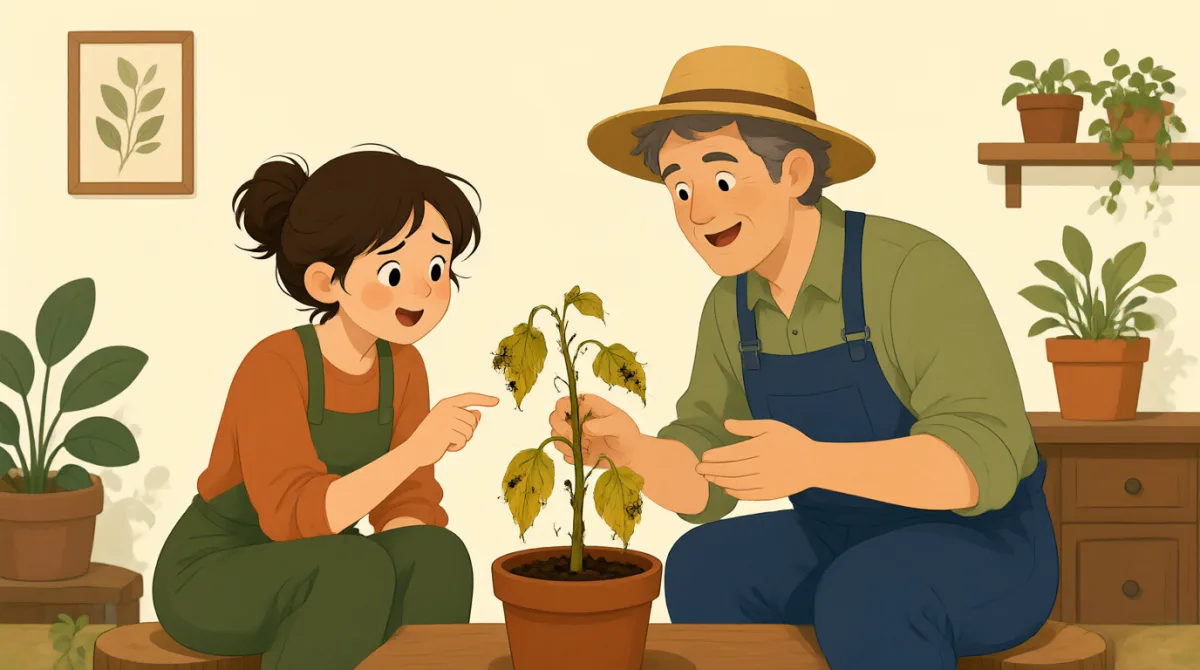
A gardener is showing a struggling plant (e.g., wilting, yellowing leaves, pests) to another more experienced gardener, who then offers advice on diagnosing the issue and suggesting solutions.
คนทำสวนคนหนึ่งนำต้นไม้ที่กำลังมีปัญหา เช่น ใบเหี่ยว ใบเหลือง หรือมีแมลงรบกวน ไปให้คนทำสวนที่มีประสบการณ์มากกว่าช่วยดู อีกฝ่ายจึงแนะนำวิธีวินิจฉัยปัญหาและเสนอแนวทางแก้ไข
บทสนทนา10

Hey David, do you have a minute? I'm having a real problem with my basil plant, and I was hoping you could take a look.
เฮ้ เดวิด มีเวลาสักนาทีไหม? ต้นโหระพาของฉันกำลังมีปัญหาหนักเลย อยากให้เธอช่วยดูหน่อยน่ะ

Of course, Emma! Bring it over. Let's see what's going on. What kind of symptoms are you noticing?
ได้เลย เอ็มมา! เอามานี่สิ มาดูกันว่าเกิดอะไรขึ้น เธอสังเกตเห็นอาการอะไรบ้าง?
Well, the leaves are yellowing quite a bit, especially the lower ones, and some are starting to curl. It also just looks generally droopy, not as vibrant as it used to be. I water it regularly, so I don't think it's underwatering.
คือใบเหลืองค่อนข้างมากเลย โดยเฉพาะใบล่าง ๆ แล้วบางใบก็เริ่มม้วนด้วย ต้นก็ดูเหี่ยว ๆ โดยรวม ไม่สดชื่นเหมือนเมื่อก่อน ฉันรดน้ำเป็นประจำ ก็เลยคิดว่าไม่น่าจะขาดน้ำนะ
Hmm, yellowing lower leaves can often point to a nutrient deficiency, specifically nitrogen. But droopiness along with yellowing can also be a sign of overwatering, even if you water regularly. How's the drainage in the pot? And how often is 'regularly'?
อืม ใบล่างเหลืองมักบ่งบอกว่าขาดสารอาหาร โดยเฉพาะไนโตรเจน แต่ถ้าต้นเหี่ยวพร้อมกับใบเหลือง ก็อาจเป็นสัญญาณว่าได้รับน้ำมากเกินไป ถึงจะรดน้ำเป็นประจำก็เถอะ กระถางระบายน้ำได้ดีไหม แล้วที่ว่ารดน้ำ “เป็นประจำ” นี่บ่อยแค่ไหน?
It's in a terracotta pot with a drainage hole, so I thought that was good. I usually water it when the top inch of soil feels dry, which is about every other day right now because it's so warm.
ปลูกอยู่ในกระถางดินเผาที่มีรูระบายน้ำน่ะ ฉันก็เลยคิดว่าน่าจะดี ปกติจะรดตอนหน้าดินลึกประมาณหนึ่งนิ้วแห้ง ซึ่งช่วงนี้อากาศร้อนมาก ก็เลยประมาณวันเว้นวัน
Okay, terracotta is good for drainage. 'Every other day' might still be a bit too much for basil, especially if the soil isn't drying out completely between waterings. Basil prefers consistently moist but not soggy soil. Let's dig in a bit, literally. Feel the soil deeper inside, say, 2-3 inches down. Is it still damp?
โอเค กระถางดินเผาระบายน้ำได้ดีนะ แต่ “วันเว้นวัน” ก็อาจจะบ่อยเกินไปสำหรับโหระพา โดยเฉพาะถ้าดินยังแห้งไม่หมดระหว่างรดน้ำแต่ละครั้ง โหระพาชอบดินที่ชื้นสม่ำเสมอ แต่ไม่แฉะ งั้นลองขุดดูหน่อย—ขุดจริง ๆ นะ ลองสัมผัสดินที่ลึกลงไปสัก 2-3 นิ้ว ดูว่ายังชื้นอยู่ไหม
Oh, wow, it is. It's quite wet down there. I guess I was definitely overwatering then. What should I do now?
โห จริงด้วย! ข้างล่างเปียกมากเลย สงสัยฉันรดน้ำมากเกินไปแน่ ๆ แล้วตอนนี้ควรทำยังไงดี?
First, let's let it dry out thoroughly. Don't water again until the top few inches are completely dry to the touch. You might even want to gently tip the pot and check for standing water if you haven't already. Once it recovers a bit, I'd suggest watering less often but more deeply, so the roots get a good soak, and then let it dry out properly before the next watering cycle. Also, make sure it's getting plenty of direct sunlight.
อย่างแรก ปล่อยให้ดินแห้งสนิทก่อน อย่ารดน้ำอีกจนกว่าดินชั้นบนลึกลงไปสักสองสามนิ้วจะแห้งสนิทเมื่อสัมผัส ถ้ายังไม่ได้ลอง ก็อาจค่อย ๆ เอียงกระถางดูว่ามีน้ำขังอยู่ไหม พอต้นเริ่มฟื้นแล้ว ฉันแนะนำให้รดน้ำน้อยครั้งลง แต่รดให้ชุ่มลึกถึงราก แล้วปล่อยให้ดินแห้งดีก่อนรอบรดน้ำครั้งต่อไป อีกอย่าง ต้องให้ต้นได้รับแสงแดดโดยตรงอย่างเพียงพอด้วยนะ
That makes so much sense! I was so focused on keeping it 'moist' that I probably drowned it. Thank you so much, David! This is incredibly helpful.
ฟังดูมีเหตุผลมากเลย! ฉันมัวแต่พยายามทำให้ดิน “ชื้น” จนคงทำให้ต้นจมน้ำแน่ ๆ ขอบใจมากนะ เดวิด! ช่วยได้มากจริง ๆ
You're very welcome, Emma! It's a common mistake, especially with herbs. Just keep an eye on it, and feel free to ask if you notice anything else. Happy gardening!
ยินดีมาก เอ็มมา! คนปลูกสมุนไพรพลาดแบบนี้กันบ่อย ๆ เลย คอยสังเกตอาการมันไว้นะ ถ้าเห็นอะไรผิดปกติเพิ่มก็มาถามได้เสมอ ขอให้สนุกกับการทำสวนนะ!
คำศัพท์8
- basilโหระพา
A popular herb plant used in cooking, like in Italian food. It's easy to grow at home but sensitive to watering.
พืชสมุนไพรที่นิยมใช้ทำอาหาร เช่น อาหารอิตาเลียน ปลูกไว้ที่บ้านได้ง่าย แต่ต้องระวังเรื่องการรดน้ำ
- yellowingการเหลือง
The process of leaves turning yellow, which often means the plant is unhealthy, like from too much water or lack of nutrients.
อาการที่ใบเปลี่ยนเป็นสีเหลือง ซึ่งมักหมายถึงต้นไม้ไม่แข็งแรง เช่น อาจได้รับน้ำมากเกินไปหรือขาดสารอาหาร
- droopyเหี่ยว
Describes something hanging down limply, not standing straight. For plants, it shows they might be thirsty or overwatered.
ใช้บรรยายสิ่งที่ห้อยลงอย่างอ่อนแรง ไม่ตั้งตรง ถ้าเป็นต้นไม้ อาจหมายความว่าขาดน้ำหรือได้รับน้ำมากเกินไป
- vibrantสดชื่น
Full of life and energy, bright and healthy-looking. A healthy plant looks vibrant with green leaves.
มีชีวิตชีวาและดูแข็งแรงสดใส ต้นไม้ที่สุขภาพดีจะดูสดชื่น มีใบสีเขียว
- overwateringการรดน้ำมากเกินไป
Giving a plant too much water, which can harm the roots. It's a common mistake for new gardeners.
การให้น้ำต้นไม้มากเกินไป ซึ่งอาจทำให้รากเสียหาย เป็นข้อผิดพลาดที่คนเริ่มทำสวนมักทำกัน
- drainageการระบายน้ำ
The way water flows out of soil or a pot to prevent it from staying too wet. Good drainage is key for healthy plants.
การที่น้ำไหลออกจากดินหรือกระถาง เพื่อไม่ให้ดินเปียกแฉะเกินไป การระบายน้ำที่ดีสำคัญต่อสุขภาพของต้นไม้
- terracottaดินเผา
A type of clay pot that's porous and helps with drainage because it allows air and water to pass through.
วัสดุชนิดหนึ่งที่ทำจากดินเหนียวและมีรูพรุน ช่วยระบายน้ำได้ดีเพราะอากาศและน้ำไหลผ่านได้
- soggyแฉะ
Very wet and heavy, like soil that's soaked with water. Plants don't like soggy soil as it can cause root rot.
เปียกชุ่มและหนัก เช่น ดินที่อมน้ำจนชุ่ม ต้นไม้ไม่ชอบดินที่แฉะ เพราะอาจทำให้รากเน่าได้
ประโยคสำคัญ8
- 1
I'm having a real problem with my basil plant, and I was hoping you could take a look.
ต้นโหระพาของฉันกำลังมีปัญหาหนักเลย อยากให้เธอช่วยดูหน่อยน่ะ
This is a polite way to ask for help. 'Having a real problem' emphasizes the issue, and 'hoping you could' is a soft request. Use it when seeking advice from friends or experts.
ประโยคนี้เป็นวิธีขอความช่วยเหลืออย่างสุภาพ 'Having a real problem' (กำลังมีปัญหาหนัก) เน้นย้ำว่าปัญหานั้นสำคัญ ส่วน 'hoping you could' (หวังว่าเธอจะช่วยได้) ทำให้คำขอฟังดูนุ่มนวล ใช้เวลาขอคำแนะนำจากเพื่อนหรือผู้เชี่ยวชาญได้
- 2
What kind of symptoms are you noticing?
เธอสังเกตเห็นอาการอะไรบ้าง?
A question to gather details about a problem. 'Symptoms' is used for signs of illness in plants or people. It's useful in troubleshooting situations, like doctor visits or plant care.
ใช้ถามเพื่อเก็บรายละเอียดเกี่ยวกับปัญหา 'Symptoms' หมายถึงอาการหรือสัญญาณของความผิดปกติ ใช้ได้ทั้งกับคนและต้นไม้ ประโยคนี้มีประโยชน์เวลาหาสาเหตุของปัญหา เช่น ตอนพบแพทย์หรือดูแลต้นไม้
- 3
The leaves are yellowing quite a bit, especially the lower ones, and some are starting to curl.
ใบเหลืองค่อนข้างมากเลย โดยเฉพาะใบล่าง ๆ แล้วบางใบก็เริ่มม้วนด้วย
Describes plant issues with specific details. 'Quite a bit' means a lot, and 'starting to' shows a process beginning. Great for explaining observations in gardening or health talks.
ใช้บรรยายปัญหาของต้นไม้พร้อมรายละเอียดเฉพาะ 'Quite a bit' หมายถึงมากพอสมควร ส่วน 'starting to' บอกว่าสิ่งนั้นกำลังเริ่มเกิดขึ้น เหมาะสำหรับเล่าสิ่งที่สังเกตเห็นเวลาคุยเรื่องทำสวนหรือสุขภาพ
- 4
Yellowing lower leaves can often point to a nutrient deficiency, specifically nitrogen.
ใบล่างเหลืองมักบ่งบอกว่าขาดสารอาหาร โดยเฉพาะไนโตรเจน
Gives advice based on symptoms. 'Point to' means indicate or suggest, and 'specifically' adds detail. Use this pattern for diagnosing problems, like in advice-giving conversations.
ใช้ให้คำแนะนำโดยอิงจากอาการ 'Point to' หมายถึงบ่งชี้หรือแสดงให้เห็น ส่วน 'specifically' ใช้เพิ่มรายละเอียด รูปแบบนี้ใช้วินิจฉัยปัญหาได้ เช่น ในบทสนทนาที่ให้คำแนะนำ
- 5
I usually water it when the top inch of soil feels dry, which is about every other day right now.
ปกติฉันจะรดตอนหน้าดินลึกประมาณหนึ่งนิ้วแห้ง ซึ่งช่วงนี้ก็ประมาณวันเว้นวัน
Explains a routine. 'Usually' shows habit, 'which is' connects ideas, and 'every other day' means alternate days. Helpful for describing schedules in daily care activities.
ใช้เล่ากิจวัตร 'Usually' ใช้บอกสิ่งที่ทำเป็นประจำ 'Which is' ใช้เชื่อมความคิด ส่วน 'every other day' หมายถึงวันเว้นวัน มีประโยชน์เวลาพูดถึงตารางกิจวัตรในการดูแลสิ่งต่าง ๆ
- 6
First, let's let it dry out thoroughly. Don't water again until the top few inches are completely dry to the touch.
อย่างแรก ปล่อยให้ดินแห้งสนิทก่อน อย่ารดน้ำอีกจนกว่าดินชั้นบนลึกลงไปสักสองสามนิ้วจะแห้งสนิทเมื่อสัมผัส
Offers step-by-step advice. 'Let it dry out' is imperative for instructions, and 'until' shows condition. Use for giving practical solutions in problem-solving dialogues.
ใช้ให้คำแนะนำทีละขั้นตอน 'Let it dry out' ใช้บอกให้ปล่อยสิ่งนั้นไว้จนแห้ง ส่วน 'until' ใช้บอกเงื่อนไขหรือจุดที่ต้องรอให้ถึง นำไปใช้เสนอวิธีแก้ปัญหาในบทสนทนาได้
- 7
That makes so much sense!
ฟังดูมีเหตุผลมากเลย!
Expresses understanding and agreement. It's a common idiomatic response to good advice. Use it to show appreciation in conversations, making you sound natural and engaged.
ใช้แสดงว่าเข้าใจและเห็นด้วย เป็นคำตอบสำนวนที่ใช้กันทั่วไปเมื่อได้รับคำแนะนำดี ๆ ใช้แสดงความขอบคุณในการสนทนา ทำให้ฟังดูเป็นธรรมชาติและมีส่วนร่วม
- 8
You're very welcome! It's a common mistake, especially with herbs.
ยินดีมาก! คนปลูกสมุนไพรพลาดแบบนี้กันบ่อย ๆ เลย
A polite reply to thanks, with reassurance. 'Very welcome' is formal politeness, and 'common mistake' comforts the listener. Ideal for ending helpful talks positively.
เป็นคำตอบอย่างสุภาพเมื่อมีคนขอบคุณ พร้อมช่วยให้อีกฝ่ายสบายใจ 'Very welcome' เป็นการตอบรับคำขอบคุณอย่างสุภาพ ส่วน 'common mistake' ช่วยให้อีกฝ่ายรู้ว่าความผิดพลาดนี้เกิดขึ้นได้บ่อย เหมาะสำหรับปิดท้ายบทสนทนาที่ให้ความช่วยเหลือในแง่ดี