Discussing Daily Commute Hassles
บ่นเรื่องปัญหาการเดินทางไปทำงานในแต่ละวัน
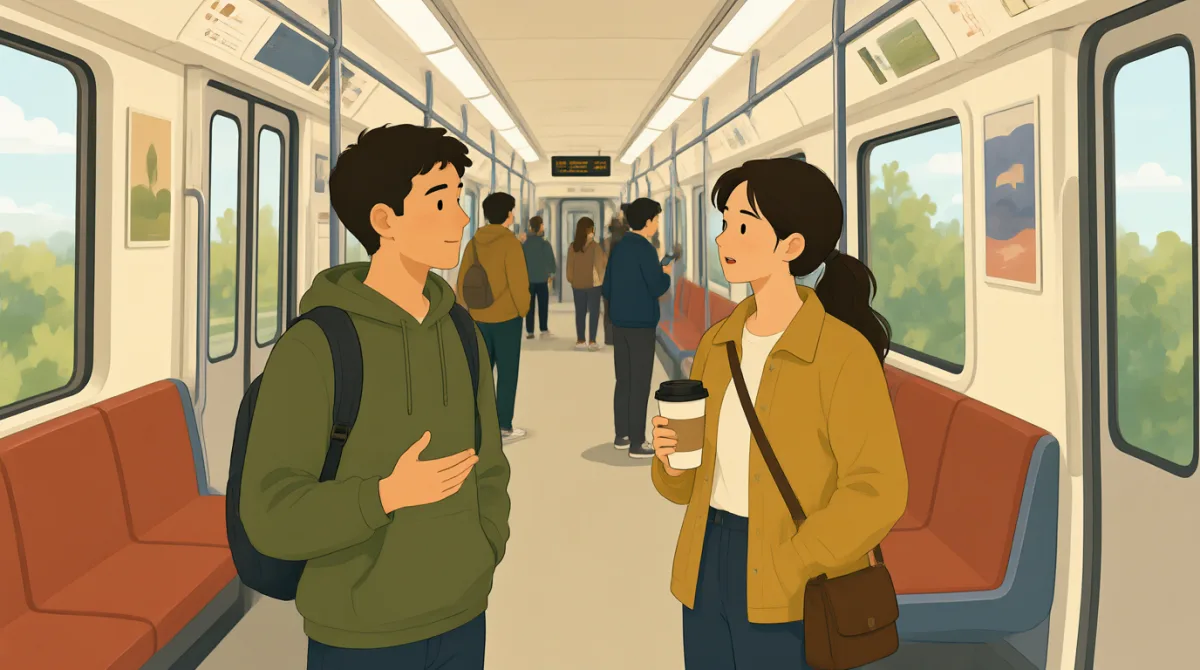
Two passengers commiserate over common public transit issues like delays, overcrowding, or technical problems, building rapport through shared frustration.
ผู้โดยสารสองคนพูดคุยเห็นอกเห็นใจกันเรื่องปัญหาที่เจอบ่อยบนขนส่งสาธารณะ เช่น รถล่าช้า ผู้โดยสารแน่น หรือปัญหาทางเทคนิค พร้อมสร้างความสนิทสนมผ่านความหงุดหงิดที่มีร่วมกัน
บทสนทนา8

Ugh, another delay. This train service really tests my patience sometimes.
เฮ้อ รถมาช้าอีกแล้ว บางทีบริการรถไฟนี่ก็ทำเอาฉันหมดความอดทนจริง ๆ

Tell me about it! It's like this every other day. I swear, I spend more time waiting than actually commuting.
เข้าใจเลย! วันเว้นวันก็เป็นแบบนี้ ฉันว่าใช้เวลารอรถมากกว่าเวลาเดินทางจริง ๆ อีก
Right? And then when it finally arrives, it's packed like sardines. You can barely breathe.
ใช่ไหมล่ะ? แล้วพอมาถึงสักที ก็แน่นเอี้ยดจนแทบหายใจไม่ออก
Exactly! The worst is when you're late for work because of it, and your boss just doesn't get it. They think you should leave even earlier.
จริง! ที่แย่ที่สุดคือพอไปทำงานสายเพราะรถพวกนี้ เจ้านายก็ไม่เข้าใจเลย คิดว่าเราควรออกจากบ้านให้เร็วกว่านี้อีก
Tell me about it. Last week, the air conditioning broke down on the bus during a heatwave. It was unbearable.
เข้าใจเลย อาทิตย์ก่อนแอร์บนรถเมล์เสียตอนที่อากาศร้อนจัด ทนแทบไม่ไหวเลย
Oh, that's rough. I had a similar experience with the metro recently, the doors kept malfunctioning at every stop.
โห แย่เลยนะ ฉันก็เพิ่งเจออะไรคล้าย ๆ กันบนรถไฟใต้ดิน ประตูเสียทุกสถานีเลย
It's frustrating, isn't it? You just want a smooth, reliable commute, but it feels like a roll of the dice every morning.
น่าหงุดหงิดเนอะ? เราก็แค่อยากเดินทางได้ราบรื่นและไว้ใจได้ แต่ทุกเช้ากลับเหมือนต้องลุ้นเอา
Absolutely. Well, misery loves company, I guess. At least we're all in the same boat.
ใช่เลย อย่างที่เขาว่ากัน คนมีทุกข์ก็สบายใจขึ้นเมื่อมีเพื่อนร่วมทุกข์ อย่างน้อยเราก็เจอเรื่องเดียวกัน
คำศัพท์8
- delayความล่าช้า
A delay means something takes longer than expected, like a train arriving late. Use it when talking about waiting times in travel.
ความล่าช้า หมายถึงสิ่งที่ใช้เวลานานกว่าที่คาดไว้ เช่น รถไฟมาถึงช้า ใช้คำนี้เวลาพูดถึงการรอระหว่างเดินทางได้เลย
- patienceความอดทน
Patience is the ability to stay calm while waiting or dealing with problems. Say 'tests my patience' when something annoys you by making you wait.
ความอดทนคือความสามารถในการใจเย็นระหว่างรอหรือรับมือกับปัญหา พูดว่า 'tests my patience' เมื่อมีบางอย่างทำให้หงุดหงิดเพราะต้องรอ
- packed like sardinesแน่นเอี้ยด
This idiom describes a place that is extremely crowded, like fish squeezed in a can. Use it to complain about overcrowding on buses or trains.
สำนวนนี้ใช้บรรยายสถานที่ที่คนแน่นมาก ราวกับปลาที่ถูกอัดอยู่ในกระป๋อง ใช้บ่นเวลารถเมล์หรือรถไฟมีผู้โดยสารแน่นได้
- malfunctioningทำงานผิดปกติ
Malfunctioning means a machine or device is not working correctly. It's useful for describing technical issues, like broken doors on a metro.
'Malfunctioning' หมายถึงเครื่องจักรหรืออุปกรณ์ทำงานไม่ถูกต้อง ใช้พูดถึงปัญหาทางเทคนิคได้ เช่น ประตูรถไฟใต้ดินเสีย
- frustratingน่าหงุดหงิด
Frustrating describes something that makes you feel annoyed or upset because it's difficult or unreliable. Common in conversations about daily problems like commutes.
'Frustrating' ใช้บรรยายสิ่งที่ทำให้เราหงุดหงิดหรือไม่สบายใจ เพราะจัดการยากหรือไว้ใจไม่ได้ มักใช้พูดถึงปัญหาในชีวิตประจำวัน เช่น การเดินทางไปทำงาน
- roll of the diceเหมือนเสี่ยงดวง
This idiom means something is uncertain or depends on luck, like rolling dice in a game. Use it for unpredictable situations, such as morning commutes.
สำนวนนี้หมายถึงสิ่งที่ไม่แน่นอนหรือขึ้นอยู่กับโชค เหมือนทอยลูกเต๋าในเกม ใช้พูดถึงสถานการณ์ที่คาดเดาไม่ได้ เช่น การเดินทางตอนเช้า
- misery loves companyคนมีทุกข์ก็สบายใจขึ้นเมื่อมีเพื่อนร่วมทุกข์
This proverb means people who are unhappy feel better when others share their suffering. It's a way to bond over shared complaints.
สุภาษิตนี้หมายถึงคนที่กำลังไม่มีความสุขจะรู้สึกดีขึ้นเมื่อมีคนอื่นร่วมทุกข์ด้วย ใช้สร้างความรู้สึกสนิทสนมจากการบ่นเรื่องที่เจอเหมือนกันได้
- in the same boatตกอยู่ในสถานการณ์เดียวกัน
This idiom means being in the same difficult situation as others. Use it to show empathy and build rapport during casual chats about problems.
สำนวนนี้หมายถึงการเจอสถานการณ์ยากลำบากแบบเดียวกับคนอื่น ใช้แสดงความเห็นอกเห็นใจและสร้างความสนิทสนมเวลาคุยกันสบาย ๆ ถึงปัญหาต่าง ๆ
ประโยคสำคัญ7
- 1
Ugh, another delay. This train service really tests my patience sometimes.
เฮ้อ รถมาช้าอีกแล้ว บางทีบริการรถไฟนี่ก็ทำเอาฉันหมดความอดทนจริง ๆ
This sentence expresses frustration with a delay using 'Ugh' as an exclamation of annoyance. 'Tests my patience' is an idiom for something that challenges your calm. Useful for starting complaints about travel issues; the structure shows cause and effect with 'really' for emphasis.
ประโยคนี้แสดงความหงุดหงิดต่อรถที่มาช้า โดยใช้ 'Ugh' เป็นคำอุทานแสดงความรำคาญ ส่วน 'tests my patience' เป็นสำนวนหมายถึงบางอย่างกำลังท้าทายความอดทนของเรา เหมาะสำหรับเริ่มบ่นเรื่องการเดินทาง และใช้ 'really' เพื่อเน้นความรู้สึก
- 2
Tell me about it!
เข้าใจเลย!
This is a common idiomatic response meaning 'I completely agree' or 'I know exactly what you mean.' It's informal and great for showing empathy in conversations about shared problems, like commutes.
นี่เป็นคำตอบติดปากที่หมายถึง 'เห็นด้วยสุด ๆ' หรือ 'เข้าใจเลยว่าคุณหมายถึงอะไร' เป็นภาษากันเอง เหมาะสำหรับแสดงความเห็นอกเห็นใจเวลาคุยเรื่องปัญหาที่เจอเหมือนกัน เช่น การเดินทางไปทำงาน
- 3
It's like this every other day.
วันเว้นวันก็เป็นแบบนี้
This uses 'every other day' to mean it happens frequently, about half the time. The simile 'It's like this' compares the situation to a pattern. Useful for describing recurring annoyances; note the present tense for ongoing habits.
ประโยคนี้ใช้ 'every other day' หมายถึงเหตุการณ์เกิดขึ้นบ่อย ๆ หรือประมาณวันเว้นวัน ส่วน 'It's like this' เปรียบเทียบสถานการณ์กับสิ่งที่เกิดซ้ำเป็นประจำ ใช้บรรยายเรื่องน่ารำคาญที่เกิดซ้ำได้ สังเกตว่าใช้รูปปัจจุบันเพื่อพูดถึงสิ่งที่เกิดขึ้นเป็นประจำ
- 4
And then when it finally arrives, it's packed like sardines. You can barely breathe.
แล้วพอมาถึงสักที ก็แน่นเอี้ยดจนแทบหายใจไม่ออก
This sentence builds on a story with 'and then' for sequence, using the idiom 'packed like sardines' for crowding. 'Barely' means 'almost not,' showing exaggeration for effect. Ideal for describing overcrowding; it uses present tense for general truths.
ประโยคนี้เล่าเรื่องต่อด้วย 'and then' เพื่อบอกลำดับเหตุการณ์ และใช้สำนวน 'packed like sardines' หมายถึงคนแน่นมาก 'Barely' หมายถึงแทบจะไม่ ใช้พูดเกินจริงเพื่อเน้นความรู้สึก เหมาะสำหรับบรรยายความแออัด และใช้รูปปัจจุบันเพื่อพูดถึงสิ่งที่เกิดขึ้นเป็นประจำ
- 5
The worst is when you're late for work because of it, and your boss just doesn't get it.
ที่แย่ที่สุดคือพอไปทำงานสายเพราะรถพวกนี้ เจ้านายก็ไม่เข้าใจเลย
This highlights the worst part using 'The worst is when...' structure for emphasis. 'Doesn't get it' is slang for 'doesn't understand.' Useful for sharing work-related frustrations; the clause 'because of it' explains cause.
ประโยคนี้เน้นส่วนที่แย่ที่สุดด้วยโครงสร้าง 'The worst is when...' ส่วน 'doesn't get it' เป็นภาษาพูด หมายถึงไม่เข้าใจ ใช้เล่าความหงุดหงิดเรื่องงานได้ โดยวลี 'because of it' อธิบายสาเหตุ
- 6
It's frustrating, isn't it?
น่าหงุดหงิดเนอะ?
This is a tag question ('isn't it?') to seek agreement and invite response. 'Frustrating' describes annoyance. Perfect for casual chats to build rapport; tag questions make conversations more interactive.
ประโยคนี้ใช้คำถามต่อท้าย ('isn't it?') เพื่อถามให้อีกฝ่ายเห็นด้วยและชวนให้ตอบ 'Frustrating' หมายถึงน่าหงุดหงิด เหมาะกับบทสนทนากันเองเพื่อสร้างความสนิทสนม คำถามต่อท้ายช่วยให้การคุยมีส่วนร่วมมากขึ้น
- 7
At least we're all in the same boat.
อย่างน้อยเราก็เจอเรื่องเดียวกัน
This ends positively with the idiom 'in the same boat' for shared situation. 'At least' softens complaints by finding a silver lining. Useful for concluding commiseration; it uses present continuous 'we're' for current shared experience.
ประโยคนี้จบลงในแง่บวกด้วยสำนวน 'in the same boat' ที่หมายถึงการตกอยู่ในสถานการณ์เดียวกัน ส่วน 'At least' ช่วยลดความรู้สึกเป็นการบ่นลง โดยชี้ให้เห็นข้อดีเล็ก ๆ น้อย ๆ เหมาะสำหรับใช้ปิดท้ายการพูดเห็นอกเห็นใจกัน และใช้รูปปัจจุบันต่อเนื่อง 'we're' เพื่อพูดถึงประสบการณ์ร่วมกันที่กำลังเกิดขึ้น