Discussing Daily Life & Customs
พูดคุยเรื่องชีวิตประจำวันและธรรมเนียม
Participants share insights into their daily routines, common social customs, etiquette, and peculiar traditions, comparing and contrasting them.
ผู้เข้าร่วมแลกเปลี่ยนเรื่องกิจวัตรประจำวัน ธรรมเนียมทางสังคม มารยาท และประเพณีแปลกตา พร้อมเปรียบเทียบความเหมือนและความแตกต่าง
บทสนทนา9
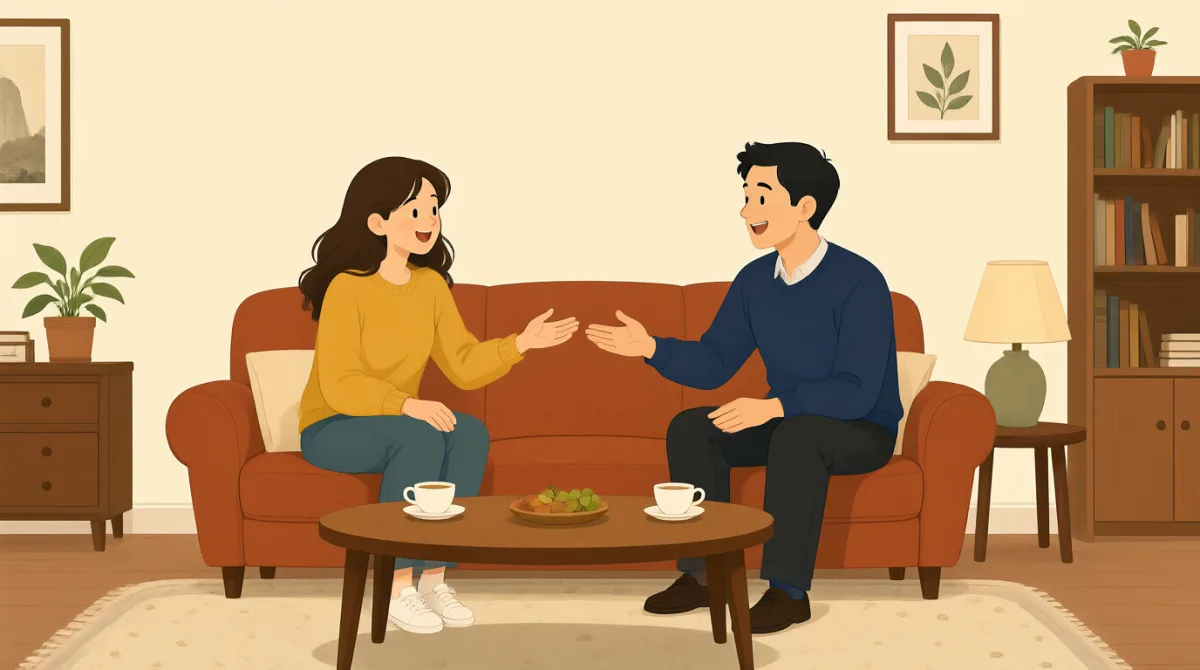

It's been so interesting discussing cultural differences. I'm curious, Jack, what's a daily custom in your country that might seem unusual to outsiders?
คุยเรื่องความแตกต่างทางวัฒนธรรมกันแล้วสนุกมากเลยนะ แจ็ก ฉันสงสัยว่าในประเทศของนายมีธรรมเนียมอะไรในชีวิตประจำวันบ้างที่คนต่างชาติอาจมองว่าแปลก

That's a good question, Emma. I'd say taking off your shoes immediately when entering someone's home is a big one. It's considered quite rude not to, even if they say it's fine.
เป็นคำถามที่ดีนะ เอ็มมา ฉันว่าเรื่องใหญ่เลยก็คือถอดรองเท้าทันทีที่เข้าบ้านคนอื่น ถือว่าเสียมารยาทมากถ้าไม่ถอด ถึงเจ้าของบ้านจะบอกว่าไม่เป็นไรก็ตาม
Ah, yes! We do that in some homes too, but it's not a universal rule. What about social etiquette around meals? For instance, do you typically share dishes or have individual plates?
อ๋อ ใช่เลย! บ้านบางหลังก็ทำแบบนั้นเหมือนกัน แต่ไม่ใช่กฎที่ทุกบ้านต้องทำ แล้วมารยาทบนโต๊ะอาหารล่ะ ปกติแบ่งอาหารกันหรือกินจานใครจานมัน
Definitely sharing. It's very common to have multiple communal dishes in the center of the table, and everyone helps themselves. It's seen as a way to bond and enjoy the meal together.
แบ่งกันแน่นอน ปกติมักจะมีอาหารหลายอย่างวางไว้ตรงกลางโต๊ะ แล้วทุกคนก็ตักกินกันเอง ถือว่าเป็นวิธีสร้างความสนิทสนมและกินมื้ออาหารด้วยกัน
That sounds lovely and very communal. In my country, while we might share appetizers, main courses are usually individual. It highlights that difference in collective vs. individualistic cultures.
ฟังดูดีและเป็นการกินร่วมกันมากเลยนะ ประเทศฉันอาจแบ่งอาหารเรียกน้ำย่อยกัน แต่จานหลักมักจะแยกกันคนละจาน เรื่องนี้สะท้อนความแตกต่างระหว่างวัฒนธรรมแบบเน้นส่วนรวมกับแบบเน้นปัจเจกบุคคลได้ดีเลย
Exactly. And a peculiar tradition for us is 'siesta' in some regions, where shops close for a few hours in the afternoon for a break. It's perplexing to tourists but a part of life for locals.
ใช่เลย แล้วประเพณีแปลก ๆ ของเราก็คือการพักกลางวันหรือ ‘siesta’ ในบางภูมิภาค ร้านค้าจะปิดช่วงบ่ายสักสองสามชั่วโมงเพื่อพักผ่อน นักท่องเที่ยวอาจงง แต่สำหรับคนท้องถิ่นแล้วมันเป็นส่วนหนึ่งของชีวิต
I've heard about siesta! It sounds like a great way to avoid the hottest part of the day and recharge. We tend to power through the entire workday, often with just a short lunch break.
ฉันเคยได้ยินเรื่อง siesta นะ! ฟังดูเป็นวิธีที่ดีเลยที่จะเลี่ยงช่วงที่ร้อนที่สุดของวันและเติมพลัง ส่วนพวกเรามักจะทำงานรวดเดียวตลอดทั้งวัน แทบได้พักแค่กินมื้อกลางวันสั้น ๆ
Yes, it definitely helps. It's fascinating how these small daily differences really paint a picture of our broader cultural values, isn't it?
ใช่ ช่วยได้จริง ๆ น่าสนใจนะที่ความแตกต่างเล็ก ๆ ในชีวิตประจำวันพวกนี้สะท้อนให้เห็นค่านิยมทางวัฒนธรรมที่กว้างขึ้นของเราได้ ใช่ไหมล่ะ
Absolutely. It makes you realize how much unspoken understanding shapes our daily interactions. Thanks for sharing, Jack!
เห็นด้วยเลย ทำให้เราเข้าใจว่าความเข้าใจที่ไม่ต้องพูดออกมามีอิทธิพลต่อปฏิสัมพันธ์ในชีวิตประจำวันของเรามากแค่ไหน ขอบใจที่เล่าให้ฟังนะ แจ็ก!
คำศัพท์12
- curiousอยากรู้
Feeling eager to know or learn something. Use it when you want to ask about new things, like 'I'm curious about your culture.'
หมายถึงรู้สึกอยากรู้หรืออยากเรียนรู้บางอย่าง ใช้เวลาถามเกี่ยวกับสิ่งใหม่ ๆ เช่น 'I'm curious about your culture.' (ฉันอยากรู้เรื่องวัฒนธรรมของคุณ)
- unusualไม่ธรรมดา
Something that is not common or typical. It's useful for describing customs that seem strange to others, such as 'That's an unusual habit.'
หมายถึงสิ่งที่ไม่พบเห็นทั่วไปหรือไม่เป็นแบบแผน ใช้บรรยายธรรมเนียมที่คนอื่นอาจมองว่าแปลกได้ เช่น 'That's an unusual habit.' (นั่นเป็นนิสัยที่ไม่ธรรมดา)
- rudeเสียมารยาท
Behavior that is impolite or disrespectful. In cultural talks, say 'It's rude not to do that' to explain social rules.
หมายถึงการกระทำที่ไม่สุภาพหรือไม่ให้เกียรติ ในการพูดคุยเรื่องวัฒนธรรม ใช้ 'It's rude not to do that' (การไม่ทำแบบนั้นถือว่าเสียมารยาท) เพื่ออธิบายกฎทางสังคมได้
- etiquetteมารยาท
The rules for polite behavior in social situations. Use it when discussing manners, like 'What's the etiquette at dinner?'
หมายถึงกฎเกณฑ์ในการวางตัวอย่างสุภาพในสถานการณ์ทางสังคม ใช้พูดถึงกิริยามารยาท เช่น 'What's the etiquette at dinner?' (มารยาทบนโต๊ะอาหารเป็นอย่างไร)
- communalส่วนรวม; ที่ใช้ร่วมกัน
Shared by a group of people. It's practical for describing shared activities, such as 'We have communal meals.'
หมายถึงสิ่งที่คนกลุ่มหนึ่งใช้หรือทำร่วมกัน ใช้บรรยายกิจกรรมร่วมกันได้ เช่น 'We have communal meals.' (พวกเรากินอาหารร่วมกัน)
- bondผูกพัน; สร้างความสนิทสนม
A close relationship or connection between people. Use it to talk about how activities bring people together, like 'Sharing food helps us bond.'
หมายถึงความสัมพันธ์หรือความเชื่อมโยงที่แน่นแฟ้นระหว่างผู้คน ใช้พูดถึงกิจกรรมที่ทำให้ผู้คนใกล้ชิดกันขึ้น เช่น 'Sharing food helps us bond.' (การแบ่งปันอาหารช่วยให้เราสนิทสนมกัน)
- peculiarแปลกประหลาด; แปลกตา
Strange or unusual in an interesting way. Good for cultural discussions, e.g., 'That's a peculiar tradition in your country.'
หมายถึงสิ่งที่แปลกหรือน่าประหลาดใจอย่างน่าสนใจ เหมาะกับการพูดคุยเรื่องวัฒนธรรม เช่น 'That's a peculiar tradition in your country.' (นั่นเป็นประเพณีแปลกตาในประเทศของคุณ)
- siestaการพักกลางวัน; การงีบช่วงบ่าย
A short rest or nap in the early afternoon, common in some warm climates. Mention it when comparing daily routines, like 'Do you take a siesta?'
หมายถึงการพักผ่อนหรืองีบสั้น ๆ ในช่วงบ่ายต้น ๆ ซึ่งพบได้ทั่วไปในบางพื้นที่ที่มีอากาศร้อน ใช้พูดเปรียบเทียบกิจวัตรประจำวันได้ เช่น 'Do you take a siesta?' (คุณพักกลางวันไหม)
- perplexingชวนงุนงง
Confusing or hard to understand. Use it for things that puzzle outsiders, such as 'The custom is perplexing to tourists.'
หมายถึงทำให้สับสนหรือเข้าใจยาก ใช้พูดถึงสิ่งที่ทำให้คนต่างถิ่นสงสัยได้ เช่น 'The custom is perplexing to tourists.' (ธรรมเนียมนี้ชวนให้นักท่องเที่ยวงุนงง)
- rechargeเติมพลัง
To rest and regain energy. It's useful in talks about breaks, like 'A siesta helps you recharge.'
หมายถึงพักผ่อนเพื่อให้กลับมามีพลังอีกครั้ง ใช้พูดถึงการพักเบรกได้ เช่น 'A siesta helps you recharge.' (การพักกลางวันช่วยให้คุณเติมพลัง)
- fascinatingน่าทึ่ง; น่าสนใจมาก
Very interesting and attracting attention. Say it to show admiration, e.g., 'Cultural differences are fascinating.'
หมายถึงน่าสนใจมากจนดึงดูดความสนใจ ใช้แสดงความชื่นชมได้ เช่น 'Cultural differences are fascinating.' (ความแตกต่างทางวัฒนธรรมน่าสนใจมาก)
- unspokenที่ไม่ได้พูดออกมาตรง ๆ; โดยนัย
Not said directly but understood. Use it for implied rules, like 'There are unspoken understandings in interactions.'
หมายถึงสิ่งที่ไม่ได้พูดออกมาตรง ๆ แต่เข้าใจกันได้ ใช้พูดถึงกฎที่เป็นนัยได้ เช่น 'There are unspoken understandings in interactions.' (ในการปฏิสัมพันธ์กันมีความเข้าใจบางอย่างที่ไม่ได้พูดออกมาตรง ๆ)
ประโยคสำคัญ9
- 1
It's been so interesting discussing cultural differences.
คุยเรื่องความแตกต่างทางวัฒนธรรมกันแล้วสนุกมากเลยนะ
This is a present perfect continuous tense sentence ('It's been... discussing') to talk about an ongoing experience. It's useful to start a conversation positively and show enthusiasm about a topic.
ประโยคนี้ใช้ present perfect continuous ('It's been... discussing') เพื่อพูดถึงประสบการณ์ที่ดำเนินต่อเนื่อง เหมาะสำหรับเริ่มบทสนทนาในแง่บวกและแสดงความกระตือรือร้นต่อหัวข้อที่กำลังคุยกัน
- 2
What's a daily custom in your country that might seem unusual to outsiders?
ในประเทศของนายมีธรรมเนียมอะไรในชีวิตประจำวันบ้างที่คนต่างชาติอาจมองว่าแปลก
A question using 'what's' for asking about examples, with 'might seem' to suggest possibility. Great for inviting someone to share personal cultural insights in discussions.
เป็นคำถามที่ใช้ 'what's' เพื่อถามหาตัวอย่าง และใช้ 'might seem' เพื่อสื่อถึงความเป็นไปได้ เหมาะสำหรับชวนอีกฝ่ายแบ่งปันมุมมองส่วนตัวเกี่ยวกับวัฒนธรรมระหว่างพูดคุยกัน
- 3
It's considered quite rude not to.
ถือว่าเสียมารยาทมากถ้าไม่ทำ
Passive voice ('It's considered') to describe general opinions, with 'not to' for negation. Use this pattern to explain social norms without blaming individuals.
ประโยคนี้ใช้รูปประโยคถูกกระทำ ('It's considered') เพื่อบอกความคิดเห็นโดยทั่วไป และใช้ 'not to' เพื่อทำให้เป็นปฏิเสธ ใช้รูปแบบนี้อธิบายบรรทัดฐานทางสังคมได้โดยไม่กล่าวโทษใครเป็นพิเศษ
- 4
What about social etiquette around meals?
แล้วมารยาททางสังคมบนโต๊ะอาหารล่ะ
A casual question starting with 'What about' to change or add to the topic. It's practical for smoothly transitioning in conversations about customs.
เป็นคำถามแบบไม่เป็นทางการที่ขึ้นต้นด้วย 'What about' เพื่อเปลี่ยนหัวข้อหรือพูดเพิ่มเติม ใช้เปลี่ยนไปคุยเรื่องธรรมเนียมอื่นได้อย่างเป็นธรรมชาติ
- 5
It's seen as a way to bond and enjoy the meal together.
ถือว่าเป็นวิธีสร้างความสนิทสนมและเพลิดเพลินกับมื้ออาหารด้วยกัน
Passive structure ('It's seen as') for common views, with infinitives ('to bond and enjoy'). Useful for explaining the purpose of traditions in cultural exchanges.
ประโยคนี้ใช้โครงสร้างถูกกระทำ ('It's seen as') เพื่อบอกมุมมองทั่วไป และใช้คำกริยารูป infinitive ('to bond and enjoy') เหมาะสำหรับอธิบายจุดประสงค์ของประเพณีในการแลกเปลี่ยนทางวัฒนธรรม
- 6
It highlights that difference in collective vs. individualistic cultures.
เรื่องนี้สะท้อนความแตกต่างระหว่างวัฒนธรรมแบบเน้นส่วนรวมกับแบบเน้นปัจเจกบุคคลได้ดี
Simple present tense ('highlights') for general truths, using 'vs.' for comparison. This sentence is key for contrasting cultures and showing deeper insights.
ประโยคนี้ใช้ present simple ('highlights') เพื่อพูดถึงข้อเท็จจริงทั่วไป และใช้ 'vs.' เพื่อเปรียบเทียบ เป็นประโยคสำคัญสำหรับแสดงความแตกต่างระหว่างวัฒนธรรมและชี้ให้เห็นมุมมองที่ลึกซึ้งขึ้น
- 7
It's perplexing to tourists but a part of life for locals.
นักท่องเที่ยวอาจรู้สึกงุนงง แต่สำหรับคนท้องถิ่นแล้วมันเป็นส่วนหนึ่งของชีวิต
Contrast with 'but' to show differences in perception, using 'to tourists' for groups. Ideal for describing how customs confuse outsiders in comparative talks.
ใช้ 'but' เพื่อแสดงความแตกต่างในการรับรู้ และใช้ 'to tourists' เพื่อระบุกลุ่มคน เหมาะสำหรับบรรยายว่าธรรมเนียมต่าง ๆ ทำให้คนต่างถิ่นสับสนได้อย่างไรในการพูดเปรียบเทียบ
- 8
It's fascinating how these small daily differences really paint a picture of our broader cultural values.
น่าสนใจนะที่ความแตกต่างเล็ก ๆ ในชีวิตประจำวันพวกนี้สะท้อนให้เห็นค่านิยมทางวัฒนธรรมที่กว้างขึ้นของเราได้
Noun clause ('how these...') after 'fascinating' to explain why something is interesting, with 'paint a picture' as an idiom for illustrating. Use it to conclude discussions thoughtfully.
ประโยคนี้ใช้อนุประโยคคำนาม ('how these...') ตามหลัง 'fascinating' เพื่ออธิบายว่าอะไรทำให้เรื่องนั้นน่าสนใจ และใช้สำนวน 'paint a picture' ในความหมายว่าแสดงให้เห็นภาพรวม ใช้ปิดท้ายการพูดคุยได้อย่างชวนคิด
- 9
It makes you realize how much unspoken understanding shapes our daily interactions.
ทำให้เราเข้าใจว่าความเข้าใจที่ไม่ได้พูดออกมาตรง ๆ มีอิทธิพลต่อปฏิสัมพันธ์ในชีวิตประจำวันของเรามากแค่ไหน
Causative structure ('makes you realize') with a noun clause ('how much...'), emphasizing impact. Helpful for reflecting on cultural influences in conversations.
ประโยคนี้ใช้โครงสร้างที่ทำให้เกิดผล ('makes you realize') ตามด้วยอนุประโยคคำนาม ('how much...') เพื่อเน้นย้ำอิทธิพลของสิ่งนั้น เหมาะสำหรับสะท้อนถึงผลกระทบของวัฒนธรรมในการสนทนา