Separate the Colors
Segregowanie kolorów
Emma and Jack sort their clothes into light and dark colors. Jack shows Emma where to put each pile.
Emma i Jack sortują ubrania na jasne i ciemne. Jack pokazuje Emmie, gdzie położyć każdy stos.
Dialog8
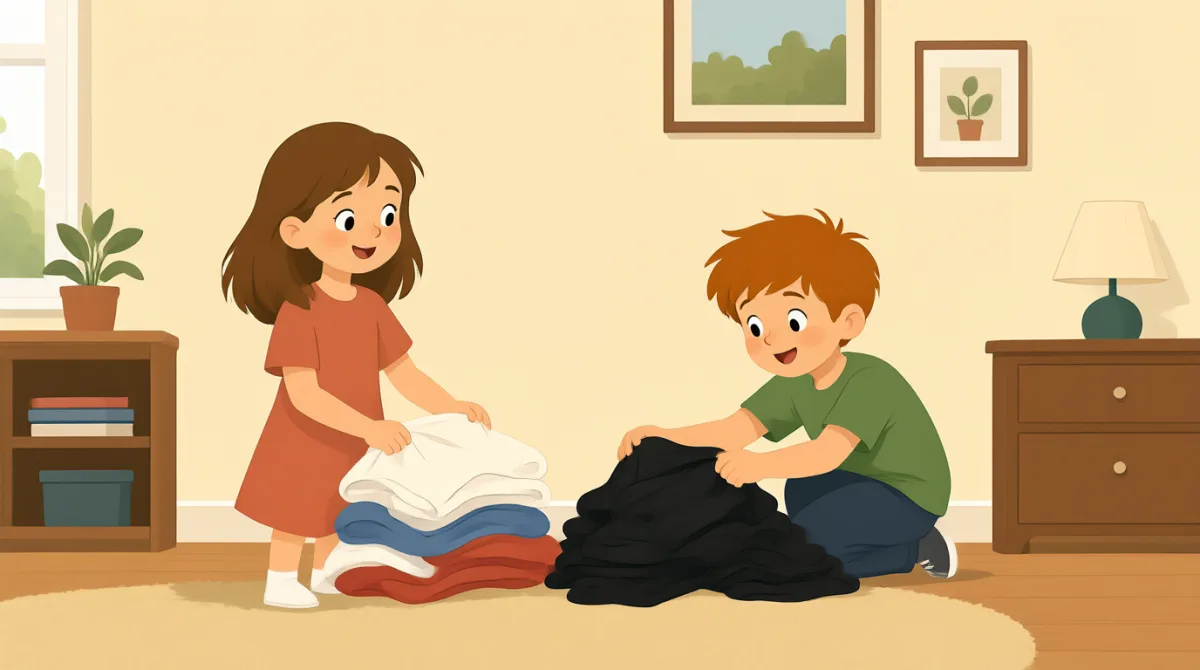

Are these clothes light or dark?
Te ubrania są jasne czy ciemne?

The white shirts go in the light pile.
Białe koszulki wrzuć do jasnych ubrań.
What about these blue jeans?
A te niebieskie dżinsy?
Put them in the dark pile.
Wrzuć je do ciemnych ubrań.
Where do I put this red shirt?
Gdzie mam położyć tę czerwoną koszulkę?
Put it with the dark clothes, please.
Wrzuć ją do ciemnych ubrań, proszę.
Okay. The piles are ready now.
Dobra. Stosy są już gotowe.
Great. Let's put them in the washer.
Super. Włóżmy je do pralki.
Słownictwo6
- light pilestos jasnych ubrań
This is the group of light-colored clothes. You can use “pile” for a group of things placed together.
To grupa ubrań w jasnych kolorach. Słowa “pile” możesz użyć, mówiąc o grupie rzeczy ułożonych razem.
- dark pilestos ciemnych ubrań
This is the group of dark-colored clothes. Put dark clothes here when you sort laundry.
To grupa ubrań w ciemnych kolorach. Podczas sortowania prania wkładaj tu ciemne ubrania.
- blue jeansniebieskie dżinsy
These are jeans that are blue. Use this phrase to name a common kind of clothing.
To dżinsy w kolorze niebieskim. Użyj tego wyrażenia, żeby nazwać popularny rodzaj ubrania.
- put them inwłożyć je do
This means to place things inside something. You can say “Put them in the washer” when you are ready to wash clothes.
To znaczy umieścić coś w środku. Gdy chcesz już zrobić pranie, możesz powiedzieć “Put them in the washer” (Włóż je do pralki).
- with the dark clothesdo ciemnych ubrań
This tells you which group something belongs with. You can use “with” to say what things go together.
To wskazuje, do której grupy należy dana rzecz. Możesz użyć “with”, żeby powiedzieć, które rzeczy pasują do siebie.
- washerpralka
A washer is a machine that cleans clothes. You can put clothes in it to wash them.
“Washer” to urządzenie, które pierze ubrania. Możesz włożyć do niego ubrania, żeby je wyprać.
Kluczowe zdania7
- 1
Are these clothes light or dark?
Te ubrania są jasne czy ciemne?
Use this question when you need help choosing between two groups. You can replace “light” and “dark” with other choices.
Użyj tego pytania, gdy potrzebujesz pomocy w wyborze jednej z dwóch grup. Zamiast “light” i “dark” możesz podać inne możliwości.
- 2
The white shirts go in the light pile.
Białe koszulki wrzuca się do jasnych ubrań.
This sentence explains where a kind of clothing belongs. You can use “go in the…” to give simple sorting instructions.
To zdanie mówi, gdzie należy umieścić dany rodzaj ubrania. Możesz użyć wyrażenia “go in the…”, żeby podać prostą instrukcję sortowania.
- 3
What about these blue jeans?
A co z tymi niebieskimi dżinsami?
Use this question to ask about another item. You can replace “these blue jeans” with a different item.
Użyj tego pytania, żeby zapytać o inną rzecz. Zamiast “these blue jeans” możesz wymienić coś innego.
- 4
Put them in the dark pile.
Wrzuć je do ciemnych ubrań.
This is a simple instruction for where to place something. You can change “the dark pile” to another place.
To prosta instrukcja, gdzie coś położyć. Zamiast “the dark pile” możesz wskazać inne miejsce.
- 5
Put it with the dark clothes, please.
Wrzuć ją do ciemnych ubrań, proszę.
Use this polite instruction to say which group an item belongs with. Change “it” and “the dark clothes” to fit the situation.
Użyj tej uprzejmej instrukcji, żeby wskazać, do której grupy należy dana rzecz. Zmień “it” i “the dark clothes”, dopasowując je do sytuacji.
- 6
The piles are ready now.
Stosy są już gotowe.
This tells someone that the piles are prepared. You can use “is ready” or “are ready” when a task is finished.
To informacja, że stosy są przygotowane. Gdy jakieś zadanie jest skończone, możesz powiedzieć “is ready” albo “are ready”.
- 7
Let's put them in the washer.
Włóżmy je do pralki.
Use “Let's” to suggest doing something together. You can replace “put them in the washer” with another activity.
Użyj “Let's”, żeby zaproponować wspólne zrobienie czegoś. Zamiast “put them in the washer” możesz podać inną czynność.