Opening an Unexpected Bill
Emma opens a hospital bill that is much higher than she expected and asks Mia to help her make sense of the charges before she calls anyone.
Dialogue10
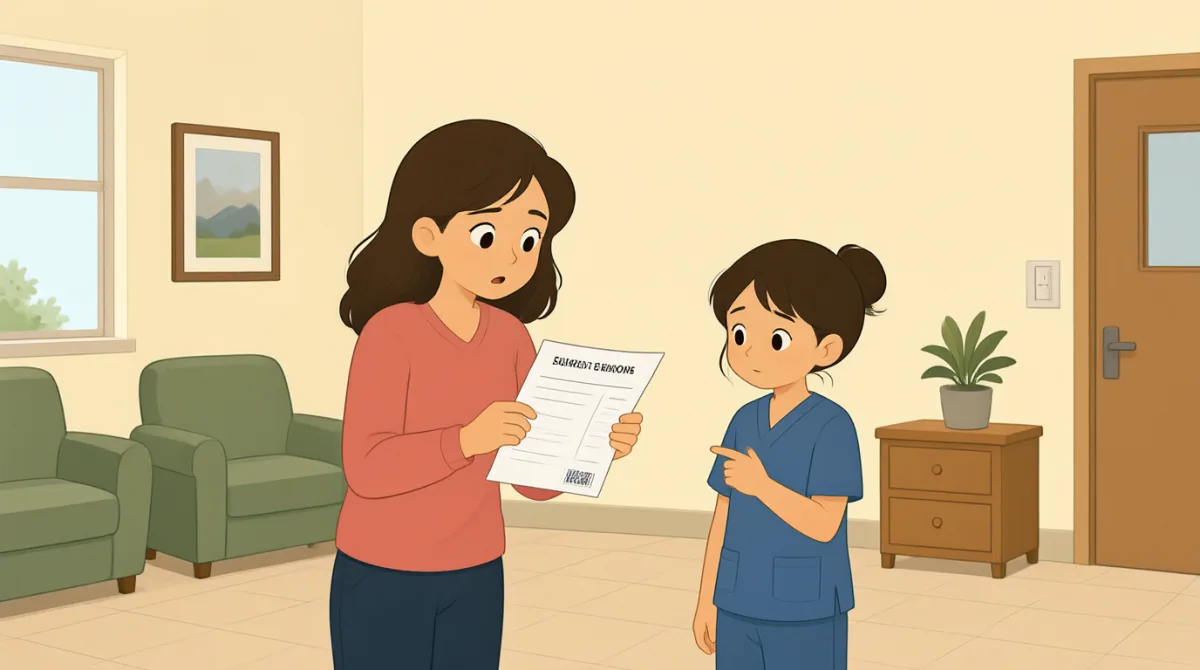

I finally opened the hospital bill, and the balance is almost three times what I expected. I thought insurance had covered most of the visit.

That’s a lot to take in. Before you call anyone, let’s go through it line by line and see what the hospital actually charged.
Here’s the first page. There’s a facility fee, a separate charge for the emergency department, and something called a diagnostic services package.
Some of those may be standard charges, but the wording isn’t very clear. Do you have the explanation of benefits from your insurer?
Yes, it says I may owe around six hundred dollars. This bill says nearly two thousand, though, so something doesn’t add up.
Keep in mind, the explanation of benefits isn’t a bill. Still, the difference is big enough that I’d want to find out what’s behind it.
There’s also a charge for an imaging service I don’t remember having. Could that be listed under a technical name I wouldn’t recognize?
Possibly. Check the date and the service description, and compare them with your discharge papers. If anything still looks unfamiliar, mark it for the billing office.
Good idea. I’ll write down the charges I can’t identify and ask how each one was calculated. I don’t want to assume it’s wrong, but I need a clear breakdown.
Exactly. And don’t agree to a payment plan or pay the full balance just to get it over with. First, make sure the bill matches what your insurer processed.
Vocabulary7
- go through it line by line
To examine something carefully, one item at a time. You can use this when reviewing a bill, contract, or report.
- doesn’t add up
Something doesn’t seem correct or consistent. Here, the insurance estimate and the hospital bill show very different amounts.
- explanation of benefits
A document from an insurer showing how a medical claim was processed and what the patient may owe. It is not itself a bill.
- what’s behind it
The reason for something or the details causing it. You can use this phrase when asking why a charge or problem occurred.
- listed under
Recorded or shown using a particular name or category. A medical service might be listed under a technical name that a patient does not recognize.
- clear breakdown
A detailed explanation of how a total amount is made up. You can request one when charges are confusing.
- get it over with
To finish something unpleasant as quickly as possible. In this context, it means paying just to avoid dealing with the bill further.
Key Sentences7
- 1
Before you call anyone, let’s go through it line by line and see what the hospital actually charged.
This is a practical way to suggest reviewing details before taking action. Reuse “let’s go through it line by line” when offering to examine a document carefully.
- 2
Do you have the explanation of benefits from your insurer?
This is a direct but polite question for checking whether someone has a document that may clarify an insurance claim. You can replace “the explanation of benefits” with the name of any relevant document.
- 3
Keep in mind, the explanation of benefits isn’t a bill.
“Keep in mind” introduces an important point the listener should remember. Use it to clarify a distinction or prevent a misunderstanding.
- 4
Still, the difference is big enough that I’d want to find out what’s behind it.
This sentence acknowledges a point while explaining why further investigation is reasonable. “I’d want to find out what’s behind it” is a tactful way to express concern and suggest checking the cause.
- 5
Could that be listed under a technical name I wouldn’t recognize?
This is a cautious way to suggest a possible explanation without claiming it is definitely true. Reuse “Could that be listed under…?” when asking whether something appears under a different label.
- 6
I don’t want to assume it’s wrong, but I need a clear breakdown.
This balances fairness with a firm request for information. You can adapt it when raising a concern while showing that you are open to an explanation.
- 7
First, make sure the bill matches what your insurer processed.
This gives a clear first step for resolving a billing question. Use “make sure [one thing] matches [another]” when comparing records or amounts.