Saying What You Do on Monday
Emma asks Mia about her Monday. Mia says she goes to work and has an English class in the evening.
Dialogue8
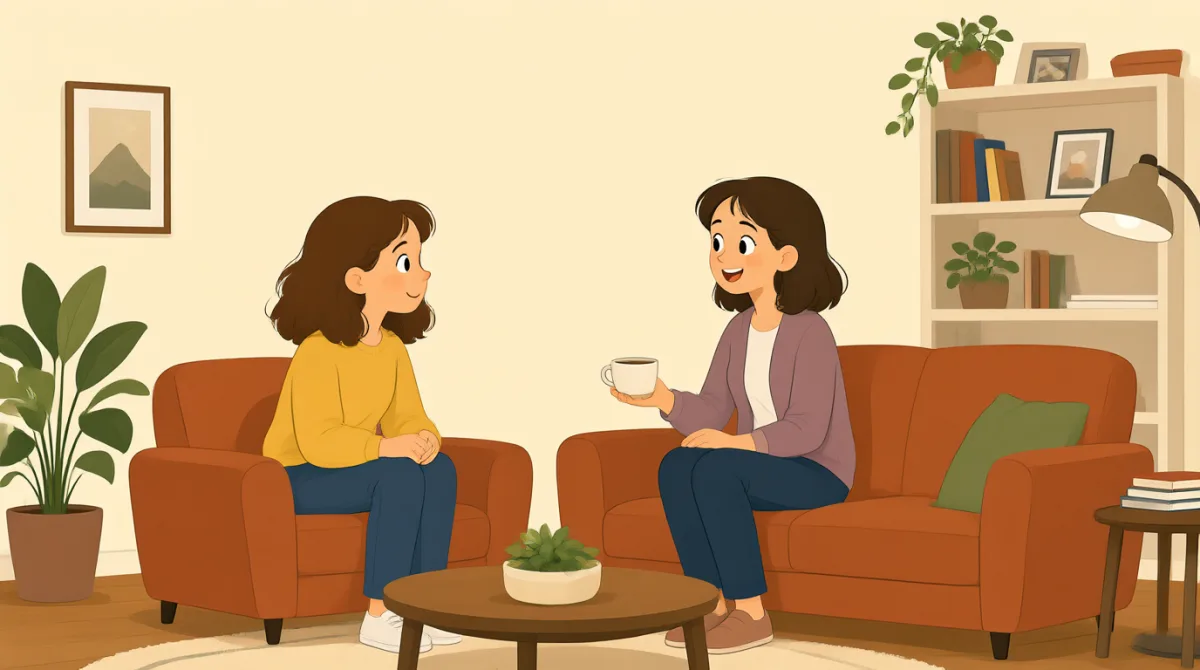

What do you do on Mondays, Mia?

I go to work on Monday.
Do you work all day?
Yes, I work until five.
What do you do in the evening?
I have an English class in the evening.
That sounds nice. Do you like it?
Yes, I do. I like learning English.
Vocabulary8
- on Mondays
This means every Monday. Use it to talk about a regular weekly activity.
- go to work
This means to travel to your job and work there. You can say, “I go to work on Tuesday.”
- all day
This means for the whole day. You can use it to ask how long someone works or studies.
- until five
This means up to five o’clock. Use “until” to say when an activity ends.
- in the evening
This means during the later part of the day. Use it to talk about when you do something.
- English class
This is a lesson where you study English. You can replace “English” with another subject.
- sounds nice
This is a friendly way to say something seems good or pleasant. You can use it to respond to someone’s plans.
- learning English
This means studying and getting better at English. You can use “learning” with other subjects or skills.
Key Sentences8
- 1
What do you do on Mondays, Mia?
Use this question to ask about someone’s regular Monday activities. Change “Mondays” to another day to ask about a different day.
- 2
I go to work on Monday.
This is a simple way to say what you do on Monday. Replace “go to work” with another activity to describe your schedule.
- 3
Do you work all day?
Use this yes-or-no question to ask if someone works for the whole day. You can change “work” to another activity.
- 4
Yes, I work until five.
This answer tells someone when your work ends. Replace “five” with another time.
- 5
What do you do in the evening?
Use this question to ask about someone’s evening activities. You can change “in the evening” to “in the morning” or “after work.”
- 6
I have an English class in the evening.
This sentence tells someone about a class and when it happens. Replace “English” with another subject or change the time.
- 7
That sounds nice.
This is a friendly response to someone’s plans or activities. Use it to show that something seems enjoyable.
- 8
Yes, I do.
Use this short answer to agree with a question that begins with “Do you.” For example, “Do you like it?” — “Yes, I do.”