Saying What You Do on Monday
เล่าว่าทำอะไรในวันจันทร์
Emma asks Mia about her Monday. Mia says she goes to work and has an English class in the evening.
เอ็มมาถามมีอาเกี่ยวกับวันจันทร์ของเธอ มีอาบอกว่าเธอไปทำงานและมีเรียนภาษาอังกฤษตอนเย็น
บทสนทนา8
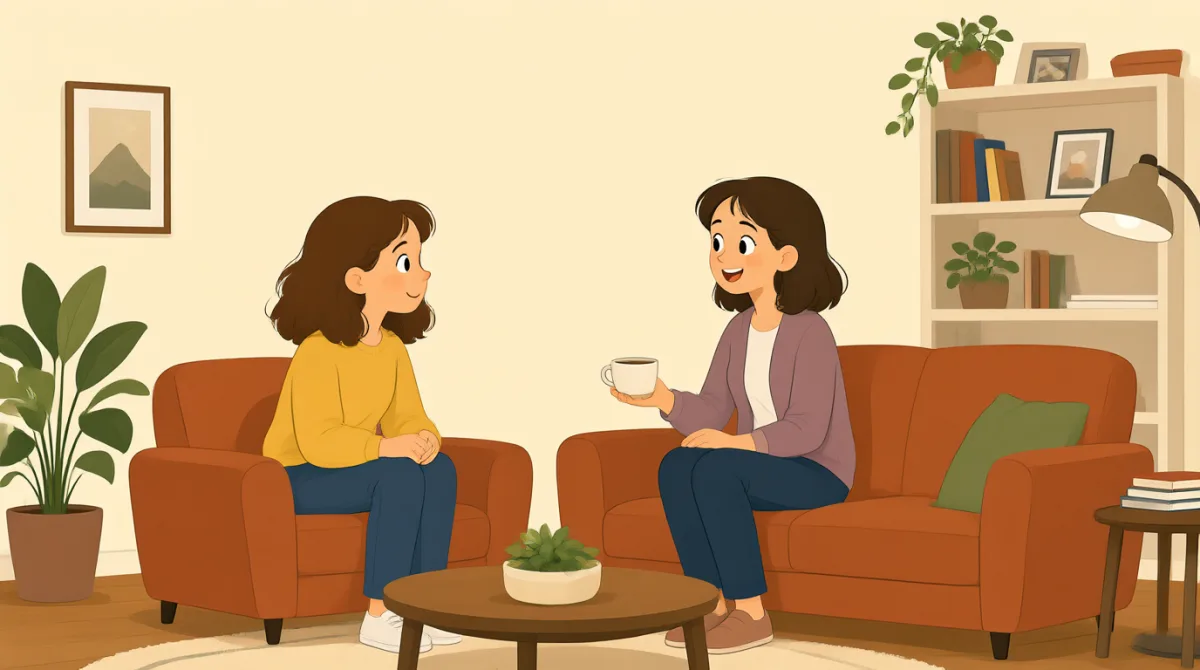

What do you do on Mondays, Mia?
วันจันทร์มีอาทำอะไรบ้างเหรอ?

I go to work on Monday.
วันจันทร์ฉันไปทำงานน่ะ
Do you work all day?
ทำงานทั้งวันเลยเหรอ?
Yes, I work until five.
ใช่ ฉันทำงานถึงห้าโมงเย็น
What do you do in the evening?
ตอนเย็นทำอะไรเหรอ?
I have an English class in the evening.
ตอนเย็นฉันมีเรียนภาษาอังกฤษน่ะ
That sounds nice. Do you like it?
ฟังดูดีจัง ชอบไหม?
Yes, I do. I like learning English.
ชอบสิ ฉันชอบเรียนภาษาอังกฤษ
คำศัพท์8
- on Mondaysทุกวันจันทร์
This means every Monday. Use it to talk about a regular weekly activity.
หมายถึงทุกวันจันทร์ ใช้พูดถึงกิจกรรมที่ทำเป็นประจำทุกสัปดาห์ได้
- go to workไปทำงาน
This means to travel to your job and work there. You can say, “I go to work on Tuesday.”
หมายถึงเดินทางไปที่ทำงานและทำงานที่นั่น พูดได้ว่า “I go to work on Tuesday.” (ฉันไปทำงานวันอังคาร)
- all dayทั้งวัน
This means for the whole day. You can use it to ask how long someone works or studies.
หมายถึงตลอดทั้งวัน ใช้ถามได้ว่าใครสักคนทำงานหรือเรียนอยู่นานแค่ไหน
- until fiveจนถึงห้าโมง
This means up to five o’clock. Use “until” to say when an activity ends.
หมายถึงจนถึงห้าโมง ใช้ “until” เพื่อบอกว่ากิจกรรมสิ้นสุดเมื่อไร
- in the eveningตอนเย็น
This means during the later part of the day. Use it to talk about when you do something.
หมายถึงช่วงเวลาตอนปลายของวัน ใช้บอกว่าคุณทำอะไรเมื่อไรได้
- English classชั้นเรียนภาษาอังกฤษ
This is a lesson where you study English. You can replace “English” with another subject.
หมายถึงบทเรียนที่คุณเรียนภาษาอังกฤษ คุณเปลี่ยน “English” เป็นวิชาอื่นได้
- sounds niceฟังดูดี
This is a friendly way to say something seems good or pleasant. You can use it to respond to someone’s plans.
เป็นวิธีพูดอย่างเป็นกันเองว่าสิ่งหนึ่งดูดีหรือน่าพอใจ ใช้ตอบรับเมื่อใครเล่าแผนของตัวเองได้
- learning Englishการเรียนภาษาอังกฤษ
This means studying and getting better at English. You can use “learning” with other subjects or skills.
หมายถึงการเรียนและพัฒนาทักษะภาษาอังกฤษ คุณใช้ “learning” กับวิชาหรือทักษะอื่นได้ด้วย
ประโยคสำคัญ8
- 1
What do you do on Mondays, Mia?
วันจันทร์มีอาทำอะไรบ้างเหรอ?
Use this question to ask about someone’s regular Monday activities. Change “Mondays” to another day to ask about a different day.
ใช้คำถามนี้ถามถึงกิจกรรมที่ใครสักคนทำเป็นประจำในวันจันทร์ เปลี่ยน “Mondays” เป็นวันอื่นเพื่อถามถึงวันนั้นได้
- 2
I go to work on Monday.
วันจันทร์ฉันไปทำงานน่ะ
This is a simple way to say what you do on Monday. Replace “go to work” with another activity to describe your schedule.
ประโยคนี้ใช้บอกง่าย ๆ ว่าคุณทำอะไรในวันจันทร์ เปลี่ยน “go to work” เป็นกิจกรรมอื่นเพื่อเล่าตารางเวลาของคุณได้
- 3
Do you work all day?
ทำงานทั้งวันเลยเหรอ?
Use this yes-or-no question to ask if someone works for the whole day. You can change “work” to another activity.
ใช้คำถามที่ตอบว่าใช่หรือไม่ใช่นี้ถามว่าใครสักคนทำงานตลอดทั้งวันไหม คุณเปลี่ยน “work” เป็นกิจกรรมอื่นได้
- 4
Yes, I work until five.
ใช่ ฉันทำงานถึงห้าโมงเย็น
This answer tells someone when your work ends. Replace “five” with another time.
คำตอบนี้บอกว่าเวลาทำงานของคุณสิ้นสุดเมื่อไร เปลี่ยน “five” เป็นเวลาอื่นได้
- 5
What do you do in the evening?
ตอนเย็นทำอะไรเหรอ?
Use this question to ask about someone’s evening activities. You can change “in the evening” to “in the morning” or “after work.”
ใช้คำถามนี้ถามถึงกิจกรรมตอนเย็นของใครสักคน คุณเปลี่ยน “in the evening” เป็น “in the morning” หรือ “after work” ได้
- 6
I have an English class in the evening.
ตอนเย็นฉันมีเรียนภาษาอังกฤษน่ะ
This sentence tells someone about a class and when it happens. Replace “English” with another subject or change the time.
ประโยคนี้บอกว่าคุณมีเรียนอะไรและเรียนเมื่อไร เปลี่ยน “English” เป็นวิชาอื่นหรือเปลี่ยนเวลาได้
- 7
That sounds nice.
ฟังดูดีจัง
This is a friendly response to someone’s plans or activities. Use it to show that something seems enjoyable.
เป็นคำตอบอย่างเป็นกันเองเมื่อใครเล่าแผนหรือกิจกรรมให้ฟัง ใช้แสดงว่าสิ่งนั้นฟังดูน่าสนุกได้
- 8
Yes, I do.
ชอบสิ
Use this short answer to agree with a question that begins with “Do you.” For example, “Do you like it?” — “Yes, I do.”
ใช้คำตอบสั้น ๆ นี้เมื่อต้องการตอบรับคำถามที่ขึ้นต้นด้วย “Do you” เช่น “Do you like it?” — “Yes, I do.” (ชอบไหม — ชอบสิ)