Talking About Classes and Work
Emma and Mia compare their weekly classes and work schedules. They talk about what they do on different days.
Dialogue8
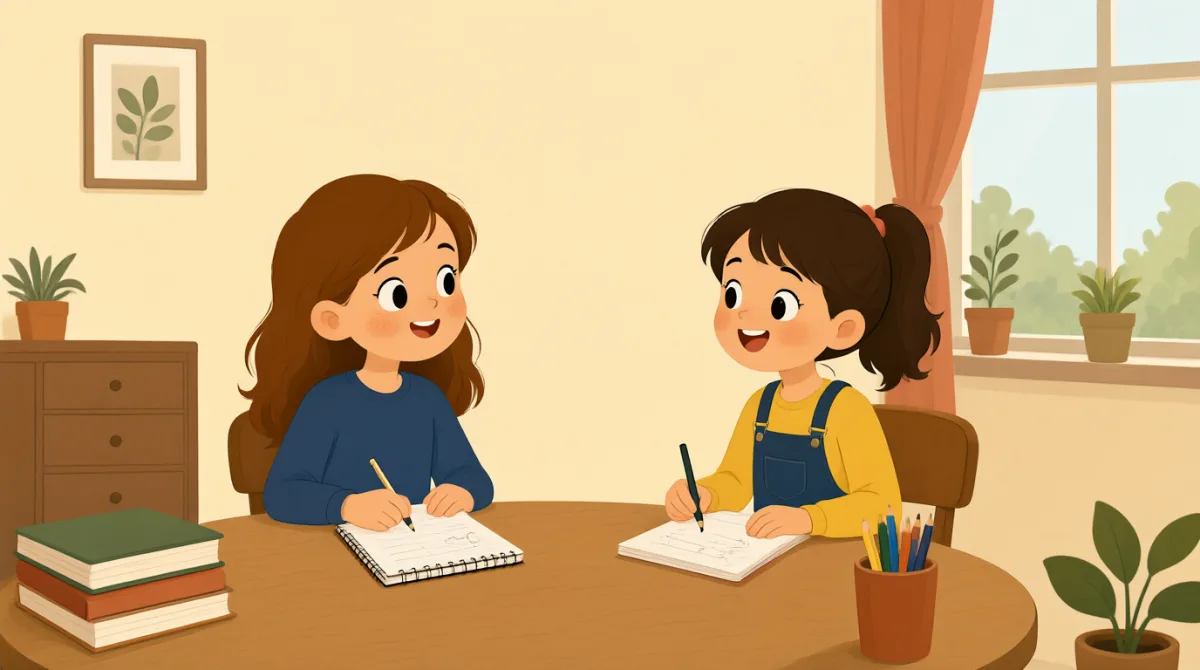

Mia, what do you do on Tuesday?

I work on Tuesday, too.
Do you have class on Tuesday?
No, I have English class on Wednesday.
What do you do on Thursday?
I work in the morning. Then I go home.
I have class on Thursday evening.
We have busy weeks!
Vocabulary7
- on Tuesday
This tells us which day something happens. Use “on” before a day of the week.
- work
Here, “work” means to do your job. You can say “I work on Monday” to talk about your schedule.
- have class
This means to attend a lesson. Use it to say when you study, for example, “I have class on Friday.”
- English class
This is a class where you study English. You can name another subject before “class,” too.
- in the morning
This tells us that something happens during the morning. You can use it to give a time in your schedule.
- go home
This means to travel to your home. Use “go” before a place to talk about where you are going.
- busy weeks
This means weeks with many things to do. You can say “My week is busy” to describe your schedule.
Key Sentences8
- 1
Mia, what do you do on Tuesday?
This is a useful way to ask about someone’s Tuesday schedule. Change “Tuesday” to another day to ask about a different day.
- 2
I work on Tuesday, too.
This tells someone that you work on Tuesday as well. Use “too” at the end to show that something is also true for you.
- 3
Do you have class on Tuesday?
This is a simple yes-or-no question about someone’s classes. Change the day to ask about another part of their schedule.
- 4
No, I have English class on Wednesday.
This gives a short answer and says when the class is. You can replace “English class” with another class or activity.
- 5
What do you do on Thursday?
Use this question to ask about someone’s plans or routine on a day. Replace “Thursday” with any day of the week.
- 6
I work in the morning.
This sentence says when you work. You can change “in the morning” to another time, such as “in the afternoon.”
- 7
Then I go home.
“Then” shows what happens next. Use it to describe the next step in your daily routine.
- 8
We have busy weeks!
This describes a schedule with many things to do. Use “We” when you are talking about yourself and another person.