After Work
퇴근 후
Jack asks Leo what he does after work. Leo talks about dinner and his evening routine.
잭이 레오에게 퇴근 후에 무엇을 하는지 물어봐요. 레오는 저녁 식사와 저녁 시간에 하는 일과에 대해 이야기해요.
대화8
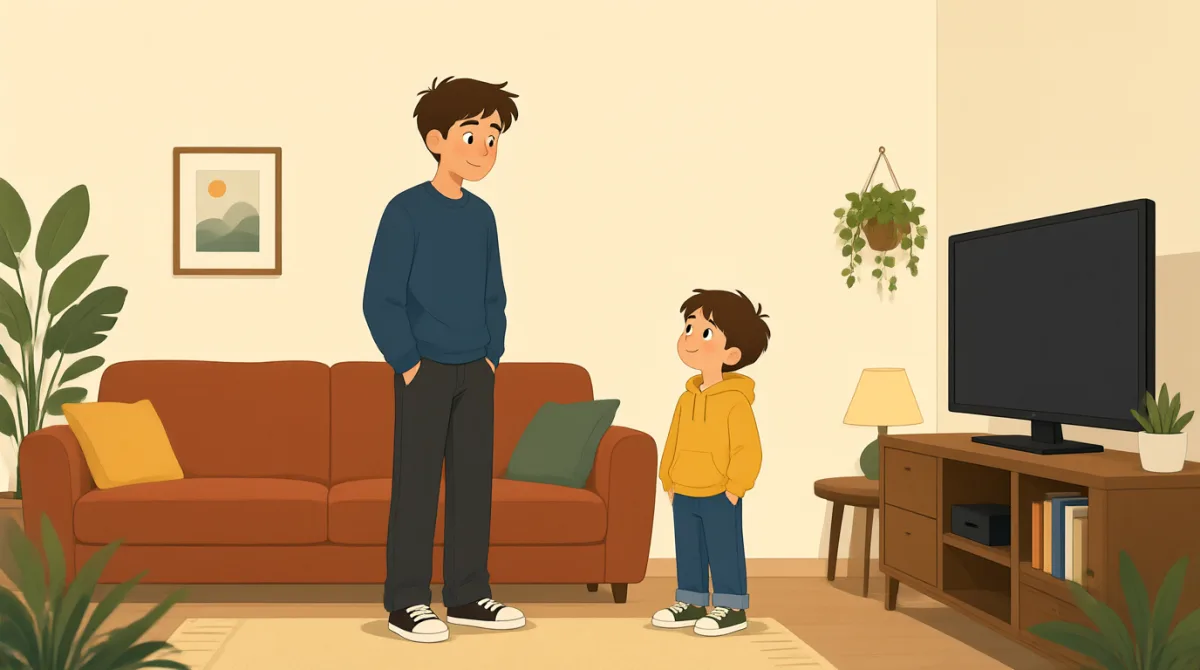

What do you do after work, Leo?
레오, 퇴근하고 뭐 해?

I go home and make dinner.
집에 가서 저녁을 만들어.
What do you usually eat?
보통 뭐 먹어?
I eat rice and chicken. Sometimes I have soup.
밥이랑 닭고기를 먹어. 가끔 수프도 먹어.
What do you do after dinner?
저녁 먹고 뭐 해?
I wash the dishes, then I watch TV.
설거지하고 나서 TV를 봐.
What time do you go to bed?
몇 시에 자?
I go to bed at ten. I get up early.
열 시에 자. 아침에 일찍 일어나.
어휘8
- after work퇴근 후
This means the time after you finish your job. Use it to talk about your plans in the evening.
일을 마친 다음 시간을 뜻해요. 저녁에 할 일을 이야기할 때 쓸 수 있어요.
- go home집에 가다
This means to travel to the place where you live. You can use it to talk about where you go after work.
자기가 사는 곳으로 가는 것을 뜻해요. 퇴근 후 어디에 가는지 이야기할 때 쓸 수 있어요.
- make dinner저녁을 만들다
This means to prepare the evening meal. You can say, “I make dinner at home.”
저녁 식사를 준비한다는 뜻이에요. “I make dinner at home.”이라고 말할 수 있어요.
- usually보통
This means something happens most of the time. Use it to ask about or describe a regular habit.
대부분의 경우에 어떤 일이 일어난다는 뜻이에요. 평소 습관을 묻거나 설명할 때 써요.
- sometimes가끔
This means something happens on some occasions, but not every time. Use it to talk about habits that change.
매번은 아니지만 어떤 일이 이따금 일어난다는 뜻이에요. 달라질 수 있는 습관을 이야기할 때 써요.
- wash the dishes설거지하다
This means to clean plates, cups, and other things used for eating. You can use it to describe a job you do after a meal.
식사에 쓴 접시나 컵 등을 씻는다는 뜻이에요. 식사 후에 하는 일을 설명할 때 쓸 수 있어요.
- go to bed자다
This means to get into bed to sleep. You can use it to say when you sleep.
잠을 자기 위해 침대에 눕는다는 뜻이에요. 몇 시에 자는지 말할 때 쓸 수 있어요.
- get up early일찍 일어나다
This means to wake up and leave your bed early in the day. Use it to talk about your morning routine.
하루 중 이른 시간에 잠에서 깨서 침대에서 일어난다는 뜻이에요. 아침 일과를 이야기할 때 써요.
핵심 문장8
- 1
What do you do after work, Leo?
레오, 퇴근하고 뭐 해?
Use this question to ask about someone's routine after their job. You can change “after work” to another time, such as “in the evening.”
상대방이 일을 마친 뒤에 하는 일을 물을 때 쓰는 질문이에요. “after work” 대신 “in the evening”처럼 다른 시간을 넣어도 돼요.
- 2
I go home and make dinner.
집에 가서 저녁을 만들어.
This sentence describes two things you do in order. You can replace “make dinner” with another activity, such as “watch TV.”
이 문장은 차례대로 하는 두 가지 일을 설명해요. “make dinner” 대신 “watch TV”처럼 다른 활동을 넣을 수 있어요.
- 3
What do you usually eat?
보통 뭐 먹어?
Use this question to ask what someone eats most of the time. You can replace “eat” with another activity to ask about a habit.
상대방이 대부분의 경우에 무엇을 먹는지 물을 때 쓰는 질문이에요. 습관을 물을 때 “eat”을 다른 활동으로 바꿔도 돼요.
- 4
Sometimes I have soup.
가끔 수프도 먹어.
Use this sentence to describe something you do or eat on some occasions. You can replace “soup” with another food or activity.
어떤 일을 하거나 음식을 먹는 경우가 이따금 있다고 말할 때 쓰는 문장이에요. “soup” 대신 다른 음식이나 활동을 넣을 수 있어요.
- 5
What do you do after dinner?
저녁 먹고 뭐 해?
Use this question to ask about someone's routine after a meal. You can change “after dinner” to “after work” or “after class.”
식사 후에 하는 일을 물을 때 쓰는 질문이에요. “after dinner”를 “after work”나 “after class”로 바꿀 수 있어요.
- 6
I wash the dishes, then I watch TV.
설거지하고 나서 TV를 봐.
This sentence tells someone about two activities in order. Use “then” to show what happens next.
이 문장은 차례대로 하는 두 가지 활동을 말해요. “then”을 써서 다음에 일어나는 일을 나타낼 수 있어요.
- 7
What time do you go to bed?
몇 시에 자?
Use this question to ask when someone goes to sleep. Answer with a time, such as “I go to bed at ten.”
상대방이 언제 잠자리에 드는지 물을 때 쓰는 질문이에요. “I go to bed at ten.”처럼 시간으로 대답할 수 있어요.
- 8
I get up early.
아침에 일찍 일어나.
Use this sentence to say that you wake up early in the day. You can replace “early” with a time, such as “at six.”
하루 중 이른 시간에 일어난다고 말할 때 쓰는 문장이에요. “early” 대신 “at six”처럼 시간을 넣을 수 있어요.