Saying Thank You
고맙다고 인사하기
Emma gives Jack's phone back and thanks him for helping her. Jack says it is no problem.
에마는 잭에게 휴대폰을 돌려주며 도와줘서 고맙다고 해요. 잭은 별일 아니라고 해요.
대화6
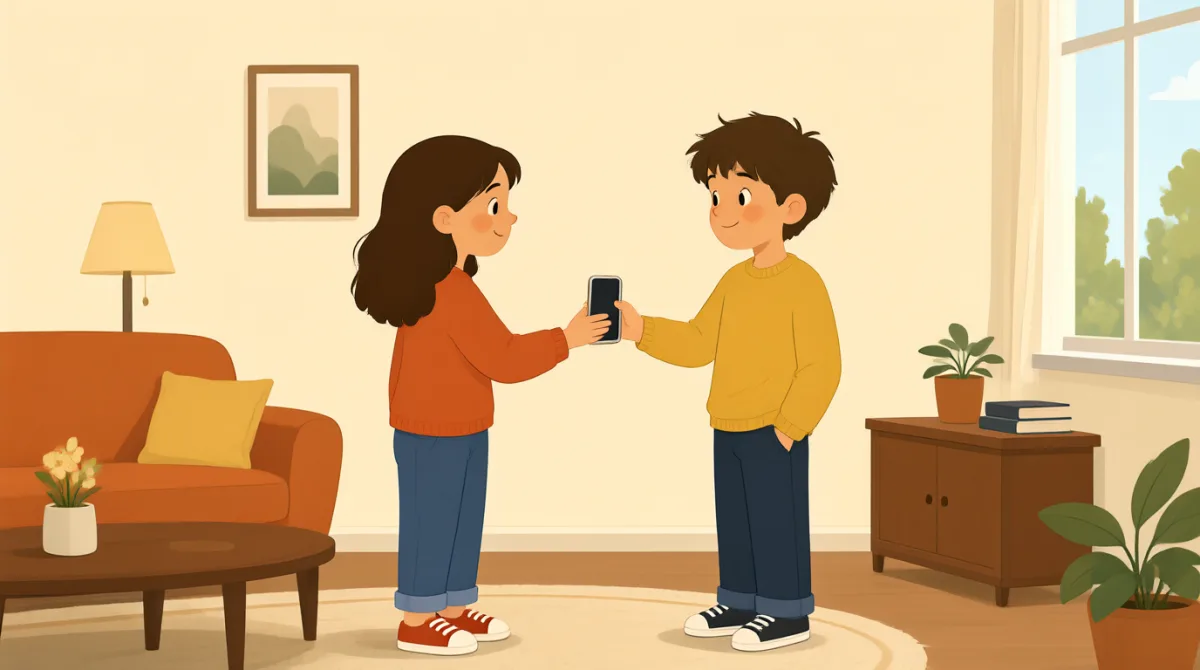

Here’s your phone. Thank you so much.
네 휴대폰이야. 정말 고마워.

You’re welcome. I’m glad I could help.
천만에. 도울 수 있어서 기뻤어.
I’m sorry I took so long.
너무 오래 걸려서 미안해.
It’s no problem. Did you reach them?
괜찮아. 그 사람들과 연락했어?
Yes, I did. Thank you again.
응, 연락했어. 다시 한번 고마워.
You’re welcome. Have a good day!
천만에. 좋은 하루 보내!
어휘8
- Here’s your phone.네 휴대폰이야.
Use this when you give someone their phone back.
누군가에게 휴대폰을 돌려줄 때 쓰는 말이에요.
- Thank you so much.정말 고마워.
This is a warm way to thank someone for helping you.
도움을 준 사람에게 따뜻하게 고마움을 전하는 말이에요.
- You’re welcome.천만에.
Say this after someone thanks you.
누군가 고맙다고 할 때 이렇게 답해요.
- I’m glad I could help.도울 수 있어서 기뻐.
Use this to say that you are happy you helped someone.
누군가를 도와줄 수 있어서 기쁘다고 말할 때 써요.
- I’m sorry I took so long.너무 오래 걸려서 미안해.
Say this when you want to apologize for taking more time than expected.
예상보다 시간이 더 걸려서 사과하고 싶을 때 하는 말이에요.
- It’s no problem.괜찮아.
Use this to tell someone that what they did was not a bother.
상대가 한 일이 번거롭지 않았다고 말할 때 써요.
- Did you reach them?그 사람들과 연락했어?
Ask this to find out if someone contacted the people they wanted to call.
전화하려던 사람들과 연락이 됐는지 물어볼 때 써요.
- Have a good day!좋은 하루 보내!
This is a friendly way to say goodbye and wish someone well.
친근하게 작별 인사를 하며 상대방의 좋은 하루를 바랄 때 쓰는 말이에요.
핵심 문장8
- 1
Here’s your phone.
네 휴대폰이야.
Use this when you return someone’s phone. You can also say, “Here’s your [item]” when giving something back.
누군가의 휴대폰을 돌려줄 때 쓰는 말이에요. 물건을 돌려줄 때는 “Here’s your [item]”이라고도 할 수 있어요.
- 2
Thank you so much.
정말 고마워.
This is a friendly way to show strong thanks. Use it when someone has helped you.
진심으로 고마운 마음을 친근하게 전하는 말이에요. 누군가가 도와줬을 때 쓰면 좋아요.
- 3
You’re welcome.
천만에.
This is a common reply to “Thank you.” Use it to show that you were happy to help.
“Thank you.”에 흔히 하는 답이에요. 기꺼이 도와줬다는 마음을 전할 때 써요.
- 4
I’m glad I could help.
도울 수 있어서 기뻐.
Use this to say you feel good about helping someone. You can also say, “I’m glad I could [help you].”
누군가를 도와줘서 기쁘다고 말할 때 써요. “I’m glad I could [help you].”라고도 할 수 있어요.
- 5
I’m sorry I took so long.
너무 오래 걸려서 미안해.
Use this to apologize for taking more time than expected. You can change “so long” to say what took time, such as “I’m sorry I took so long to call.”
예상보다 시간이 더 걸린 것에 대해 사과할 때 써요. 시간이 오래 걸린 일을 넣어 “so long”을 바꿀 수 있어요. 예를 들면 “I’m sorry I took so long to call.”이라고 할 수 있어요.
- 6
It’s no problem.
괜찮아.
This is a simple way to tell someone not to worry about a small problem or favor. Use it after an apology or thank-you.
작은 문제나 부탁은 신경 쓰지 않아도 된다고 간단히 말하는 표현이에요. 사과나 감사 인사를 들은 뒤에 써요.
- 7
Did you reach them?
그 사람들과 연락했어?
Use this question to ask if someone was able to contact people by phone. “Them” means the people they wanted to call.
누군가가 전화로 다른 사람들과 연락할 수 있었는지 물어볼 때 써요. “Them”은 그 사람이 전화하려던 사람들을 뜻해요.
- 8
Have a good day!
좋은 하루 보내!
Use this friendly phrase when saying goodbye. You can also change “day” to “weekend” or another time.
친근하게 작별 인사를 할 때 쓰는 표현이에요. “day” 대신 “weekend”나 다른 시간 표현을 넣어도 돼요.