Greeting the Teacher
先生にあいさつする
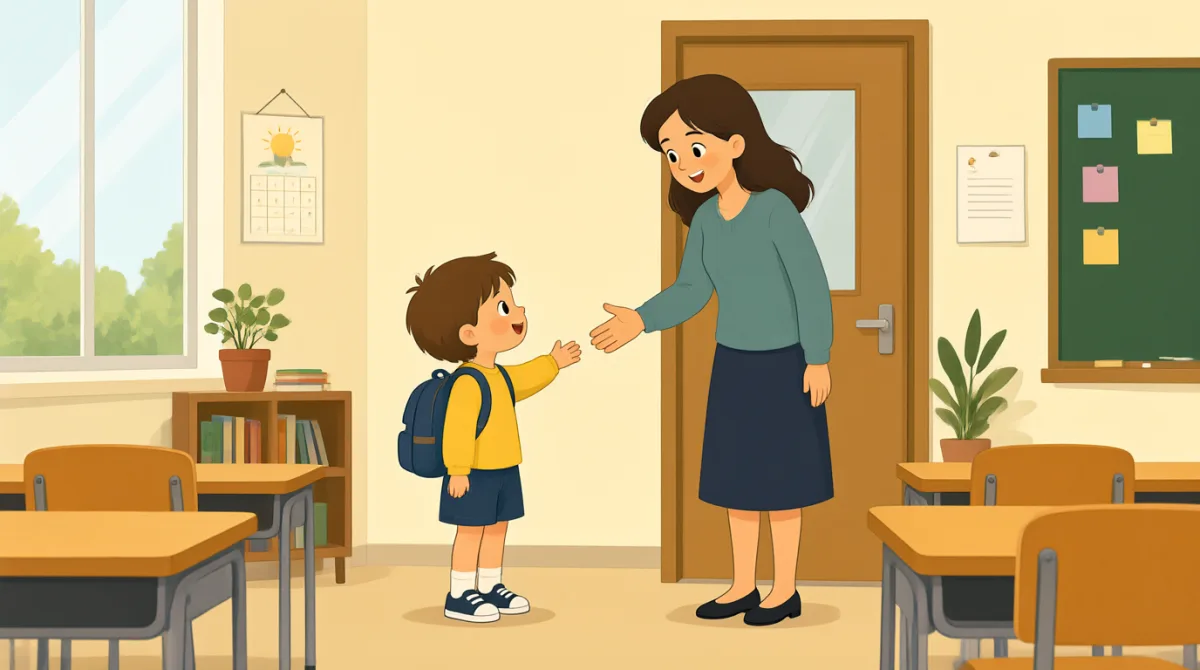
At the classroom door, Mia and her child greet the teacher. The teacher welcomes the child to school.
教室の入口で、ミアと子どもが先生にあいさつします。先生は子どもを歓迎します。
会話7

Good morning, Grace. This is Emma.
おはようございます、グレース。こちらはエマです。

Good morning, Emma. Welcome to school!
おはよう、エマ。学校へようこそ!

Good morning, Grace. I have my bag.
おはようございます、グレース。かばんを持ってきたよ。
Great! Are you ready for class?
いいね!授業の準備はできてる?
Yes, I am. I am ready.
うん、できてるよ。準備はばっちり。
Have a good day, Emma. Listen to Grace.
エマ、楽しい一日を過ごしてね。グレースの言うことを聞いてね。
We will have a lovely day. Come on in!
今日は楽しい一日になりそうですね。さあ、どうぞ入って!
語彙6
- Good morningおはようございます
A polite greeting used in the morning. You can say it when you meet a teacher or another person.
朝に使う丁寧なあいさつです。先生やほかの人に会ったときに使えます。
- Welcome to school学校へようこそ
This tells someone you are happy they are at school. You can say it to a new student.
相手が学校に来てくれてうれしい、という気持ちを伝える表現です。新しい生徒を迎えるときに使えます。
- my bag私のかばん
This means the bag belongs to me. You can use “my” before something that belongs to you.
「私のかばん」という意味です。自分の持ち物を表すときは、名詞の前に「my」を付けます。
- ready for class授業の準備ができている
This means prepared to start a lesson. You can ask, “Are you ready for class?”
授業を始める準備ができている、という意味です。“Are you ready for class?”(授業の準備はできていますか?)のように尋ねられます。
- Have a good dayよい一日を
This is a friendly way to wish someone a nice day. You can say it when you say goodbye.
相手がすてきな一日を過ごせるよう願う、親しみのある表現です。別れ際に使えます。
- Come on inどうぞ入って
This is a friendly way to invite someone to enter. You can use it at a classroom or home.
相手に中へ入るよう促す、親しみのある表現です。教室や家で使えます。
重要な文8
- 1
Good morning, Grace.
おはようございます、グレース。
Use this simple greeting when you meet someone in the morning. Change “Grace” to the person’s name.
朝に人と会ったときに使う、シンプルなあいさつです。“Grace”を相手の名前に変えて使いましょう。
- 2
This is Emma.
こちらはエマです。
Use this sentence to introduce someone. Say “This is” and then the person’s name.
人を紹介するときに使う文です。“This is”のあとに、その人の名前を言います。
- 3
Welcome to school!
学校へようこそ!
Use this to greet a student and make them feel welcome. You can change “school” to another place.
生徒にあいさつして、歓迎する気持ちを伝える表現です。“school”を別の場所に変えて使うこともできます。
- 4
I have my bag.
かばんを持っています。
Use this sentence to say that you have something with you. Change “my bag” to another item, like “my book.”
何かを持っていることを伝える文です。“my bag”を“my book”(私の本)のような別の持ち物に変えて使えます。
- 5
Are you ready for class?
授業の準備はできていますか?
Use this question to ask if someone is prepared for a lesson. You can change “class” to another activity.
授業を受ける準備ができているか尋ねる質問です。“class”を別の活動に変えて使うこともできます。
- 6
Yes, I am.
はい、できています。
Use this short answer to say yes to a question like “Are you ready?”
“Are you ready?”(準備はできていますか?)のような質問に、肯定して答える短い表現です。
- 7
Have a good day, Emma.
エマ、よい一日を。
Use this friendly phrase when saying goodbye. Add the person’s name at the end.
別れを告げるときに使う、親しみのある表現です。最後に相手の名前を付けましょう。
- 8
Come on in!
どうぞ入って!
Use this phrase to invite someone to come inside. It sounds friendly and welcoming.
中へ入るよう相手を招く表現です。親しみや歓迎の気持ちが伝わります。