The Child Wants Everything
बच्ची सब कुछ चाहती है
Emma gets excited and wants several toys, but Mia helps her choose one. They talk about what she will enjoy most.
एमा उत्साहित होकर कई खिलौने चाहती है, लेकिन मिया उसे एक खिलौना चुनने में मदद करती है। वे बात करती हैं कि उसे किस खिलौने से सबसे ज़्यादा मज़ा आएगा।
संवाद7
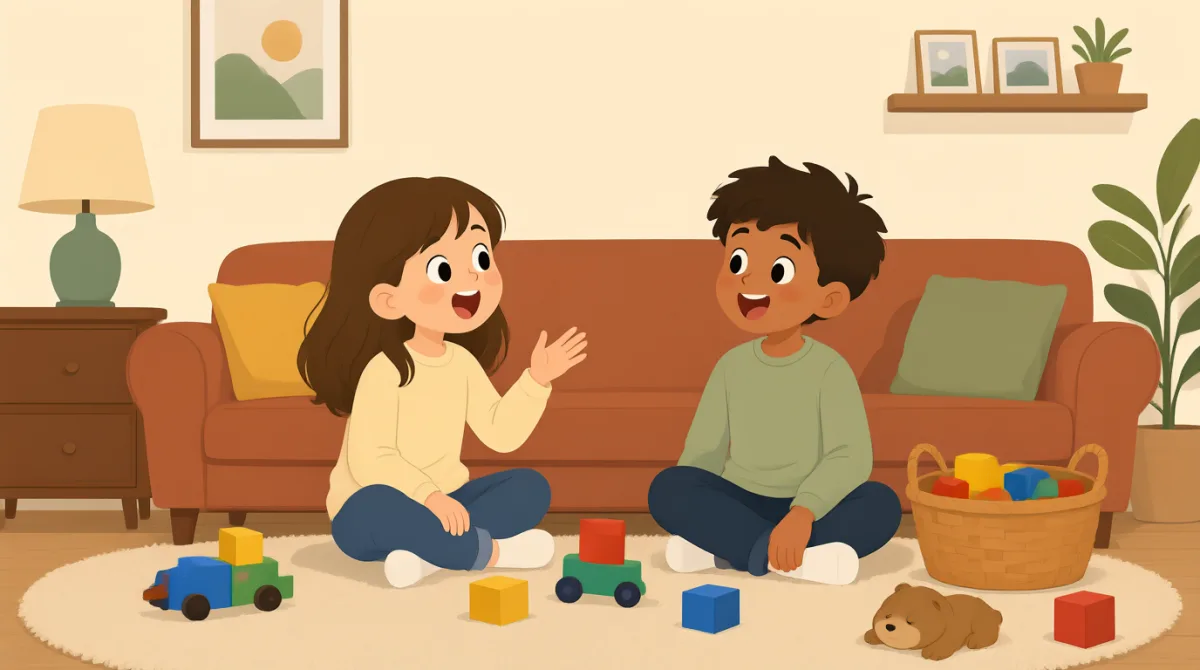

Mom, look! I want the pink doll, the puzzle, and that little car!
माँ, देखो! मुझे गुलाबी गुड़िया, पहेली और वह छोटी-सी गाड़ी चाहिए!

Those are all fun, but we can choose just one today.
ये सब मज़ेदार हैं, लेकिन आज हम सिर्फ़ एक चुन सकते हैं।
But I like all of them! The doll has a pretty dress.
लेकिन मुझे ये सब पसंद हैं! गुड़िया की पोशाक कितनी सुंदर है।
You already have dolls at home. Which one will you play with most?
तुम्हारे पास घर पर पहले से गुड़ियाँ हैं। इनमें से किससे तुम सबसे ज़्यादा खेलोगी?
Maybe the puzzle. I like putting the pieces together.
शायद पहेली से। मुझे उसके टुकड़े जोड़ना पसंद है।
That sounds like a good choice. You can do it with me, too.
यह अच्छा चुनाव लगता है। तुम इसे मेरे साथ भी कर सकती हो।
Okay, I’ll take the puzzle. Maybe I can finish it tonight!
ठीक है, मैं पहेली ले लूँगी। शायद मैं इसे आज रात पूरा कर लूँ!
शब्दावली7
- lookदेखो
Here, “look” gets someone’s attention and points out something interesting. Use it to show someone what you have noticed.
यहाँ “look” किसी का ध्यान खींचने और कोई दिलचस्प चीज़ दिखाने के लिए कहा गया है। जब तुम किसी को वह चीज़ दिखाना चाहो जिस पर तुम्हारी नज़र पड़ी है, तो इसका इस्तेमाल करो।
- choose just oneसिर्फ़ एक चुनना
This means to pick only one thing. Use “choose just one” when there is a limit on how many things you can have.
इसका मतलब है केवल एक चीज़ चुनना। जब तुम कितनी चीज़ें ले सकते हो, इसकी सीमा हो, तो “choose just one” का इस्तेमाल करो।
- at homeघर पर
This means in your house or where you live. You can use it to talk about things you own or do there.
इसका मतलब है अपने घर में या जहाँ तुम रहते हो वहाँ। अपनी चीज़ों या वहाँ की जाने वाली गतिविधियों के बारे में बात करते समय इसका इस्तेमाल कर सकते हो।
- play withके साथ खेलना
This means to use a toy or game for fun. For example, you can play with a doll or a puzzle.
इसका मतलब है मज़े के लिए किसी खिलौने या खेल का इस्तेमाल करना। उदाहरण के लिए, तुम गुड़िया या पहेली के साथ खेल सकते हो।
- putting the pieces togetherटुकड़ों को जोड़ना
This means joining puzzle pieces to make a picture. Use this phrase to describe how you work on a puzzle.
इसका मतलब है तस्वीर बनाने के लिए पहेली के टुकड़ों को जोड़ना। पहेली हल करते समय तुम क्या कर रहे हो, यह बताने के लिए इस वाक्यांश का इस्तेमाल करो।
- good choiceअच्छा चुनाव
A “good choice” is a decision that seems right or suitable. You can say this when you agree with someone’s decision.
“good choice” ऐसा फ़ैसला होता है जो सही या उपयुक्त लगे। जब तुम किसी के फ़ैसले से सहमत हो, तो यह कह सकते हो।
- take the puzzleपहेली लेना
Here, this means to choose and get the puzzle. You can use “I’ll take…” when deciding which item to buy or have.
यहाँ इसका मतलब है पहेली चुनकर लेना। कौन-सी चीज़ खरीदनी या लेनी है, यह तय करते समय “I’ll take…” का इस्तेमाल कर सकते हो।
मुख्य वाक्य7
- 1
I want the pink doll, the puzzle, and that little car!
मुझे गुलाबी गुड़िया, पहेली और वह छोटी-सी गाड़ी चाहिए!
Use “I want…” to say which things you would like. You can name one item or list several.
अपनी पसंद की चीज़ें बताने के लिए “I want…” का इस्तेमाल करो। तुम एक चीज़ का नाम ले सकते हो या कई चीज़ों की सूची बता सकते हो।
- 2
We can choose just one today.
आज हम सिर्फ़ एक चुन सकते हैं।
This is a gentle way to explain that there is a limit. You can replace “one” with another number or item.
सीमा समझाने का यह एक नरम तरीका है। “one” की जगह कोई दूसरी संख्या या चीज़ रख सकते हो।
- 3
Which one will you play with most?
तुम इनमें से किसके साथ सबसे ज़्यादा खेलोगी?
Use this question to ask which option someone will enjoy or use the most. “Which one” is useful when choosing between things.
किसी से यह पूछने के लिए इस सवाल का इस्तेमाल करो कि उसे कौन-सा विकल्प सबसे ज़्यादा पसंद आएगा या वह किसका सबसे ज़्यादा इस्तेमाल करेगा। चीज़ों में से चुनते समय “Which one” काम आता है।
- 4
I like putting the pieces together.
मुझे पहेली के टुकड़े जोड़ना पसंद है।
Use “I like + verb-ing” to talk about an activity you enjoy. You can replace “putting the pieces together” with another activity.
जिस काम को करने में तुम्हें मज़ा आता है, उसके बारे में बताने के लिए “I like + verb-ing” का इस्तेमाल करो। “putting the pieces together” की जगह किसी दूसरी गतिविधि का नाम रख सकते हो।
- 5
You can do it with me, too.
तुम इसे मेरे साथ भी कर सकती हो।
This offers to share an activity with someone. Use “You can do it with me” to invite someone to join you.
यह किसी के साथ मिलकर कोई गतिविधि करने का प्रस्ताव है। किसी को अपने साथ शामिल होने के लिए बुलाने के लिए “You can do it with me” का इस्तेमाल करो।
- 6
Okay, I’ll take the puzzle.
ठीक है, मैं पहेली ले लूँगी।
Use “I’ll take…” to make a choice or say what you will get. Replace “the puzzle” with the item you choose.
चुनाव करने या यह बताने के लिए कि तुम क्या लोगे, “I’ll take…” का इस्तेमाल करो। “the puzzle” की जगह अपनी चुनी हुई चीज़ का नाम रखो।
- 7
Maybe I can finish it tonight!
शायद मैं इसे आज रात पूरा कर लूँ!
Use “Maybe I can…” to talk about something you might be able to do. “Tonight” tells when you may do it.
किसी ऐसे काम के बारे में बात करने के लिए जिसे तुम शायद कर पाओ, “Maybe I can…” का इस्तेमाल करो। “Tonight” बताता है कि तुम इसे कब कर सकते हो।