Post-Activity Debrief
गतिविधि के बाद चर्चा
After a team building activity, the facilitator leads a discussion to reflect on the experience, share insights, and discuss how lessons learned can be applied back in the workplace.
टीम-बिल्डिंग गतिविधि के बाद, संचालक अनुभव पर विचार करने, सीख साझा करने और यह चर्चा करने के लिए बातचीत का नेतृत्व करता है कि सीखी गई बातों को कार्यस्थल पर कैसे लागू किया जा सकता है।
संवाद9
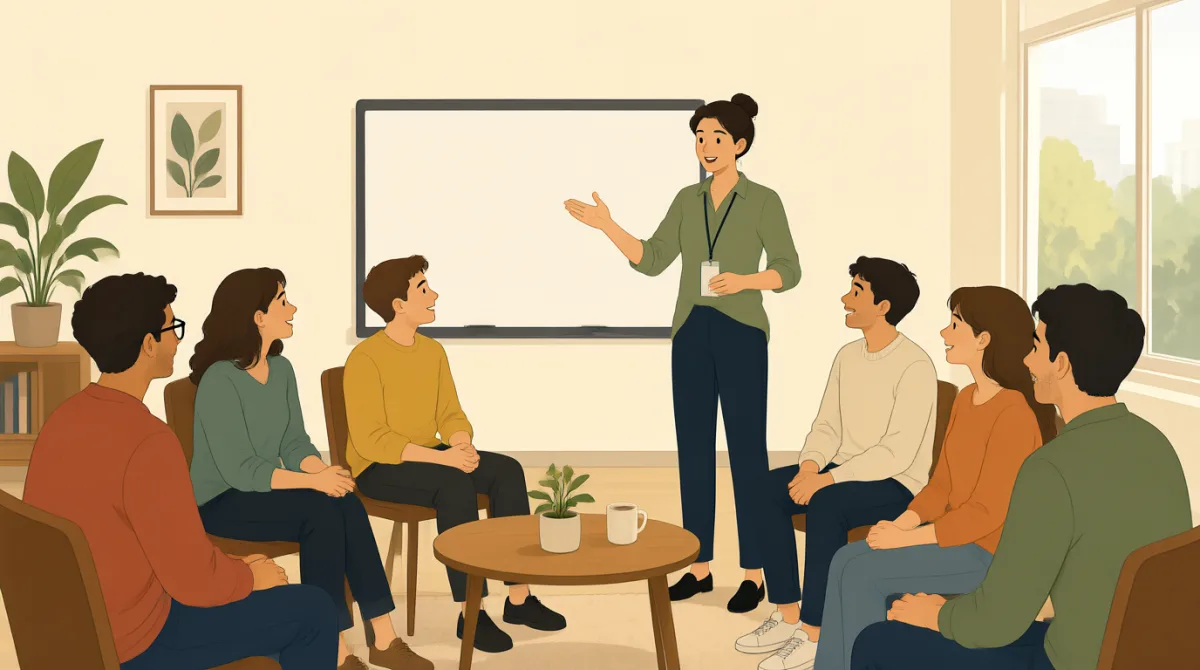

Alright everyone, thanks again for a truly engaging afternoon. Before we wrap up, I'd like to open the floor for a quick debrief. What were your key takeaways from today's activities?
ठीक है, सभी का एक बार फिर इस सचमुच दिलचस्प दोपहर के लिए धन्यवाद। समापन से पहले, मैं थोड़ी देर की चर्चा शुरू करना चाहूँगी। आज की गतिविधियों से आपको सबसे अहम सीख क्या मिली?

I can start. For me, the blindfolded obstacle course really highlighted the importance of clear communication and trust. It's one thing to say you trust your teammates, but quite another to literally put your faith in them to guide you.
मैं शुरू करता हूँ। मेरे लिए, आँखों पर पट्टी बाँधकर की गई बाधा-दौड़ ने साफ़ संवाद और भरोसे की अहमियत को सचमुच उजागर किया। अपने साथियों पर भरोसा है, यह कहना एक बात है, लेकिन उन्हें रास्ता दिखाने के लिए सचमुच उन पर निर्भर होना बिल्कुल दूसरी बात।

Definitely, Jack. And the tower building challenge showed me how crucial it is to listen to everyone's ideas, even if they seem unconventional at first. We had a breakthrough once we stopped sticking to just one plan.
बिल्कुल, जैक। और टावर बनाने की चुनौती ने मुझे दिखाया कि सबके विचारों को सुनना कितना ज़रूरी है, भले ही वे शुरू में आम सोच से हटकर लगें। जैसे ही हमने सिर्फ़ एक ही योजना पर अड़े रहना छोड़ा, हमें एक शानदार हल मिल गया।

To add to that, I think the time pressure during the escape room really emphasized how effective we can be under stress when we leverage each other's strengths. Everyone naturally stepped up in their area.
उसमें एक बात और जोड़ूँ तो, मुझे लगता है कि एस्केप रूम में समय की कमी ने सचमुच दिखाया कि तनाव में भी हम कितने प्रभावी हो सकते हैं, जब हम एक-दूसरे की खूबियों का सही इस्तेमाल करते हैं। हर किसी ने अपने-अपने क्षेत्र में स्वाभाविक रूप से ज़िम्मेदारी संभाली।
Those are excellent points. How do you all see these lessons translating back into our day-to-day work? Jack, you mentioned trust and communication. How can we apply that more effectively in our project teams?
बहुत अच्छी बातें हैं। आप सबको क्या लगता है, इन सीखों को हम अपने रोज़मर्रा के काम में कैसे लागू कर सकते हैं? जैक, तुमने भरोसे और संवाद की बात की। अपनी प्रोजेक्ट टीमों में हम इसे और प्रभावी ढंग से कैसे अपना सकते हैं?
I think it means being more explicit with our expectations and intentions, and actively asking for feedback. Like, instead of assuming someone knows what you mean, literally checking in, 'Did that make sense? Are we on the same page?'
मुझे लगता है, इसका मतलब है कि हम अपनी अपेक्षाएँ और इरादे ज़्यादा साफ़ तौर पर बताएँ और सक्रिय रूप से प्रतिक्रिया माँगें। जैसे, यह मान लेने के बजाय कि किसी को पता है आपका क्या मतलब है, सीधे पूछ लें, 'क्या मेरी बात समझ में आई? क्या हम दोनों एक ही बात समझ रहे हैं?'
And for team collaboration, maybe setting aside dedicated brainstorming time where no idea is a bad idea, even if they sound wild. That's how we found our solution in the tower challenge.
और टीम के साथ मिलकर काम करने के लिए, शायद विचार-मंथन के लिए अलग से समय तय करें, जहाँ कोई भी विचार बुरा न माना जाए, भले ही वह कितना भी अजीब लगे। टावर वाली चुनौती में हमें अपना हल इसी तरह मिला था।
I'd say identifying who has what strength within the team more proactively. If we know who excels at problem-solving under pressure, we can naturally delegate more effectively during crunch times.
मैं कहूँगा कि हमें पहले से ही यह पहचान लेना चाहिए कि टीम में किसकी क्या खूबी है। अगर हमें पता हो कि दबाव में समस्याएँ सुलझाने में कौन माहिर है, तो काम के सबसे व्यस्त समय में हम ज़िम्मेदारियाँ ज़्यादा स्वाभाविक और प्रभावी ढंग से बाँट सकते हैं।
Fantastic insights, everyone. It sounds like the core themes of communication, trust, inclusivity, and leveraging strengths resonated strongly today. Let's aim to consciously integrate these into our daily operations. Thank you all for your active participation!
बहुत बढ़िया बातें, सभी। लगता है कि आज संवाद, भरोसा, सबको शामिल करना और खूबियों का सही इस्तेमाल—ये मुख्य बातें आप सबको अच्छी तरह समझ आईं। आइए, इन्हें अपने रोज़मर्रा के काम में सोच-समझकर अपनाने की कोशिश करें। सक्रिय रूप से हिस्सा लेने के लिए आप सभी का धन्यवाद!
शब्दावली9
- debriefकार्यक्रम के बाद की समीक्षा
A meeting or discussion after an event to review what happened and share thoughts. Useful in work settings to reflect on experiences.
किसी घटना के बाद यह समीक्षा करने और विचार साझा करने के लिए होने वाली बैठक या चर्चा कि क्या हुआ था। अनुभवों पर विचार करने के लिए कार्यस्थल पर यह शब्द उपयोगी है।
- key takeawaysमुख्य सीख
The most important lessons or points learned from an activity. Commonly used in professional discussions to summarize insights.
किसी गतिविधि से मिली सबसे अहम सीख या बातें। पेशेवर चर्चाओं में मिली जानकारियों का सार बताने के लिए इसका आम तौर पर इस्तेमाल होता है।
- trustभरोसा
Belief in the reliability of others. In team building, it means relying on teammates without doubt, essential for collaboration.
दूसरों के भरोसेमंद होने का विश्वास। टीम-बिल्डिंग में इसका मतलब है बिना झिझक साथियों पर निर्भर होना, जो मिलकर काम करने के लिए बेहद ज़रूरी है।
- breakthroughबड़ी कामयाबी
A sudden important discovery or success. Often used when a team overcomes a challenge after trying new ideas.
अचानक हुई कोई अहम खोज या सफलता। इसका इस्तेमाल अक्सर तब होता है जब कोई टीम नए विचार आज़माने के बाद किसी चुनौती से पार पा लेती है।
- leverageसही इस्तेमाल करना
To use something to maximum advantage. In teams, it means utilizing each member's strengths to improve performance.
किसी चीज़ का अधिकतम फ़ायदा उठाना। टीम के संदर्भ में, इसका मतलब है बेहतर प्रदर्शन के लिए हर सदस्य की खूबियों का इस्तेमाल करना।
- explicitस्पष्ट
Clear and direct, leaving no room for confusion. Helpful in communication to avoid misunderstandings in projects.
साफ़ और सीधा, जिसमें भ्रम की गुंजाइश न हो। परियोजनाओं में ग़लतफ़हमी से बचने के लिए स्पष्ट संवाद मददगार होता है।
- feedbackप्रतिक्रिया
Opinions or comments given to improve something. Actively seeking it builds better team interactions in workplaces.
किसी चीज़ को बेहतर बनाने के लिए दी गई राय या टिप्पणी। सक्रिय रूप से प्रतिक्रिया माँगने से कार्यस्थल पर टीम के सदस्यों के बीच बेहतर तालमेल बनता है।
- proactivelyपहले से पहल करके
Taking action in advance to prevent problems. In teams, it means identifying strengths early to delegate tasks effectively.
समस्याओं को रोकने के लिए पहले ही कदम उठाना। टीमों में इसका मतलब है कि काम प्रभावी ढंग से बाँटने के लिए सदस्यों की खूबियों को पहले ही पहचान लिया जाए।
- inclusivityसबको शामिल करने की भावना
The practice of including everyone and valuing their ideas. Promotes diverse input in team discussions for better results.
सबको शामिल करने और उनके विचारों को महत्व देने का तरीका। इससे टीम की चर्चाओं में अलग-अलग राय सामने आती हैं और बेहतर नतीजे मिलते हैं।
मुख्य वाक्य8
- 1
What were your key takeaways from today's activities?
आज की गतिविधियों से आपको सबसे अहम सीख क्या मिली?
This is a question to start a discussion on main lessons learned. Useful for leading debriefs; it uses 'key takeaways' idiomatically to invite sharing in professional settings.
यह सवाल सीखी गई मुख्य बातों पर चर्चा शुरू करने के लिए पूछा जाता है। समीक्षा-चर्चा का नेतृत्व करते समय यह उपयोगी है; इसमें 'key takeaways' का इस्तेमाल मुहावरेदार अर्थ में, पेशेवर माहौल में लोगों को अपनी सीख साझा करने के लिए आमंत्रित करने हेतु किया गया है।
- 2
It's one thing to say you trust your teammates, but quite another to literally put your faith in them to guide you.
अपने साथियों पर भरोसा है, यह कहना एक बात है, लेकिन उन्हें रास्ता दिखाने के लिए सचमुच उन पर निर्भर होना बिल्कुल दूसरी बात।
This contrasts theory and practice using 'it's one thing... but quite another' structure. Great for emphasizing real application; helps learners express differences in experiences.
यह वाक्य 'it's one thing... but quite another' की बनावट से कहने और करने के बीच का अंतर दिखाता है। असल ज़िंदगी में किसी बात को लागू करने पर ज़ोर देने के लिए यह बढ़िया है; इससे आप अनुभवों के बीच अंतर बता सकते हैं।
- 3
We had a breakthrough once we stopped sticking to just one plan.
जैसे ही हमने सिर्फ़ एक ही योजना पर अड़े रहना छोड़ा, हमें एक शानदार हल मिल गया।
Describes a success after change, with 'once' showing timing. Useful for sharing team insights; teaches conditional success in collaborative stories.
यह बदलाव के बाद मिली सफलता बताता है, और 'once' से यह दिखता है कि सफलता कब मिली। टीम से मिली सीख साझा करते समय यह उपयोगी है; इससे सहयोग की कहानियों में सफलता की शर्त बताना सीखते हैं।
- 4
How do you all see these lessons translating back into our day-to-day work?
आप सबको क्या लगता है, इन सीखों को हम अपने रोज़मर्रा के काम में कैसे लागू कर सकते हैं?
Asks for opinions on applying ideas practically, using 'translating back into' for adaptation. Ideal for workplace reflections; encourages discussion on real-life use.
यह व्यावहारिक रूप से विचारों को लागू करने के बारे में राय पूछता है। इसमें 'translating back into' का इस्तेमाल विचारों को नई परिस्थिति के अनुसार ढालने के अर्थ में है। कार्यस्थल पर अनुभवों पर चर्चा के लिए यह बढ़िया है और असल ज़िंदगी में इन विचारों के इस्तेमाल पर बातचीत को बढ़ावा देता है।
- 5
Instead of assuming someone knows what you mean, literally checking in, 'Did that make sense? Are we on the same page?'
यह मान लेने के बजाय कि किसी को पता है आपका क्या मतलब है, सीधे पूछ लें, 'क्या मेरी बात समझ में आई? क्या हम दोनों एक ही बात समझ रहे हैं?'
Suggests better communication habits with examples. 'On the same page' is an idiom for agreement; practical for project teams to confirm understanding and avoid errors.
यह उदाहरणों के ज़रिए बेहतर संवाद की आदतें सुझाता है। 'On the same page' एक मुहावरा है जिसका मतलब है एक ही बात से सहमत या अवगत होना। प्रोजेक्ट टीमों में समझ की पुष्टि करके ग़लतियों से बचने के लिए यह उपयोगी है।
- 6
Setting aside dedicated brainstorming time where no idea is a bad idea.
विचार-मंथन के लिए अलग से समय तय करना, जहाँ कोई भी विचार बुरा न माना जाए।
Proposes a team activity rule using gerund 'setting aside' for suggestions. 'No idea is a bad idea' encourages creativity; useful in meetings to foster open collaboration.
यह 'setting aside' के क्रिया के -ing रूप का इस्तेमाल करके टीम के लिए एक नियम सुझाता है। 'No idea is a bad idea' रचनात्मकता को बढ़ावा देता है; बैठकों में खुले तौर पर मिलकर काम करने के लिए यह उपयोगी है।
- 7
If we know who excels at problem-solving under pressure, we can naturally delegate more effectively during crunch times.
अगर हमें पता हो कि दबाव में समस्याएँ सुलझाने में कौन माहिर है, तो काम के सबसे व्यस्त समय में हम ज़िम्मेदारियाँ ज़्यादा प्रभावी ढंग से बाँट सकते हैं।
Uses conditional 'if... we can' for advice on team roles. 'Crunch times' means busy periods; teaches leveraging strengths in stressful work scenarios.
इसमें टीम की भूमिकाओं के बारे में सलाह देने के लिए 'if... we can' वाली शर्त का इस्तेमाल है। 'Crunch times' का मतलब काम के बहुत व्यस्त दौर से है। इससे तनावपूर्ण कामकाजी हालात में टीम की खूबियों का सही इस्तेमाल करना सीखते हैं।
- 8
Let's aim to consciously integrate these into our daily operations.
आइए, इन्हें अपने रोज़मर्रा के काम में सोच-समझकर अपनाने की कोशिश करें।
Motivational call to action with 'let's aim to' for goals. 'Consciously integrate' means deliberately applying; perfect for ending discussions with commitment.
यह 'let's aim to' के ज़रिए लक्ष्य तय करने का प्रेरक आह्वान है। 'Consciously integrate' का मतलब है सोच-समझकर किसी चीज़ को अपने काम में शामिल करना। चर्चा के अंत में प्रतिबद्धता जताने के लिए यह एकदम सही है।