During the Watering Task
पौधों को पानी देते समय
You are watering the plants and notice something unexpected, like a plant looking unwell, or a minor issue with the house. You decide whether to contact your neighbor.
आप पौधों को पानी दे रहे हैं और कुछ अनपेक्षित देखते हैं, जैसे कोई पौधा मुरझाया हुआ लगना या घर में कोई छोटी-मोटी समस्या। आप तय करते हैं कि पड़ोसी से संपर्क करना है या नहीं।
संवाद8
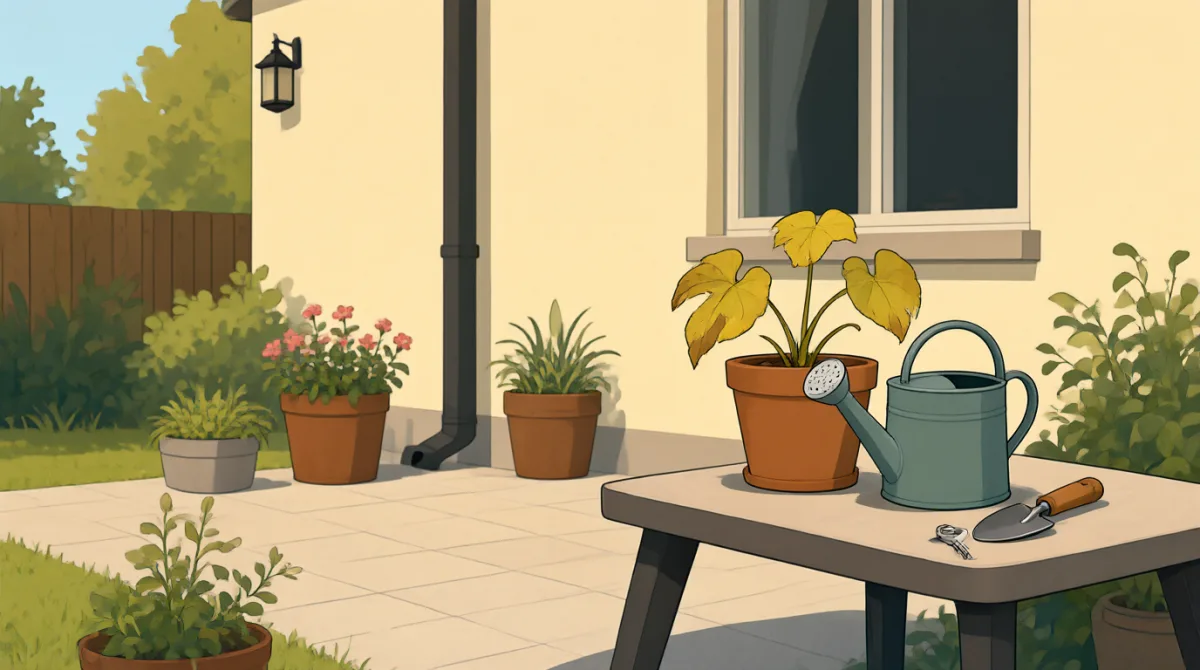

Hmm, I'm watering the plants, but this one looks quite droopy. It's the small one by the window.
हम्म, मैं पौधों को पानी दे रही हूँ, लेकिन यह वाला कुछ ज़्यादा ही मुरझाया हुआ लग रहा है। खिड़की के पास वाला छोटा पौधा।

Oh really? Is it the one with the purple flowers? I thought I gave all of them a good drink before leaving.
अच्छा? क्या वह बैंगनी फूलों वाला पौधा है? मुझे लगा था कि जाने से पहले मैंने सबको अच्छी तरह पानी दिया था।
No, it's a green leafy one, actually. Not flowering. It just seems a bit... sad. Should I give it more water, or less?
नहीं, दरअसल यह हरी पत्तियों वाला पौधा है। इसमें फूल नहीं आते। बस थोड़ा... उदास-सा लग रहा है। इसे और पानी दूँ या कम?
Oh, that's my fern! It can be a bit dramatic sometimes. It usually perks up after a good watering. Just make sure the soil is damp, but not completely soaked. Thanks for noticing!
अरे, वह मेरा फ़र्न है! कभी-कभी थोड़ा नखरे करता है। अच्छी तरह पानी देने के बाद आम तौर पर फिर से तरोताज़ा हो जाता है। बस ध्यान रखना कि मिट्टी नम रहे, लेकिन पूरी तरह पानी से लबालब न हो। ध्यान देने के लिए शुक्रिया!
Got it. I'll make sure to give it a little extra attention then. Is there anything else I should look out for, or anything else you need me to do while you're away?
समझ गई। फिर मैं इसका थोड़ा और ध्यान रखूँगी। तुम्हारे जाने के दौरान मुझे किसी और चीज़ पर ध्यान देना चाहिए या कोई और काम करना है?
No, that's everything for now. Just watering the plants is a huge help. I really appreciate you looking after things while I'm gone.
नहीं, अभी के लिए बस इतना ही। पौधों को पानी देना भी बहुत बड़ी मदद है। मेरे यहाँ न होने पर तुम चीज़ों का ध्यान रख रही हो, इसकी मैं सचमुच बहुत कद्र करता हूँ।
No problem at all! Happy to help out. Enjoy your trip!
कोई बात नहीं! मदद करके खुशी हुई। तुम्हारी यात्रा अच्छी रहे!
Thanks, Emma! See you when I get back.
शुक्रिया, एम्मा! लौटने पर मिलते हैं।
शब्दावली7
- droopyमुरझाया हुआ
Describes something that hangs down or looks weak, like a plant without enough water. Use it when talking about plants or tired things, e.g., 'The flowers look droopy.'
यह किसी ऐसी चीज़ के लिए कहते हैं जो नीचे लटकी हुई या कमज़ोर दिखे, जैसे पानी की कमी से पौधा। पौधों या थकी हुई चीज़ों के बारे में बात करते समय इसका इस्तेमाल करें, जैसे 'The flowers look droopy.' (फूल मुरझाए हुए लग रहे हैं।)
- fernफ़र्न
A type of green plant with soft, feathery leaves that often grows in shady places. It's common in homes, and you can say 'My fern needs more light.'
यह एक तरह का हरा पौधा है, जिसकी पत्तियाँ मुलायम और पंख जैसी होती हैं। यह अक्सर छायादार जगहों पर उगता है और घरों में भी आम है। आप कह सकते हैं 'My fern needs more light.' (मेरे फ़र्न को और रोशनी चाहिए।)
- perks upफिर से तरोताज़ा होना
Means to become more cheerful or healthy, like a plant standing up after watering. Use in casual talk: 'She perked up after eating.'
इसका मतलब है फिर से खुशमिज़ाज या स्वस्थ दिखने लगना, जैसे पानी देने के बाद पौधा सीधा हो जाए। बोलचाल में इसका इस्तेमाल करें: 'She perked up after eating.' (खाना खाने के बाद वह फिर से तरोताज़ा हो गई।)
- dampनम
Slightly wet, but not too much, like soil after light watering. It's useful for giving care instructions: 'Keep the cloth damp.'
इसका मतलब है थोड़ा गीला, लेकिन बहुत ज़्यादा नहीं—जैसे हल्का पानी देने के बाद मिट्टी। देखभाल के निर्देश देते समय यह शब्द काम आता है: 'Keep the cloth damp.' (कपड़े को नम रखो।)
- soakedपूरी तरह भीगा हुआ
Completely wet through, often too much. Opposite of damp; say 'Don't get your clothes soaked in the rain.'
इसका मतलब है पूरी तरह गीला हो जाना, अक्सर ज़रूरत से ज़्यादा। यह “नम” का उलटा है। कहें: 'Don't get your clothes soaked in the rain.' (बारिश में अपने कपड़े पूरी तरह मत भिगो लेना।)
- look out forपर नज़र रखना
To watch carefully for something, like problems or signs. Practical for advice: 'Look out for traffic when crossing.'
इसका मतलब है किसी चीज़, जैसे समस्या या संकेत, पर ध्यान से नज़र रखना। सलाह देते समय यह काम आता है: 'Look out for traffic when crossing.' (सड़क पार करते समय यातायात पर नज़र रखना।)
- appreciateकद्र करना
To feel grateful for help or something nice. Common in polite thanks: 'I appreciate your time.'
इसका मतलब है मदद या किसी अच्छी चीज़ के लिए आभारी महसूस करना। विनम्रता से धन्यवाद देते समय यह आम है: 'I appreciate your time.' (मैं आपके समय की कद्र करता हूँ।)
मुख्य वाक्य8
- 1
Hmm, I'm watering the plants, but this one looks quite droopy.
हम्म, मैं पौधों को पानी दे रही हूँ, लेकिन यह वाला कुछ ज़्यादा ही मुरझाया हुआ लग रहा है।
This sentence reports an observation during a task, using 'but' to contrast actions and problems. Useful for describing issues politely; practice with present continuous tense for ongoing actions.
इस वाक्य में किसी काम के दौरान दिखी बात बताई गई है। 'but' का इस्तेमाल काम और समस्या के बीच अंतर दिखाने के लिए हुआ है। किसी परेशानी का विनम्रता से ज़िक्र करने के लिए यह उपयोगी है। जारी काम बताने वाले present continuous tense का अभ्यास करें।
- 2
Oh really? Is it the one with the purple flowers?
अच्छा? क्या वह बैंगनी फूलों वाला पौधा है?
A natural way to show surprise and ask for clarification with a yes/no question. Great for conversations; 'really?' softens questions and builds rapport.
यह हैरानी जताने और हाँ-या-नहीं वाले सवाल से बात साफ़ करने का स्वाभाविक तरीका है। बातचीत में 'really?' सवाल को थोड़ा नरम बनाता है और आपसी अपनापन बढ़ाता है।
- 3
It just seems a bit... sad. Should I give it more water, or less?
बस थोड़ा... उदास-सा लग रहा है। इसे और पानी दूँ या कम?
Uses 'seem' to express uncertainty and a tag question for advice. Helpful for seeking guidance; the pause with '...' shows hesitation, common in casual speech.
'seem' का इस्तेमाल अनिश्चितता जताने के लिए और सलाह माँगने के लिए सवाल करने के ढंग का इस्तेमाल किया गया है। मार्गदर्शन माँगते समय यह उपयोगी है। '...' वाला ठहराव झिझक दिखाता है, जो आम बोलचाल में स्वाभाविक है।
- 4
It usually perks up after a good watering.
अच्छी तरह पानी देने के बाद आम तौर पर यह फिर से तरोताज़ा हो जाता है।
Describes a typical result with 'usually' for habits and 'after' for sequence. Useful for giving plant care tips; shows conditional improvement patterns.
'usually' किसी आम आदत या नतीजे के लिए और 'after' घटनाओं का क्रम बताने के लिए इस्तेमाल हुआ है। पौधों की देखभाल के सुझाव देते समय यह काम आता है और बताता है कि देखभाल के बाद सुधार कैसे होता है।
- 5
Just make sure the soil is damp, but not completely soaked.
बस ध्यान रखना कि मिट्टी नम रहे, लेकिन पूरी तरह पानी से लबालब न हो।
An imperative sentence with 'make sure' for instructions, using 'but' for contrast. Practical for advice; emphasizes balance in actions like watering.
'make sure' के साथ निर्देश देने वाला वाक्य है और 'but' से दो बातों के बीच अंतर दिखाया गया है। सलाह देने में यह उपयोगी है और पानी देने जैसे काम में सही संतुलन पर ज़ोर देता है।
- 6
Is there anything else I should look out for, or anything else you need me to do?
क्या मुझे किसी और चीज़ पर ध्यान देना चाहिए, या कोई और काम है जो तुम मुझसे करवाना चाहते हो?
A polite question using 'or' to offer options and 'should' for suggestions. Ideal for checking responsibilities; teaches how to confirm tasks in helpful scenarios.
यह विनम्र सवाल विकल्प देने के लिए 'or' और सुझाव पूछने के लिए 'should' का इस्तेमाल करता है। ज़िम्मेदारियों के बारे में पूछने और मददगार स्थिति में काम पक्का करने के लिए यह अच्छा तरीका है।
- 7
I really appreciate you looking after things while I'm gone.
मेरे यहाँ न होने पर तुम चीज़ों का ध्यान रख रही हो, इसकी मैं सचमुच बहुत कद्र करता हूँ।
Expresses thanks with 'appreciate' and gerund 'looking after' for ongoing help. Very useful in neighborly or service contexts; 'really' adds emphasis for sincerity.
'appreciate' से आभार जताया गया है और 'looking after' का इस्तेमाल लगातार मदद के लिए हुआ है। पड़ोसियों या सेवा से जुड़े हालात में यह बहुत काम आता है। 'really' बात में सच्चाई और ज़ोर जोड़ता है।
- 8
No problem at all! Happy to help out.
कोई बात नहीं! मदद करके खुशी हुई।
A friendly response to thanks, using 'no problem' idiom and 'happy to' for willingness. Common in daily interactions; reinforces positive, supportive language.
धन्यवाद का दोस्ताना जवाब देने के लिए 'no problem' मुहावरे और मदद करने की खुशी जताने के लिए 'happy to' का इस्तेमाल हुआ है। रोज़मर्रा की बातचीत में यह आम है और अपनापन व मदद का भाव दिखाता है।