Coordinating Tasks During an Event
कार्यक्रम के दौरान कामों का समन्वय
Volunteers are working together on a task, discussing who does what, asking for help, or delegating responsibilities.
स्वयंसेवक मिलकर काम कर रहे हैं और चर्चा कर रहे हैं कि कौन क्या करेगा, मदद कैसे माँगनी है और ज़िम्मेदारियाँ कैसे बाँटनी हैं।
संवाद8
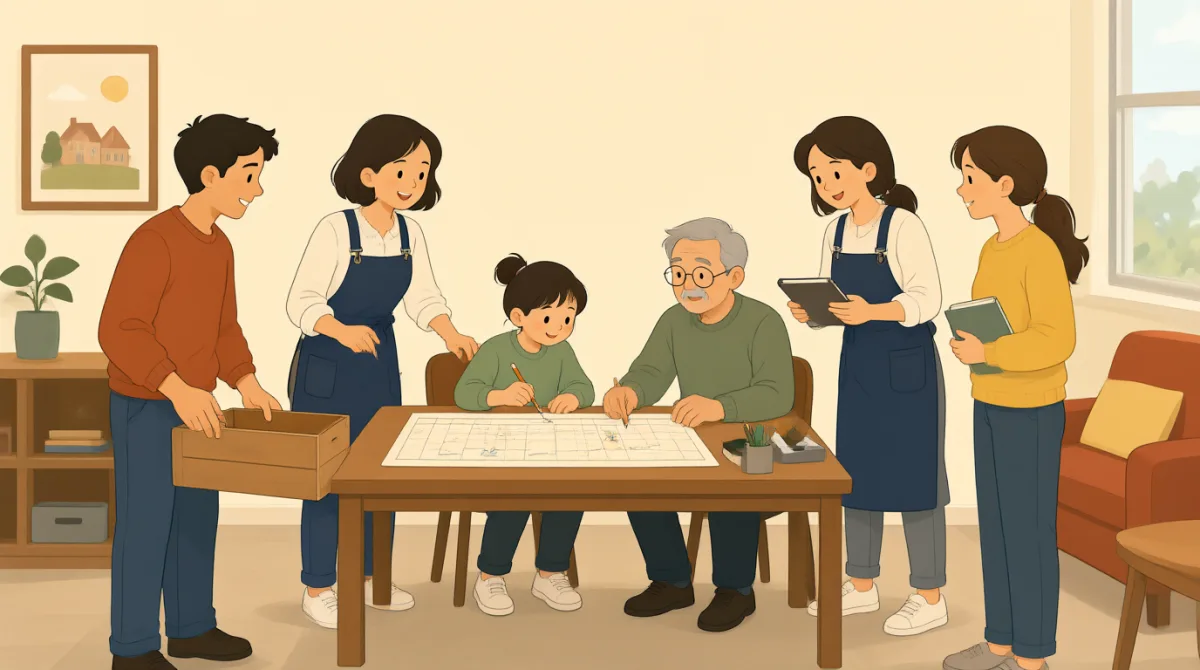

Okay, team, we need to sort these donated clothes. Should we divide them by gender first, or by type?
ठीक है, टीम, हमें दान में मिले इन कपड़ों को छाँटना है। पहले इन्हें पुरुषों और महिलाओं के कपड़ों में बाँटें या कपड़ों के प्रकार के हिसाब से?

I think sorting by gender first makes more sense. It's a quicker initial pass. Then we can go into jackets, shirts, pants, etc.
मुझे लगता है कि पहले पुरुषों और महिलाओं के कपड़ों में छाँटना ज़्यादा ठीक रहेगा। इससे शुरुआती छँटाई जल्दी हो जाएगी। फिर हम जैकेट, कमीज़, पैंट वगैरह अलग कर सकते हैं।

Good call. So, Jack, can you take the men's clothing section? Emma, maybe you can handle the women's?
अच्छा सुझाव है। तो जैक, क्या तुम पुरुषों के कपड़ों वाला हिस्सा संभाल सकते हो? एमा, क्या तुम महिलाओं के कपड़ों वाला हिस्सा देख लोगी?

Sure, I can do that. Do we have enough bins for each category once we start sub-sorting?
ज़रूर, मैं कर लूँगी। जब हम आगे कपड़ों को अलग-अलग छाँटना शुरू करेंगे, तो क्या हर श्रेणी के लिए पर्याप्त डिब्बे हैं?
That's a good point, Emma. I'll grab some more from the storage room if we're short. Mia, would you mind helping me with that in a minute?
अच्छी बात कही, एमा। अगर डिब्बे कम पड़े तो मैं स्टोररूम से कुछ और ले आऊँगा। मिया, क्या तुम थोड़ी देर में इसमें मेरी मदद करोगी?
Not at all, I'm happy to help. Just let me finish this first pile here.
बिलकुल, मुझे मदद करके खुशी होगी। बस मुझे यहाँ कपड़ों का यह पहला ढेर निपटा लेने दो।
And remember, if anything looks damaged or stained, put it in the separate 'don't keep' pile over there.
और याद रखना, अगर कोई चीज़ फटी हुई या दाग़दार लगे, तो उसे वहाँ अलग रखे ‘नहीं रखना’ वाले ढेर में डाल देना।
Got it. So, just to confirm, gender first, then type, and watch out for damaged items. Sounds good!
समझ गई। तो बस पक्का कर लूँ—पहले पुरुषों और महिलाओं के कपड़े, फिर कपड़ों के प्रकार, और खराब चीज़ों पर ध्यान देना है। ठीक है!
शब्दावली7
- sortछाँटना
To organize items into groups based on certain features, like size or color. In volunteering, it's useful for arranging donations efficiently.
किसी खास गुण, जैसे आकार या रंग, के आधार पर चीज़ों को अलग-अलग समूहों में रखना। स्वयंसेवा के काम में इससे दान की चीज़ों को व्यवस्थित करना आसान हो जाता है।
- divideबाँटना
To separate things into parts or categories. Use it when planning how to split tasks or items, such as 'divide the work by team members.'
चीज़ों को अलग-अलग हिस्सों या श्रेणियों में बाँटना। काम या सामान को बाँटने की योजना बनाते समय इस शब्द का इस्तेमाल करें, जैसे 'divide the work by team members.' (काम को टीम के सदस्यों के बीच बाँटना।)
- genderलिंग
Refers to male or female categories. In this context, it's used for sorting clothes to make distribution easier in community events.
यह पुरुष या महिला की श्रेणी को बताता है। इस संदर्भ में, सामुदायिक कार्यक्रमों में कपड़ों को बाँटने में आसानी के लिए उन्हें छाँटते समय इसका इस्तेमाल किया गया है।
- handleसंभालना
To deal with or manage something. Commonly used when assigning responsibilities, like 'Can you handle this task?' in group work.
किसी चीज़ से निपटना या उसकी ज़िम्मेदारी लेना। समूह में काम बाँटते समय इसका इस्तेमाल आम है, जैसे 'Can you handle this task?' (क्या तुम यह काम संभाल सकते हो?)
- binsडिब्बे
Containers like boxes or baskets for storing or organizing items. Practical in volunteering for keeping categories separate and tidy.
चीज़ों को रखने या व्यवस्थित करने के लिए इस्तेमाल होने वाले बक्से या टोकरियाँ। स्वयंसेवा के काम में इनसे अलग-अलग श्रेणियों की चीज़ें साफ़-सुथरी और अलग रखी जा सकती हैं।
- categoryश्रेणी
A group of things with similar features. Useful for discussing organization, such as 'Sort by category' in events or shopping.
ऐसी चीज़ों का समूह जिनमें कुछ समान गुण हों। चीज़ों को व्यवस्थित करने की बात करते समय यह शब्द काम आता है, जैसे 'Sort by category' (श्रेणी के हिसाब से छाँटें)।
- damagedक्षतिग्रस्त
Broken or harmed in some way. In volunteering, check for damaged items to decide if they can be kept or discarded.
जो किसी तरह से टूटा या खराब हुआ हो। स्वयंसेवा के काम में यह देखने के लिए चीज़ों की जाँच करें कि वे क्षतिग्रस्त तो नहीं हैं और उन्हें रखना चाहिए या फेंकना।
मुख्य वाक्य7
- 1
Should we divide them by gender first, or by type?
क्या हम पहले इन्हें लिंग के आधार पर बाँटें या प्रकार के आधार पर?
This is a question using 'should we' to suggest options and seek agreement. It's useful for coordinating tasks in teams, helping learners practice polite decision-making in group settings.
'should we' का इस्तेमाल करके यह सवाल विकल्प सुझाता है और दूसरों की सहमति माँगता है। टीम में काम का समन्वय करते समय यह उपयोगी है और समूह में विनम्रता से फ़ैसले लेने का अभ्यास कराता है।
- 2
I think sorting by gender first makes more sense.
मुझे लगता है कि पहले लिंग के आधार पर छाँटना ज़्यादा ठीक रहेगा।
Uses 'I think... makes more sense' to give an opinion politely. Great for intermediate learners to express preferences during planning, with 'makes more sense' showing logical reasoning.
'I think... makes more sense' का इस्तेमाल करके आप विनम्रता से अपनी राय देते हैं। योजना बनाते समय अपनी पसंद बताने के लिए यह वाक्य उपयोगी है। 'makes more sense' से पता चलता है कि आपकी पसंद के पीछे तर्क है।
- 3
Good call. So, Jack, can you take the men's clothing section?
अच्छा सुझाव है। तो जैक, क्या तुम पुरुषों के कपड़ों वाला हिस्सा संभाल सकते हो?
'Good call' means 'good idea' or 'smart suggestion.' This sentence delegates tasks using 'can you take' for assigning roles. Useful in volunteering to agree and assign responsibilities smoothly.
'Good call' का मतलब है 'अच्छा विचार' या 'समझदारी भरा सुझाव'। इस वाक्य में 'can you take' के ज़रिए किसी को ज़िम्मेदारी दी जाती है। स्वयंसेवा के काम में सहमति जताने और काम आसानी से बाँटने के लिए यह उपयोगी है।
- 4
Do we have enough bins for each category once we start sub-sorting?
जब हम आगे अलग-अलग छाँटना शुरू करेंगे, तो क्या हर श्रेणी के लिए पर्याप्त डिब्बे हैं?
A question checking resources with 'do we have enough' and 'once we start' for future actions. Helps learners ask about preparation in team coordination, focusing on practical needs.
इस सवाल में 'do we have enough' का इस्तेमाल यह पूछने के लिए है कि साधन पर्याप्त हैं या नहीं, और 'once we start' आगे होने वाली कार्रवाई का ज़िक्र करता है। टीम के साथ काम का समन्वय करते समय तैयारी और व्यावहारिक ज़रूरतों के बारे में पूछने के लिए यह उपयोगी है।
- 5
Would you mind helping me with that in a minute?
क्या तुम थोड़ी देर में इसमें मेरी मदद करोगी?
'Would you mind' is a polite way to request help. 'In a minute' means soon. This is essential for asking assistance without pressure, common in collaborative activities like volunteering.
'Would you mind' मदद माँगने का विनम्र तरीका है। 'In a minute' का मतलब है 'थोड़ी देर में'। स्वयंसेवा जैसे मिल-जुलकर किए जाने वाले कामों में बिना दबाव डाले मदद माँगने के लिए यह वाक्य उपयोगी है।
- 6
Not at all, I'm happy to help.
बिलकुल, मुझे मदद करके खुशी होगी।
'Not at all' politely means 'no problem.' This response shows willingness to assist. Useful for intermediate learners to reply positively to requests, building teamwork language.
'Not at all' विनम्रता से 'कोई बात नहीं' कहने का तरीका है। यह जवाब बताता है कि आप मदद करने के लिए तैयार हैं। किसी के अनुरोध का सकारात्मक जवाब देने और टीम में मिलकर काम करने की भाषा सीखने के लिए यह उपयोगी है।
- 7
So, just to confirm, gender first, then type, and watch out for damaged items.
तो बस पक्का कर लूँ—पहले लिंग के आधार पर, फिर प्रकार के आधार पर छाँटना है और क्षतिग्रस्त चीज़ों पर ध्यान देना है।
'Just to confirm' summarizes to ensure understanding. Uses 'watch out for' meaning 'be careful about.' Ideal for recapping instructions in group work, reinforcing clarity and caution.
'Just to confirm' का इस्तेमाल यह पक्का करने के लिए बात का सार दोहराने में होता है कि सभी को ठीक से समझ आया है। 'Watch out for' का मतलब है 'किसी चीज़ को लेकर सावधान रहना'। समूह में काम करते समय निर्देशों को दोहराने और सावधानी बरतने की याद दिलाने के लिए यह उपयोगी है।