Discussing Daily Life & Customs
مناقشة الحياة اليومية والعادات
Participants share insights into their daily routines, common social customs, etiquette, and peculiar traditions, comparing and contrasting them.
يتبادل المشاركون أفكارهم حول روتينهم اليومي، والعادات الاجتماعية الشائعة، وآداب التعامل، والتقاليد الغريبة، ويقارنون بينها.
حوار9
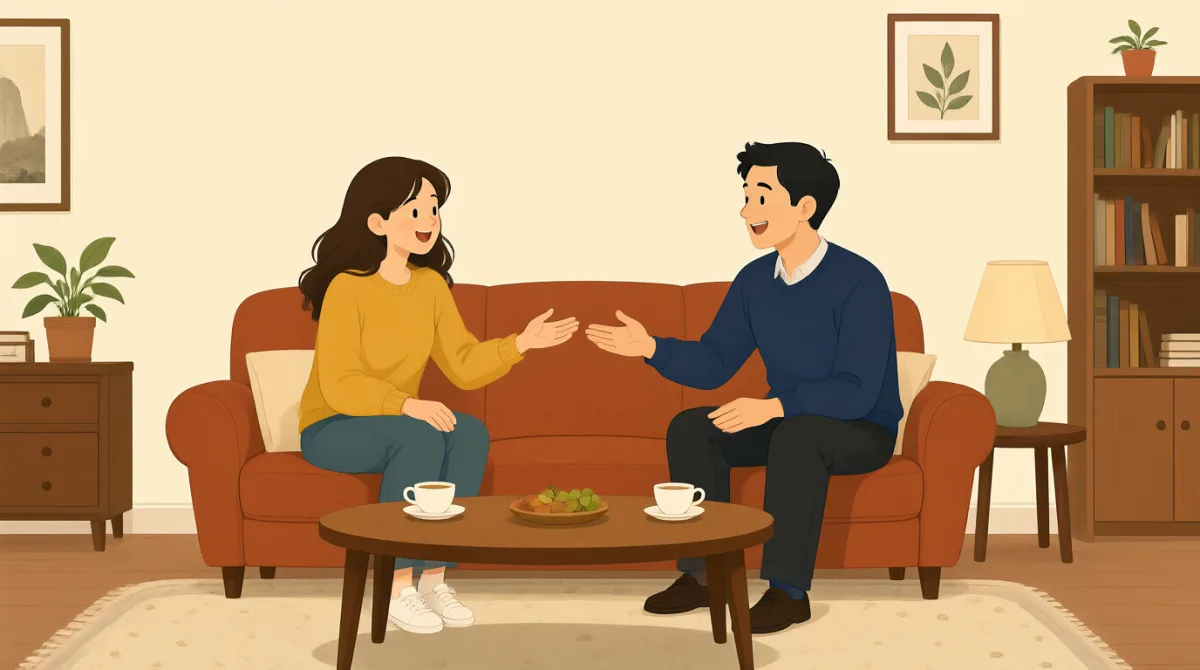

It's been so interesting discussing cultural differences. I'm curious, Jack, what's a daily custom in your country that might seem unusual to outsiders?
كان الحديث عن الاختلافات الثقافية ممتعًا جدًا. أشعر بالفضول يا Jack: ما العادة اليومية في بلدك التي قد تبدو غير مألوفة للغرباء؟

That's a good question, Emma. I'd say taking off your shoes immediately when entering someone's home is a big one. It's considered quite rude not to, even if they say it's fine.
سؤال جيد يا Emma. أعتقد أن خلع الحذاء فور دخول منزل أحدهم من أبرز هذه العادات. ويُعدّ عدم خلعه تصرفًا فظًا جدًا، حتى لو قالوا لك إن الأمر لا بأس به.
Ah, yes! We do that in some homes too, but it's not a universal rule. What about social etiquette around meals? For instance, do you typically share dishes or have individual plates?
آه، أجل! نفعل ذلك في بعض المنازل عندنا أيضًا، لكنه ليس قاعدة عامة. وماذا عن آداب التعامل الاجتماعية على مائدة الطعام؟ مثلًا، هل تتشاركون عادةً الأطباق أم يتناول كل شخص الطعام في طبقه؟
Definitely sharing. It's very common to have multiple communal dishes in the center of the table, and everyone helps themselves. It's seen as a way to bond and enjoy the meal together.
بالتأكيد نتشارك الطعام. فمن الشائع جدًا وضع عدة أطباق مشتركة في وسط المائدة، ويأخذ كل شخص منها ما يريد. ويُنظر إلى ذلك على أنه وسيلة للتقارب والاستمتاع بالوجبة معًا.
That sounds lovely and very communal. In my country, while we might share appetizers, main courses are usually individual. It highlights that difference in collective vs. individualistic cultures.
يبدو ذلك جميلًا، ويعكس روح المشاركة فعلًا. في بلدي، قد نتشارك المقبلات، لكن الأطباق الرئيسية عادةً ما تكون فردية. وهذا يبرز الاختلاف بين الثقافات الجماعية والفردية.
Exactly. And a peculiar tradition for us is 'siesta' in some regions, where shops close for a few hours in the afternoon for a break. It's perplexing to tourists but a part of life for locals.
صحيح. ومن تقاليدنا الغريبة «السييستا» في بعض المناطق، حيث تُغلق المتاجر لبضع ساعات بعد الظهر للاستراحة. وقد يحير ذلك السياح، لكنه جزء من حياة السكان المحليين.
I've heard about siesta! It sounds like a great way to avoid the hottest part of the day and recharge. We tend to power through the entire workday, often with just a short lunch break.
سمعت عن السييستا! تبدو طريقة رائعة لتجنب أشد ساعات النهار حرارة واستعادة النشاط. أما نحن، فنواصل العمل طوال اليوم عادةً، ولا نأخذ سوى استراحة قصيرة لتناول الغداء.
Yes, it definitely helps. It's fascinating how these small daily differences really paint a picture of our broader cultural values, isn't it?
أجل، إنها مفيدة بالتأكيد. من المدهش كيف ترسم هذه الاختلافات اليومية الصغيرة صورةً لقيمنا الثقافية الأوسع، أليس كذلك؟
Absolutely. It makes you realize how much unspoken understanding shapes our daily interactions. Thanks for sharing, Jack!
بالتأكيد. فهي تجعلك تدرك إلى أي حد يوجّه التفاهم الضمني تفاعلاتنا اليومية. شكرًا على المشاركة يا Jack!
المفردات12
- curiousفضوليّ
Feeling eager to know or learn something. Use it when you want to ask about new things, like 'I'm curious about your culture.'
تعني الرغبة في معرفة شيء أو تعلّمه. استخدمها عندما تريد السؤال عن أمور جديدة، مثل: 'I'm curious about your culture.' (أشعر بالفضول لمعرفة ثقافتك.)
- unusualغير مألوف
Something that is not common or typical. It's useful for describing customs that seem strange to others, such as 'That's an unusual habit.'
يُقال عن شيء غير شائع أو غير معتاد. تفيد في وصف العادات التي تبدو غريبة للآخرين، مثل: 'That's an unusual habit.' (هذه عادة غير مألوفة.)
- rudeفظّ
Behavior that is impolite or disrespectful. In cultural talks, say 'It's rude not to do that' to explain social rules.
يصف سلوكًا غير مهذب أو ينمّ عن قلة احترام. عند الحديث عن العادات الثقافية، يمكنك قول: 'It's rude not to do that' (من الفظّ ألا تفعل ذلك) لشرح قواعد التعامل الاجتماعي.
- etiquetteآداب التعامل
The rules for polite behavior in social situations. Use it when discussing manners, like 'What's the etiquette at dinner?'
قواعد السلوك المهذب في المواقف الاجتماعية. استخدمها عند الحديث عن اللباقة، مثل: 'What's the etiquette at dinner?' (ما آداب التعامل على مائدة العشاء؟)
- communalمشترك
Shared by a group of people. It's practical for describing shared activities, such as 'We have communal meals.'
يصف شيئًا يتقاسمه أفراد مجموعة. يفيد في وصف الأنشطة التي يشارك فيها الناس، مثل: 'We have communal meals.' (نتناول وجبات مشتركة.)
- bondيرسّخ الألفة
A close relationship or connection between people. Use it to talk about how activities bring people together, like 'Sharing food helps us bond.'
تعني رابطة أو صلة وثيقة بين أشخاص. استخدمها للحديث عن كيفية تقريب الأنشطة بين الناس، مثل: 'Sharing food helps us bond.' (يساعدنا تقاسم الطعام على ترسيخ الألفة.)
- peculiarغريب
Strange or unusual in an interesting way. Good for cultural discussions, e.g., 'That's a peculiar tradition in your country.'
يعني غريبًا أو غير مألوف على نحو يثير الاهتمام. يناسب الحديث عن الثقافات، مثل: 'That's a peculiar tradition in your country.' (ذلك تقليد غريب في بلدك.)
- siestaقيلولة الظهيرة
A short rest or nap in the early afternoon, common in some warm climates. Mention it when comparing daily routines, like 'Do you take a siesta?'
استراحة قصيرة أو غفوة في أوائل فترة بعد الظهر، وهي شائعة في بعض المناطق الدافئة. اذكرها عند مقارنة الروتين اليومي، مثل: 'Do you take a siesta?' (هل تأخذ قيلولة الظهيرة؟)
- perplexingمحير
Confusing or hard to understand. Use it for things that puzzle outsiders, such as 'The custom is perplexing to tourists.'
يعني مربكًا أو يصعب فهمه. استخدمه لوصف أمور تحيّر الغرباء، مثل: 'The custom is perplexing to tourists.' (هذه العادة محيرة للسياح.)
- rechargeيستعيد نشاطه
To rest and regain energy. It's useful in talks about breaks, like 'A siesta helps you recharge.'
تعني أن يستريح ويستعيد طاقته. تفيد في الحديث عن الاستراحات، مثل: 'A siesta helps you recharge.' (تساعدك قيلولة الظهيرة على استعادة نشاطك.)
- fascinatingمثير للاهتمام
Very interesting and attracting attention. Say it to show admiration, e.g., 'Cultural differences are fascinating.'
يعني شديد الإمتاع وجاذبًا للانتباه. استخدمه للتعبير عن الإعجاب، مثل: 'Cultural differences are fascinating.' (الاختلافات الثقافية مثيرة للاهتمام.)
- unspokenضمنيّ
Not said directly but understood. Use it for implied rules, like 'There are unspoken understandings in interactions.'
يعني شيئًا لا يُقال صراحةً، لكنه مفهوم. استخدمه للحديث عن القواعد التي يُفهم معناها دون التصريح بها، مثل: 'There are unspoken understandings in interactions.' (هناك تفاهمات ضمنية في التفاعلات.)
الجمل الأساسية9
- 1
It's been so interesting discussing cultural differences.
كان الحديث عن الاختلافات الثقافية ممتعًا جدًا.
This is a present perfect continuous tense sentence ('It's been... discussing') to talk about an ongoing experience. It's useful to start a conversation positively and show enthusiasm about a topic.
هذه جملة في زمن المضارع التام المستمر ('It's been... discussing') للحديث عن تجربة مستمرة. تفيد في بدء الحديث بإيجابية وإظهار الحماس للموضوع.
- 2
What's a daily custom in your country that might seem unusual to outsiders?
ما العادة اليومية في بلدك التي قد تبدو غير مألوفة للغرباء؟
A question using 'what's' for asking about examples, with 'might seem' to suggest possibility. Great for inviting someone to share personal cultural insights in discussions.
يُستخدم السؤال 'what's' لطلب أمثلة، بينما تشير عبارة 'might seem' إلى احتمال. وهو مناسب لدعوة شخص إلى مشاركة جوانب من ثقافته خلال النقاش.
- 3
It's considered quite rude not to.
ويُعدّ عدم فعل ذلك فظًا جدًا.
Passive voice ('It's considered') to describe general opinions, with 'not to' for negation. Use this pattern to explain social norms without blaming individuals.
يُستخدم المبني للمجهول في 'It's considered' لوصف آراء شائعة، وتُستخدم 'not to' للنفي. يفيد هذا التركيب في شرح الأعراف الاجتماعية دون لوم أشخاص بعينهم.
- 4
What about social etiquette around meals?
وماذا عن آداب التعامل الاجتماعية على مائدة الطعام؟
A casual question starting with 'What about' to change or add to the topic. It's practical for smoothly transitioning in conversations about customs.
سؤال عفوي يبدأ بعبارة 'What about' للانتقال إلى موضوع أو إضافة نقطة إليه. ويساعد على الانتقال بسلاسة عند الحديث عن العادات.
- 5
It's seen as a way to bond and enjoy the meal together.
ويُنظر إلى ذلك على أنه وسيلة للتقارب والاستمتاع بالوجبة معًا.
Passive structure ('It's seen as') for common views, with infinitives ('to bond and enjoy'). Useful for explaining the purpose of traditions in cultural exchanges.
يُستخدم تركيب المبني للمجهول 'It's seen as' للتعبير عن آراء شائعة، وتأتي بعده أفعال المصدر 'to bond and enjoy'. يفيد هذا في شرح الغاية من التقاليد خلال التبادل الثقافي.
- 6
It highlights that difference in collective vs. individualistic cultures.
وهذا يبرز الاختلاف بين الثقافات الجماعية والفردية.
Simple present tense ('highlights') for general truths, using 'vs.' for comparison. This sentence is key for contrasting cultures and showing deeper insights.
يُستخدم المضارع البسيط في 'highlights' للتعبير عن حقائق عامة، وتُستخدم 'vs.' للمقارنة. هذه الجملة مفيدة للموازنة بين الثقافات وإبراز جوانب أعمق.
- 7
It's perplexing to tourists but a part of life for locals.
إنها محيرة للسياح، لكنها جزء من حياة السكان المحليين.
Contrast with 'but' to show differences in perception, using 'to tourists' for groups. Ideal for describing how customs confuse outsiders in comparative talks.
تُستخدم 'but' لإظهار التباين بين وجهات النظر، وتحدد 'to tourists' الفئة المقصودة. تلائم هذه العبارة وصف العادات التي تحيّر الغرباء في المقارنات الثقافية.
- 8
It's fascinating how these small daily differences really paint a picture of our broader cultural values.
من المدهش كيف ترسم هذه الاختلافات اليومية الصغيرة صورةً لقيمنا الثقافية الأوسع.
Noun clause ('how these...') after 'fascinating' to explain why something is interesting, with 'paint a picture' as an idiom for illustrating. Use it to conclude discussions thoughtfully.
تأتي جملة فرعية تبدأ بـ 'how these...' بعد 'fascinating' لتوضيح سبب إثارة الأمر للاهتمام، وتُستخدم العبارة الاصطلاحية 'paint a picture' بمعنى توضيح صورة أو رسمها. استخدمها لاختتام النقاش بتأمل.
- 9
It makes you realize how much unspoken understanding shapes our daily interactions.
إنها تجعلك تدرك إلى أي حد يوجّه التفاهم الضمني تفاعلاتنا اليومية.
Causative structure ('makes you realize') with a noun clause ('how much...'), emphasizing impact. Helpful for reflecting on cultural influences in conversations.
يستخدم التركيب السببي 'makes you realize' مع جملة فرعية اسمية تبدأ بـ 'how much...' للتأكيد على الأثر. يفيد في التأمل في تأثير الثقافة خلال الأحاديث.