Meeting Your Classmates
Conociendo a tus compañeros de clase
On her first day, Emma meets Mia and Leo in class. They introduce themselves and talk about why they are learning English.
En su primer día, Emma conoce a Mia y Leo en clase. Se presentan y hablan de por qué están aprendiendo inglés.
Diálogo9
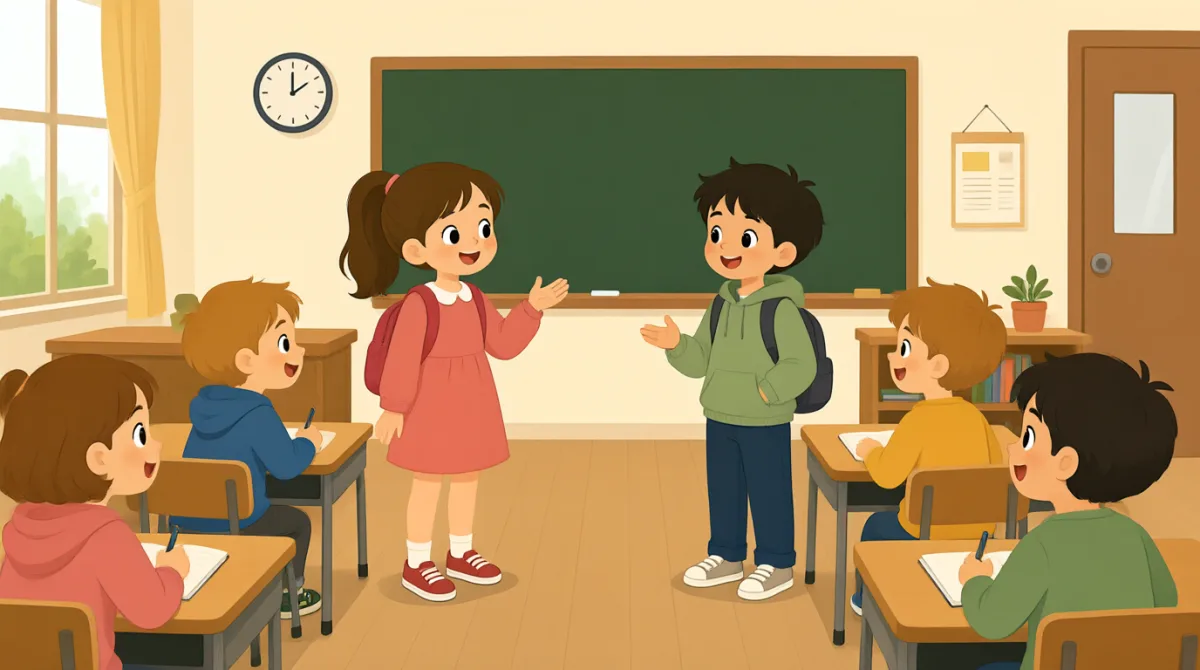

Hi, I’m Emma. Is this the beginner English class?
Hola, soy Emma. ¿Esta es la clase de inglés para principiantes?

Yes, it is. I’m Mia. It’s nice to meet you.
Sí, así es. Soy Mia. Encantada de conocerte.

I’m Leo. This is my first class, too. I’m a little nervous.
Soy Leo. También es mi primera clase. Estoy un poco nervioso.
Me too! Why are you learning English?
¡Yo también! ¿Por qué estás aprendiendo inglés?
I need it for work, and I want to travel more.
Lo necesito para el trabajo y quiero viajar más.
I want to speak with more people when I travel.
Quiero hablar con más gente cuando viajo.
I’m learning for work, too. I hope to speak more easily.
Yo también estoy aprendiendo inglés por el trabajo. Espero poder hablar con más facilidad.
We can practice together after class. That might help us feel more comfortable.
Podemos practicar juntos después de clase. Eso podría ayudarnos a sentirnos más cómodos.
Great idea! Let’s sit together and help each other out.
¡Buena idea! Sentémonos juntos y ayudémonos.
Vocabulario8
- beginner English classclase de inglés para principiantes
A class for people who are just starting to learn English. Use this phrase to check that you are in the right class.
Una clase para quienes recién empiezan a aprender inglés. Usa esta frase para comprobar que estás en la clase correcta.
- nice to meet youencantado/a de conocerte
A friendly phrase to say when you meet someone for the first time. You can use it when you introduce yourself.
Una frase amable que se dice cuando conoces a alguien por primera vez. Puedes usarla después de presentarte.
- nervousnervioso/a
Feeling worried or unsure about something. You can say you feel nervous before a new class or activity.
Sentir preocupación o inseguridad por algo. Puedes decir que estás nervioso antes de una clase o actividad nueva.
- learning Englishaprender inglés
Studying English to improve your skills. Use this phrase to talk about why you are studying.
Estudiar inglés para mejorar tus habilidades. Usa esta frase para hablar de por qué estás estudiando.
- travel moreviajar más
Go on more trips or visit more places. You can use it when talking about a travel goal.
Hacer más viajes o visitar más lugares. Puedes usar esta expresión para hablar de una meta relacionada con los viajes.
- practice togetherpracticar juntos
Study or repeat something with another person. You can suggest it to a classmate who is learning the same thing.
Estudiar o repetir algo con otra persona. Puedes proponérselo a un compañero que está aprendiendo lo mismo.
- feel more comfortablesentirse más cómodo/a
Feel more relaxed and less worried. Use this phrase to describe how practice or support can help.
Sentirse más relajado y menos preocupado. Usa esta frase para describir cómo la práctica o el apoyo pueden ayudar.
- help each other outayudarse mutuamente
Give one another help. You can use this friendly phrase when people agree to work together.
Darse ayuda unos a otros. Puedes usar esta frase amistosa cuando varias personas acuerdan trabajar juntas.
Frases clave8
- 1
Is this the beginner English class?
¿Esta es la clase de inglés para principiantes?
Use this question to check whether you are in the right class. You can replace “beginner English class” with another class or event.
Usa esta pregunta para comprobar si estás en la clase correcta. Puedes sustituir “beginner English class” por otra clase o actividad.
- 2
It’s nice to meet you.
Encantado/a de conocerte.
This is a polite way to greet someone you are meeting for the first time. You can use it after introducing yourself.
Esta es una forma cortés de saludar a alguien a quien conoces por primera vez. Puedes decirla después de presentarte.
- 3
This is my first class, too.
Esta también es mi primera clase.
Use this sentence to share that you are new, and “too” shows the other person is not the only one. Replace “class” with another activity.
Usa esta frase para contar que eres nuevo, y “too” indica que la otra persona no es la única. Sustituye “class” por otra actividad.
- 4
Why are you learning English?
¿Por qué estás aprendiendo inglés?
Use this question to ask someone about their reason for studying English. You can replace “English” with another subject or skill.
Usa esta pregunta para preguntarle a alguien por qué estudia inglés. Puedes sustituir “English” por otra materia o habilidad.
- 5
I need it for work, and I want to travel more.
Lo necesito para el trabajo y quiero viajar más.
This sentence gives two reasons for learning something. Replace “it” with the skill or language you need.
Esta frase da dos razones para aprender algo. Sustituye “it” por la habilidad o el idioma que necesitas.
- 6
I hope to speak more easily.
Espero poder hablar con más facilidad.
Use this sentence to talk about a skill you want to improve. You can replace “speak” with another verb, such as “read” or “write.”
Usa esta frase para hablar de una habilidad que quieres mejorar. Puedes sustituir “speak” por otro verbo, como “read” o “write”.
- 7
We can practice together after class.
Podemos practicar juntos después de clase.
This is a friendly way to suggest studying with someone. Replace “after class” with another time, such as “after work.”
Esta es una forma amistosa de proponer estudiar con alguien. Sustituye “after class” por otro momento, como “after work”.
- 8
Let’s sit together and help each other out.
Sentémonos juntos y ayudémonos.
Use “Let’s” to suggest doing something together. This sentence is useful for making a friendly plan with classmates.
Usa “Let’s” para proponer hacer algo juntos. Esta frase sirve para hacer un plan amistoso con tus compañeros de clase.