Talking About Brothers and Sisters
Rozmowa o rodzeństwie
Emma and Mia talk about their brothers and sisters. They ask simple questions about family size.
Emma i Mia rozmawiają o swoim rodzeństwie. Zadają proste pytania o wielkość rodziny.
Dialog7
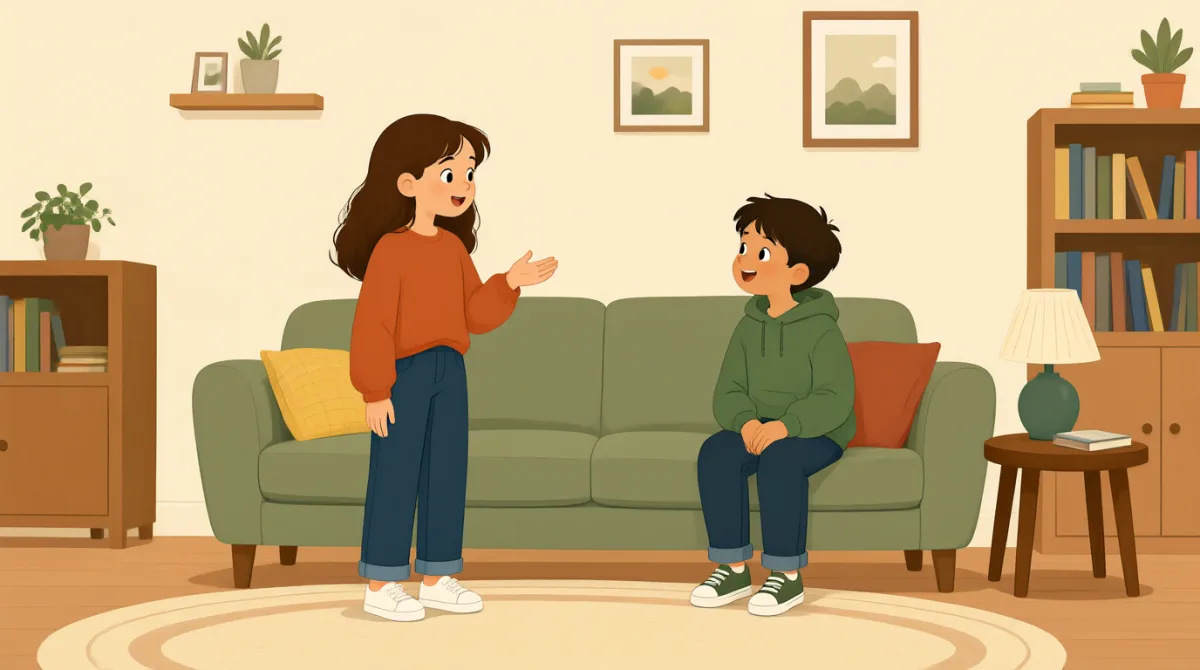

Mia, do you have any brothers or sisters?
Mia, masz rodzeństwo?

Yes, I have one brother. How about you?
Tak, mam jednego brata. A ty?
I have two sisters. Are you the oldest?
Ja mam dwie siostry. Jesteś najstarsza?
No, I’m the youngest. My brother is older.
Nie, jestem najmłodsza. Mój brat jest starszy.
That’s nice. Do you have a big family?
To fajnie. Masz dużą rodzinę?
Not really. There are four of us. What about you?
Niespecjalnie. Jest nas czworo. A u ciebie?
There are five of us: my parents, my sisters, and me.
Nas jest pięcioro: moi rodzice, moje siostry i ja.
Słownictwo8
- brothers or sistersrodzeństwo
This means siblings: brothers and sisters in your family. Use it to ask someone about their siblings.
To znaczy: bracia i siostry w twojej rodzinie. Tego wyrażenia używa się, pytając kogoś o rodzeństwo.
- one brotherjeden brat
This means the person has a single brother. You can change “one” to say how many brothers you have.
To znaczy, że dana osoba ma jednego brata. Możesz zmienić “one”, żeby powiedzieć, ilu masz braci.
- two sistersdwie siostry
This means the person has two female siblings. You can use a number with “sisters” to talk about your family.
To znaczy, że dana osoba ma dwie siostry. Możesz użyć liczby przed “sisters”, żeby opowiedzieć o swojej rodzinie.
- the oldestnajstarsza
This means older than all the other children in the family. Use “Are you the oldest?” to ask about someone’s place in the family.
To znaczy, że dana osoba jest starsza od wszystkich pozostałych dzieci w rodzinie. Zapytaj “Are you the oldest?”, żeby dowiedzieć się, które miejsce ktoś zajmuje wśród rodzeństwa.
- the youngestnajmłodsza
This means younger than all the other children in the family. You can say “I’m the youngest” to describe your place in the family.
To znaczy, że dana osoba jest młodsza od wszystkich pozostałych dzieci w rodzinie. Możesz powiedzieć “I’m the youngest”, żeby opisać swoje miejsce wśród rodzeństwa.
- big familyduża rodzina
A big family has many people in it. Use “Do you have a big family?” to ask about someone’s family size.
Duża rodzina to taka, w której jest wiele osób. Zapytaj “Do you have a big family?”, żeby dowiedzieć się, jak liczna jest czyjaś rodzina.
- There are four of us.Jest nas czworo.
This tells someone that a group has four people. You can change “four” to give a different number.
To informuje kogoś, że w grupie są cztery osoby. Możesz zmienić “four”, żeby podać inną liczbę.
- my parentsmoi rodzice
This means your mother and father. Use it to say who is in your family.
To znaczy twoja mama i twój tata. Użyj tego wyrażenia, żeby powiedzieć, kto należy do twojej rodziny.
Kluczowe zdania8
- 1
Mia, do you have any brothers or sisters?
Mia, masz rodzeństwo?
This is a simple way to ask if someone has siblings. You can replace “brothers or sisters” with another family member.
To prosty sposób, żeby zapytać, czy ktoś ma rodzeństwo. Możesz zastąpić “brothers or sisters” innym członkiem rodziny.
- 2
Yes, I have one brother.
Tak, mam jednego brata.
Use this to answer a question about siblings and say how many brothers you have. Change “one” and “brother” to match your family.
Użyj tego zdania, żeby odpowiedzieć na pytanie o rodzeństwo i powiedzieć, ilu masz braci. Zmień “one” i “brother”, aby pasowały do twojej rodziny.
- 3
How about you?
A ty?
This is a short, friendly way to ask the other person the same question. Use it to keep a conversation going.
To krótkie, przyjazne pytanie, którym możesz zadać drugiej osobie to samo pytanie. Użyj go, żeby podtrzymać rozmowę.
- 4
Are you the oldest?
Jesteś najstarsza?
Use this question to ask if someone is older than all their siblings. You can also ask, “Are you the youngest?”
Użyj tego pytania, żeby dowiedzieć się, czy ktoś jest starszy od całego swojego rodzeństwa. Możesz też zapytać: “Are you the youngest?”.
- 5
No, I’m the youngest.
Nie, jestem najmłodsza.
This is a simple way to say you are younger than your siblings. You can replace “the youngest” with “the oldest” if that is true for you.
To prosty sposób, żeby powiedzieć, że jesteś młodsza od swojego rodzeństwa. Jeśli to prawda, możesz zastąpić “the youngest” wyrażeniem “the oldest”.
- 6
Do you have a big family?
Masz dużą rodzinę?
Use this question to ask whether someone has many people in their family. You can answer with a number or say, “Not really.”
Użyj tego pytania, żeby dowiedzieć się, czy ktoś ma liczną rodzinę. Możesz odpowiedzieć liczbą albo powiedzieć: “Not really.”.
- 7
There are four of us.
Jest nas czworo.
This tells someone how many people are in your family or group. Change “four” to the correct number.
To zdanie informuje, ile osób jest w twojej rodzinie lub grupie. Zmień “four” na właściwą liczbę.
- 8
There are five of us: my parents, my sisters, and me.
Nas jest pięcioro: moi rodzice, moje siostry i ja.
Use this sentence to give the number of people in your family and say who they are. You can change the number and family members to fit your own family.
Użyj tego zdania, żeby podać liczbę osób w swojej rodzinie i powiedzieć, kto do niej należy. Możesz zmienić liczbę i członków rodziny, aby opisać swoją rodzinę.