Asking What Page We’re On
ถามว่าตอนนี้อยู่หน้าไหน
Emma asks Mia what page the class is on. Mia tells her the page number.
เอ็มมาถามมีอาว่าชั้นเรียนกำลังอ่านหน้าไหน มีอาบอกเลขหน้าให้เธอ
บทสนทนา6
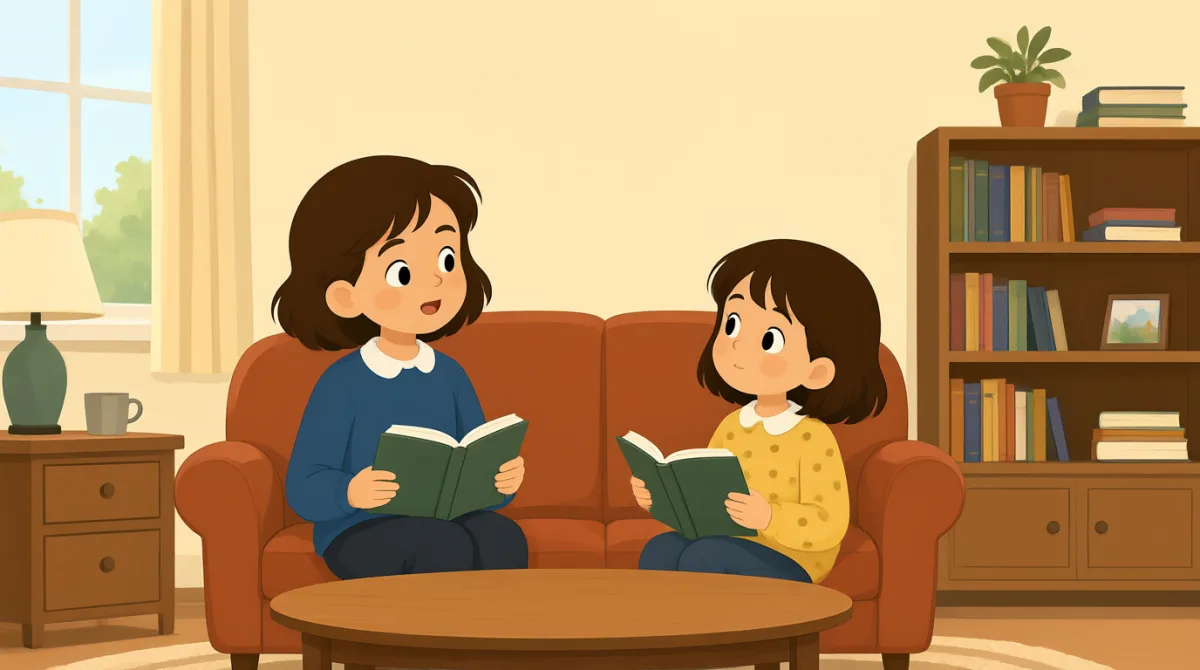

Mia, what page are we on?
มีอา ตอนนี้เราอยู่หน้าไหนเหรอ

We’re on page twelve.
เราอยู่หน้าสิบสอง
Thanks. I was on page ten.
ขอบใจนะ เราอยู่หน้าสิบ
No problem. Please turn to page twelve.
ไม่เป็นไร เปิดไปหน้าสิบสองเลย
Okay. I’m there now.
โอเค ตอนนี้เราอยู่หน้านั้นแล้ว
Great. Let’s read the next part.
เยี่ยม งั้นมาอ่านส่วนต่อไปกัน
คำศัพท์8
- what pageหน้าไหน
Use this to ask for the number of a page. For example, “What page are we on?”
ใช้ถามว่าเป็นหน้าหมายเลขอะไร ตัวอย่างเช่น “What page are we on?” (ตอนนี้เราอยู่หน้าไหน)
- We’re on page twelve.เราอยู่หน้าสิบสอง
This tells someone the page the class is reading. You can change “twelve” to another page number.
ใช้บอกใครสักคนว่าชั้นเรียนกำลังอ่านหน้าไหน เปลี่ยน “twelve” เป็นเลขหน้าอื่นได้
- Thanks.ขอบใจนะ
Use this short word to thank someone. It is common in everyday conversation.
ใช้คำสั้น ๆ นี้เพื่อขอบคุณใครสักคน เป็นคำที่ใช้กันทั่วไปในบทสนทนาทุกวัน
- I was on page ten.เราอยู่หน้าสิบ
This says which page you were reading before. Change “ten” to the page number you were on.
ใช้บอกว่าก่อนหน้านี้กำลังอ่านอยู่หน้าไหน เปลี่ยน “ten” เป็นเลขหน้าที่เธออ่านอยู่ได้
- No problem.ไม่เป็นไร
Use this friendly phrase to say that helping was easy or okay.
ใช้วลีเป็นกันเองนี้เพื่อบอกว่าการช่วยเหลือเป็นเรื่องง่ายหรือไม่เป็นปัญหา
- Please turn to page twelve.เปิดไปหน้าสิบสองเลย
Use this polite instruction to tell someone to open the book to a page. Change “twelve” to another page number.
ใช้ประโยคบอกให้ทำอย่างสุภาพ เพื่อบอกใครสักคนให้เปิดหนังสือไปยังหน้าหนึ่ง เปลี่ยน “twelve” เป็นเลขหน้าอื่นได้
- I’m there now.ตอนนี้เราอยู่หน้านั้นแล้ว
This tells someone you have found the right place in the book. You can use “I’m there now” after turning to a page.
ใช้บอกใครสักคนว่าเจอหน้าที่ถูกต้องในหนังสือแล้ว พูดว่า “I’m there now” หลังจากเปิดไปยังหน้าที่ต้องการได้
- Let’s read the next part.มาอ่านส่วนต่อไปกัน
Use this to suggest reading the part that comes after the current one. “Let’s” is a friendly way to make a suggestion.
ใช้ชวนให้อ่านส่วนที่อยู่ถัดจากส่วนปัจจุบัน “Let’s” เป็นวิธีชวนทำอะไรสักอย่างที่ฟังเป็นกันเอง
ประโยคสำคัญ8
- 1
Mia, what page are we on?
มีอา ตอนนี้เราอยู่หน้าไหนเหรอ
Use this question to ask which page the class is reading. You can replace “page” with another thing you need to find.
ใช้คำถามนี้ถามว่าชั้นเรียนกำลังอ่านหน้าไหน จะเปลี่ยน “page” เป็นสิ่งอื่นที่ต้องการหาได้
- 2
We’re on page twelve.
เราอยู่หน้าสิบสอง
This is a simple way to tell someone the current page. Change “twelve” to the correct page number.
นี่เป็นวิธีง่าย ๆ ในการบอกใครสักคนว่าตอนนี้อยู่หน้าไหน เปลี่ยน “twelve” เป็นเลขหน้าที่ถูกต้องได้
- 3
Thanks.
ขอบใจนะ
Use this short sentence to thank someone for helping you. It works in many everyday situations.
ใช้ประโยคสั้น ๆ นี้ขอบคุณใครสักคนที่ช่วยเหลือ ใช้ได้ในหลายสถานการณ์ทั่วไป
- 4
I was on page ten.
เราอยู่หน้าสิบ
Use this sentence to say which page you had before. Replace “ten” with your page number.
ใช้ประโยคนี้บอกว่าก่อนหน้านี้อยู่หน้าไหน เปลี่ยน “ten” เป็นเลขหน้าของเธอได้
- 5
No problem.
ไม่เป็นไร
Use this friendly reply when someone thanks you. It shows that helping was okay.
ใช้คำตอบเป็นกันเองนี้เมื่อมีคนขอบคุณ แสดงให้เห็นว่าการช่วยเหลือไม่ใช่ปัญหา
- 6
Please turn to page twelve.
เปิดไปหน้าสิบสองเลย
Use this polite sentence to tell someone which page to open. Replace “twelve” with another page number.
ใช้ประโยคสุภาพนี้บอกใครสักคนให้เปิดไปหน้าที่ต้องการ เปลี่ยน “twelve” เป็นเลขหน้าอื่นได้
- 7
Okay. I’m there now.
โอเค ตอนนี้เราอยู่หน้านั้นแล้ว
Use this to say you understand and have found the right page. You can use it after following someone’s directions.
ใช้ประโยคนี้บอกว่าเข้าใจแล้วและเจอหน้าที่ถูกต้อง ใช้ได้หลังจากทำตามคำบอกทางของใครสักคน
- 8
Great. Let’s read the next part.
เยี่ยม งั้นมาอ่านส่วนต่อไปกัน
Use this to suggest continuing with the next section. Replace “read” with another activity, such as “look at” or “do.”
ใช้ประโยคนี้ชวนทำต่อในส่วนถัดไป เปลี่ยน “read” เป็นกิจกรรมอื่นได้ เช่น “look at” หรือ “do”