Choosing a Game
Wybór gry
Emma and Leo look at the games and choose one to play. They set it on the table.
Emma i Leo oglądają gry i wybierają jedną do wspólnej zabawy. Kładą ją na stole.
Dialog7
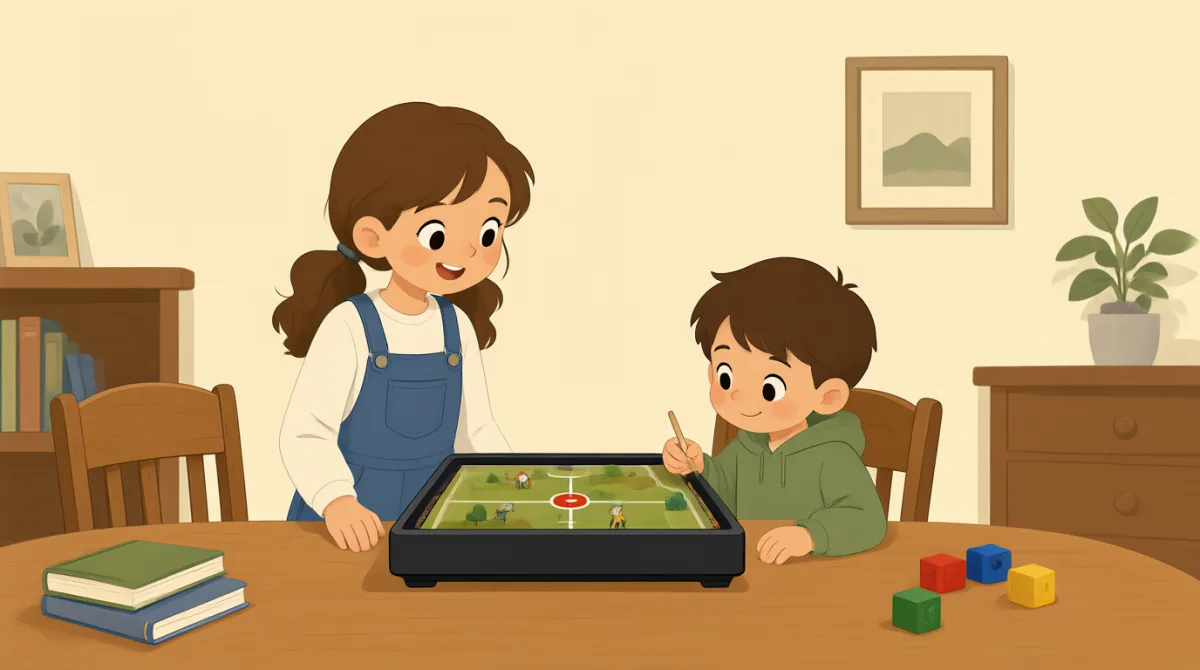

Look at all these games! Which one should we play?
Popatrz na te wszystkie gry! W którą powinniśmy zagrać?

How about this one? It looks fun.
A może w tę? Wygląda na fajną.
What is it called?
Jak się nazywa?
It's called Race to the Finish.
Nazywa się Race to the Finish.
Great! Let's play it.
Super! Zagrajmy w nią.
I'll put it on the table.
Położę ją na stole.
Thanks. Let's open the box.
Dzięki. Otwórzmy pudełko.
Słownictwo7
- How about this one?A może w tę?
Use this to suggest one choice. You can point to an item while you say it.
Użyj tego zwrotu, żeby zaproponować jeden z możliwych wyborów. Możesz wskazać przedmiot, kiedy to mówisz.
- It looks fun.Wygląda na fajną.
Use this to say that something seems enjoyable. You can say, “It looks [adjective].”
Użyj tego zwrotu, żeby powiedzieć, że coś wydaje się przyjemne. Możesz powiedzieć: „It looks [adjective].”
- What is it called?Jak się nazywa?
Ask this when you want to know the name of something.
Zapytaj tak, gdy chcesz poznać nazwę czegoś.
- It's called Race to the Finish.Nazywa się Race to the Finish.
Use “It's called…” to tell someone the name of a thing.
Użyj zwrotu „It's called…”, żeby powiedzieć komuś, jak coś się nazywa.
- Let's play it.Zagrajmy w nią.
Use this to suggest playing a game together. “Let's” is followed by an action word.
Użyj tego zwrotu, żeby zaproponować wspólną grę. Po „Let's” następuje czasownik oznaczający czynność.
- put it on the tablepołożyć to na stole
This means to move something so it rests on the table. You can replace “it” with another object.
To znaczy przenieść coś tak, żeby leżało na stole. Zamiast „it” możesz użyć nazwy innego przedmiotu.
- open the boxotworzyć pudełko
This means to take the lid off a box. You can use “open” with doors, bags, and other things too.
To znaczy zdjąć pokrywkę z pudełka. „Open” możesz też stosować w odniesieniu do drzwi, toreb i innych rzeczy.
Kluczowe zdania8
- 1
Look at all these games!
Popatrz na te wszystkie gry!
Use this to draw someone's attention to several things nearby. You can replace “games” with other plural nouns.
Użyj tego zwrotu, żeby zwrócić czyjąś uwagę na kilka znajdujących się w pobliżu rzeczy. Zamiast „games” możesz użyć innych rzeczowników w liczbie mnogiej.
- 2
Which one should we play?
W którą powinniśmy zagrać?
Ask this when you want to choose one game or activity together. Replace “play” with another action to ask about a different choice.
Zapytaj tak, gdy chcecie wspólnie wybrać grę lub inną aktywność. Zastąp „play” innym czasownikiem, jeśli chcesz zapytać o inny wybór.
- 3
How about this one?
A może w tę?
Use this to suggest a choice. You can point to the item as you say it.
Użyj tego zwrotu, żeby coś zaproponować. Możesz wskazać przedmiot, kiedy to mówisz.
- 4
What is it called?
Jak się nazywa?
Use this to ask for the name of something. “What is [thing] called?” works for other objects too.
Użyj tego pytania, żeby poznać nazwę czegoś. „What is [thing] called?” możesz stosować także w odniesieniu do innych przedmiotów.
- 5
It's called Race to the Finish.
Nazywa się Race to the Finish.
Use “It's called…” to give the name of something. Replace the game title with the name you want to share.
Użyj zwrotu „It's called…”, żeby podać nazwę czegoś. Zamiast tytułu gry wpisz nazwę, którą chcesz przekazać.
- 6
Great! Let's play it.
Super! Zagrajmy w nią.
Use this to agree to a suggestion and say what you want to do. Replace “play it” with another activity.
Użyj tego zwrotu, żeby zgodzić się na propozycję i powiedzieć, co chcesz zrobić. Zamiast „play it” możesz podać inną aktywność.
- 7
I'll put it on the table.
Położę ją na stole.
Use “I'll” to say what you will do. Replace “put it on the table” with another action.
Użyj „I'll”, żeby powiedzieć, co zrobisz. Zamiast „put it on the table” możesz podać inną czynność.
- 8
Thanks. Let's open the box.
Dzięki. Otwórzmy pudełko.
Use “Thanks” to show you are grateful, then “Let's…” to suggest doing something together.
Użyj „Thanks”, żeby wyrazić wdzięczność, a potem „Let's…”, żeby zaproponować wspólne zrobienie czegoś.