Asking How to Get There
Jak tam dotrzeć
Emma asks Jack how to get to the café and the park. Jack gives her simple directions and explains which bus to take.
Emma pyta Jacka, jak dotrzeć do kawiarni i parku. Jack podaje jej proste wskazówki i wyjaśnia, którym autobusem pojechać.
Dialog6
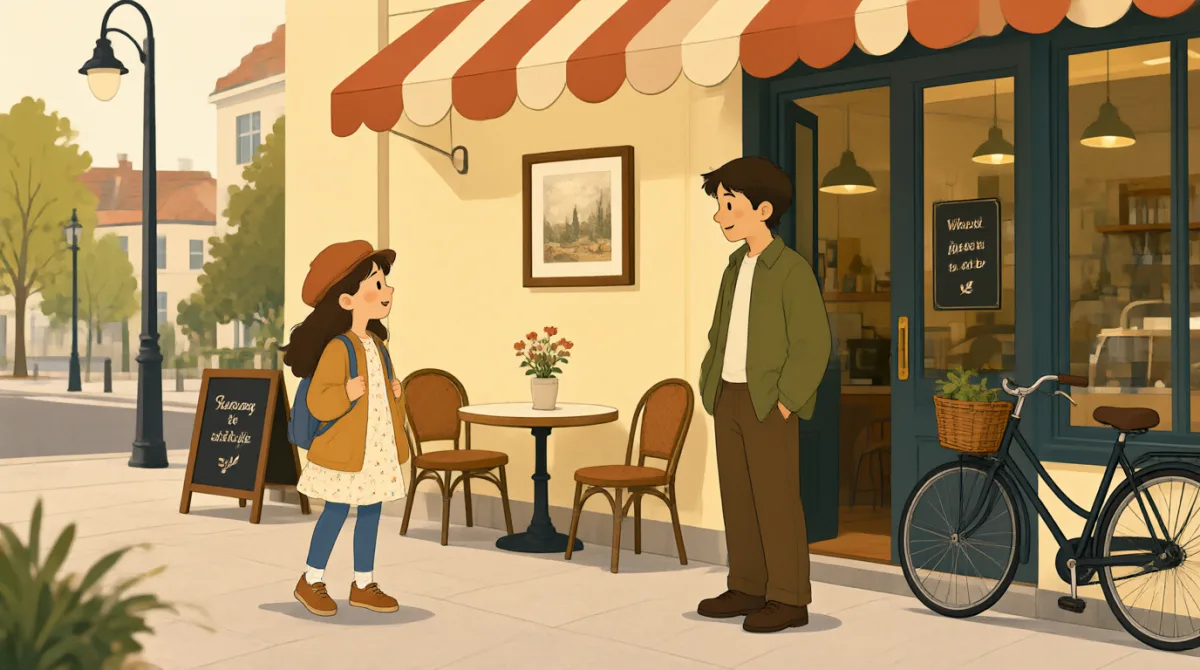

How do I get to the café and the park?
Jak dotrzeć do kawiarni i parku?

The café is near the museum. Go straight.
Kawiarnia jest blisko muzeum. Idź prosto.
And how do I get to the park?
A jak dotrzeć do parku?
Take the number two bus to the park.
Jedź do parku autobusem numer dwa.
Where is the bus stop?
Gdzie jest przystanek autobusowy?
It’s across the street, next to the bank.
Jest po drugiej stronie ulicy, obok banku.
Słownictwo8
- get todotrzeć do
This means to reach a place. Use “How do I get to...?” to ask for directions.
To znaczy dostać się do jakiegoś miejsca. Pytania „How do I get to...?” używa się, aby zapytać o drogę.
- nearblisko
This means close to a place. You can say one place is near another.
To znaczy niedaleko jakiegoś miejsca. Możesz powiedzieć, że jedno miejsce jest blisko drugiego.
- museummuzeum
A museum is a place where people see art or learn about history. In this dialogue, it helps Emma find the café.
Muzeum to miejsce, w którym można oglądać dzieła sztuki lub poznawać historię. W tym dialogu pomaga Emmie znaleźć kawiarnię.
- Go straight.Idź prosto.
This tells someone to keep going forward. It is a simple direction.
To polecenie, żeby iść dalej przed siebie. To prosta wskazówka dotycząca drogi.
- Take the number two busJedź autobusem numer dwa
This tells someone to ride bus number two. Use “Take the number [number] bus” to give bus directions.
To znaczy, że należy pojechać autobusem numer dwa. Zwrotu „Take the number [number] bus” używa się, aby wskazać, którym autobusem jechać.
- bus stopprzystanek autobusowy
A bus stop is a place where people wait for a bus. You can ask where it is.
Przystanek autobusowy to miejsce, w którym czeka się na autobus. Możesz zapytać, gdzie się znajduje.
- across the streetpo drugiej stronie ulicy
This means on the other side of the street. It helps someone find a place.
To znaczy po przeciwnej stronie ulicy. Taki zwrot pomaga komuś znaleźć dane miejsce.
- next toobok
This means beside or very close to something. Use it to describe where a place is.
To znaczy tuż przy czymś lub bardzo blisko czegoś. Użyj tego zwrotu, aby opisać, gdzie znajduje się dane miejsce.
Kluczowe zdania7
- 1
How do I get to the café and the park?
Jak dotrzeć do kawiarni i parku?
Use this question to ask for directions to one or more places. You can replace “the café and the park” with the place you want to visit.
Użyj tego pytania, aby zapytać o drogę do jednego lub kilku miejsc. Możesz zastąpić „the café and the park” nazwą miejsca, które chcesz odwiedzić.
- 2
The café is near the museum.
Kawiarnia jest blisko muzeum.
This sentence describes where a place is. Replace “the café” and “the museum” with other places.
To zdanie opisuje, gdzie znajduje się dane miejsce. Zastąp „the café” i „the museum” nazwami innych miejsc.
- 3
Go straight.
Idź prosto.
Use this short command to tell someone to continue forward. It is useful when giving simple directions.
Użyj tego krótkiego polecenia, aby powiedzieć komuś, żeby szedł dalej przed siebie. Przydaje się przy udzielaniu prostych wskazówek.
- 4
And how do I get to the park?
A jak dotrzeć do parku?
Use this to ask for directions to another place. Start with “And how do I get to...” when asking a follow-up question.
Użyj tego pytania, aby zapytać o drogę do kolejnego miejsca. Rozpocznij pytanie uzupełniające od „And how do I get to...”.
- 5
Take the number two bus to the park.
Jedź do parku autobusem numer dwa.
This sentence tells someone which bus to take and where to go. Replace “two” and “the park” with the bus number and destination.
To zdanie mówi, którym autobusem jechać i dokąd. Zastąp „two” numerem autobusu, a „the park” nazwą celu podróży.
- 6
Where is the bus stop?
Gdzie jest przystanek autobusowy?
Use this question to ask where you can catch a bus. You can replace “the bus stop” with another place.
Użyj tego pytania, aby dowiedzieć się, gdzie można wsiąść do autobusu. Możesz zastąpić „the bus stop” nazwą innego miejsca.
- 7
It’s across the street, next to the bank.
Jest po drugiej stronie ulicy, obok banku.
This sentence gives two clues about a location. Replace “across the street” and “next to the bank” with other location details.
To zdanie zawiera dwie wskazówki dotyczące położenia. Zastąp „across the street” i „next to the bank” innymi określeniami miejsca.