Bringing Them Together
Mia brings Leo and Jack together, sets ground rules for a respectful conversation, and summarizes each person’s perspective neutrally. She checks that both feel accurately heard before they respond to one another.
Dialogue11
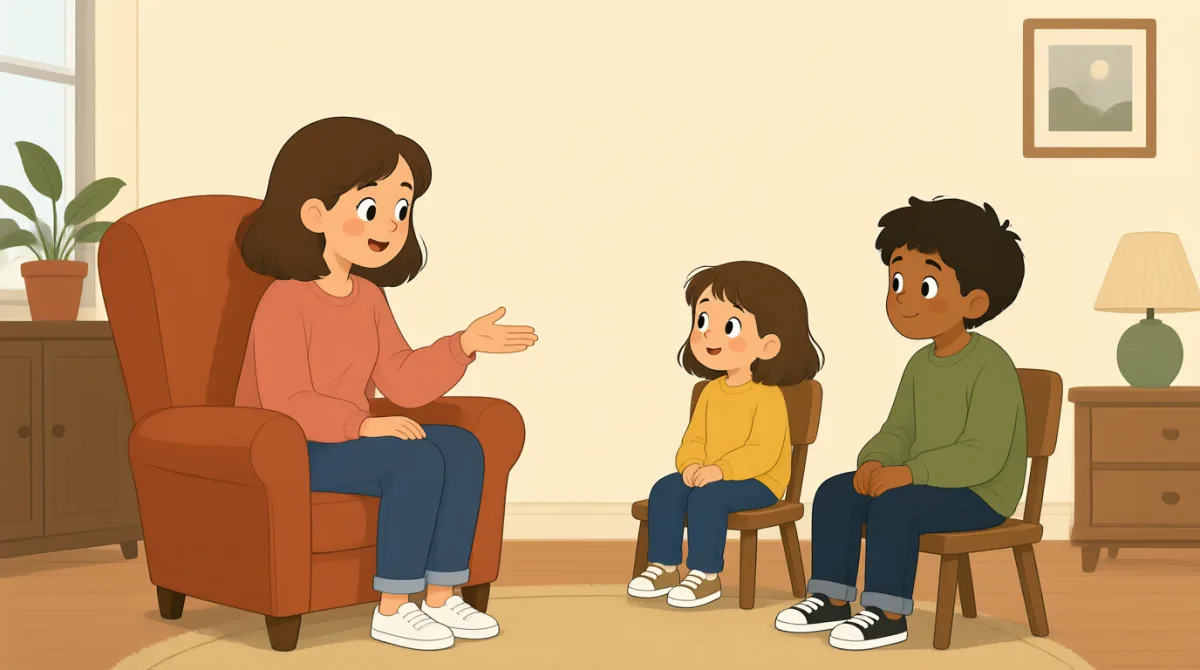

Thanks for meeting together. Before we begin, let’s agree on three ground rules: one person speaks at a time, we describe behavior rather than character, and we ask questions before drawing conclusions.

That’s fair. I want to explain what happened, because from my perspective, Jack changed the handoff without telling me, then treated my concern as if I were being difficult.

I didn’t intend to dismiss him. I thought the deadline left us no choice, and I made a practical adjustment so the work wouldn’t stall.
Let me pause there. Leo, do you feel that summary captures your concern—that the change itself was difficult, but the lack of communication made it worse?
Yes. I can adapt when circumstances change. What frustrated me was discovering the change afterward and being expected to absorb the consequences without any discussion.
Jack, is it accurate to say that you were focused on protecting the deadline, but you inferred that Leo would prefer speed over a conversation?
That’s accurate, although I can see now that it was an assumption. I was under pressure, and I treated a judgment call as though it didn’t require coordination.
I’m hearing two perspectives, not necessarily two incompatible goals. Leo needed visibility before the change affected his work; Jack needed enough discretion to respond quickly to a deadline.
That sounds right. I’m not asking Jack to seek approval for every decision. I need a reasonable chance to flag risks before a change becomes irreversible.
And I’m not asking Leo to accept every decision silently. I need him to recognize that sometimes a quick adjustment is necessary, even if the communication isn’t perfect.
Do you both agree that this is an accurate, neutral account of where things stand? If so, we can move from proving who was right to deciding what would make the next handoff workable.
Vocabulary8
- ground rules
Basic rules that everyone agrees to follow during a discussion. Here, they create a respectful and orderly conversation.
- from my perspective
A phrase used to introduce how a situation looks or feels to you. It signals that this is your viewpoint, not necessarily an objective fact.
- absorb the consequences
To deal with the results or negative effects of something. Leo feels he had to handle the effects of a change he did not help decide.
- a judgment call
A decision based on personal assessment rather than a clear rule or complete information. Jack recognizes that this kind of decision may still require coordination.
- under pressure
In a stressful situation with limited time or difficult demands. Jack explains that pressure influenced his decision-making.
- enough discretion
Sufficient freedom to make decisions independently. Jack wants to respond quickly without needing approval for every adjustment.
- flag risks
To point out or draw attention to possible problems. Leo wants an opportunity to identify risks before a change becomes final.
- move from proving who was right
To stop arguing about blame and begin focusing on a practical solution. Mia uses this phrase to redirect the conversation toward future cooperation.
Key Sentences8
- 1
Before we begin, let’s agree on three ground rules: one person speaks at a time, we describe behavior rather than character, and we ask questions before drawing conclusions.
This is useful for establishing respectful discussion rules in a tense meeting. You can adapt it by replacing the rules with expectations appropriate to your situation.
- 2
What frustrated me was discovering the change afterward and being expected to absorb the consequences without any discussion.
This sentence clearly separates the triggering event from its emotional impact. Use “What frustrated me was…” to explain a problem without directly attacking someone’s character.
- 3
I was under pressure, and I treated a judgment call as though it didn’t require coordination.
This is a concise way to acknowledge responsibility while explaining the circumstances. It can be reused when admitting that a decision was made too independently.
- 4
I’m hearing two perspectives, not necessarily two incompatible goals.
This sentence helps a mediator reframe conflict as a possible difference in approach rather than a fundamental opposition. It is useful when both sides may ultimately want the same outcome.
- 5
I’m not asking Jack to seek approval for every decision.
This structure makes a request sound reasonable by clarifying what you are not demanding. Replace the name and action to express limits without appearing controlling.
- 6
I need a reasonable chance to flag risks before a change becomes irreversible.
This sentence makes a specific, practical request about timing and communication. It can be reused when you need input before a decision becomes difficult to undo.
- 7
I need him to recognize that sometimes a quick adjustment is necessary, even if the communication isn’t perfect.
This sentence acknowledges an imperfect process while defending the need for flexibility. Use it to express a balanced expectation rather than an absolute demand.
- 8
If so, we can move from proving who was right to deciding what would make the next handoff workable.
This is a professional way to shift from blame to problem-solving. It is especially useful in mediation, project reviews, and other discussions about preventing future conflict.