A Dinner-Table Disagreement
저녁 식탁에서 벌어진 의견 충돌
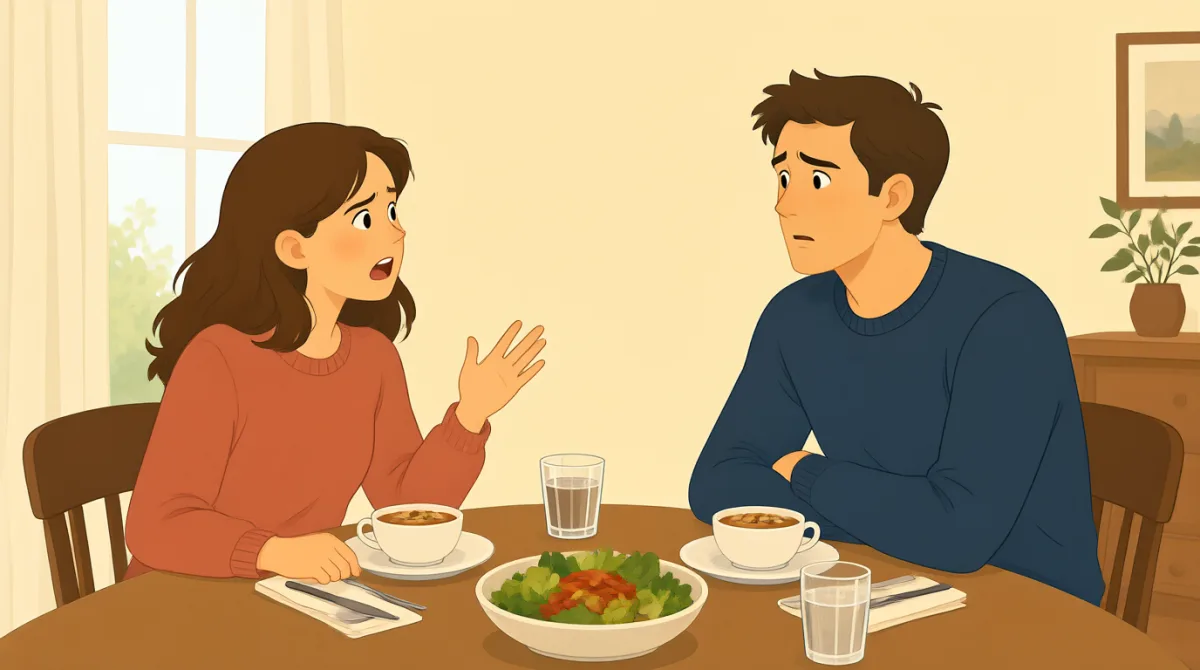
At a family dinner, Emma argues that AI could eliminate many jobs, while David says the greater change may be to the tasks people do. Their disagreement stays lively but respectful.
가족 저녁 식사 자리에서 에마는 AI가 많은 일자리를 없앨 수 있다고 주장하고, 데이비드는 더 큰 변화는 사람들이 하는 업무에 생길 수 있다고 말해. 두 사람은 활기차게 의견을 주고받지만 서로를 존중해.
대화12

I keep hearing that AI will make entire professions disappear. If a system can draft reports, answer customers, and analyze data in seconds, why would a company keep so many people on payroll?
AI 때문에 직업군 전체가 사라질 거라는 말을 계속 듣고 있어. 어떤 시스템이 보고서를 작성하고, 고객 문의에 답하고, 데이터를 몇 초 만에 분석할 수 있다면 회사가 왜 그렇게 많은 직원을 계속 고용하겠어?

Because doing those tasks quickly isn’t the same as doing a whole job well. A job involves judgment, accountability, and dealing with situations the system wasn’t trained to handle.
그런 업무를 빠르게 처리하는 것과 직업 전체를 잘 수행하는 건 다르니까. 일에는 판단력과 책임감이 필요하고, 시스템이 훈련받지 않은 상황에 대처하는 능력도 필요해.
That distinction sounds reassuring, but companies don’t need AI to do a job perfectly. If it handles most of the workload, they may need fewer employees, even if a person still checks the final result.
그 구분이 안심되긴 하지만, 회사가 AI한테 일을 완벽하게 하라고 할 필요는 없어. 업무량 대부분을 처리할 수 있다면, 사람이 마지막 결과를 확인하더라도 필요한 직원 수는 줄어들 수 있어.
Fair point. Efficiency can reduce staffing, and I wouldn’t dismiss that risk. But technology can also make certain services cheaper, which may increase demand and create work that wasn’t viable before.
일리 있네. 효율성이 높아지면 인력이 줄어들 수도 있고, 그런 위험을 가볍게 여기진 않을 거야. 하지만 기술 덕분에 특정 서비스의 비용이 낮아지면 수요가 늘고, 예전에는 수익성이 없던 분야에서도 일자리가 생길 수 있어.
Sometimes, yes. But that assumes new demand arrives quickly enough and benefits the people whose jobs have vanished. A growing industry doesn’t automatically hire the workers displaced from another one.
그럴 때도 있지. 하지만 그러려면 새로운 수요가 충분히 빨리 생기고, 일자리를 잃은 사람들이 그 혜택을 받아야 해. 산업이 성장한다고 해서 다른 산업에서 밀려난 노동자들을 저절로 고용하는 건 아니야.
You’re right that the transition can be painful and uneven. Still, predictions about mass unemployment often treat every task exposed to automation as though the entire occupation were about to disappear.
전환 과정이 힘들고 사람마다 다르게 영향을 받을 수 있다는 건 네 말이 맞아. 그래도 대량 실업을 예측할 때는 자동화의 영향을 받는 모든 업무를 마치 직업 전체가 곧 사라질 것처럼 보는 경우가 많아.
I’m not saying every exposed job vanishes overnight. I’m saying that when enough core tasks are automated, the role can shrink until there are only a few positions left—and those remaining workers may face much higher expectations.
자동화의 영향을 받는 직업이 모두 하룻밤 사이에 사라진다는 말은 아니야. 핵심 업무가 충분히 자동화되면 그 역할의 규모가 줄어서 일자리가 몇 개만 남을 수 있다는 거야. 그렇게 남은 직원들에겐 훨씬 더 높은 기대가 쏟아질 수도 있고.
That’s a stronger argument than simply saying, ‘AI takes all the jobs.’ I’d add that new roles often emerge, but there’s no guarantee they’ll appear in the same places or be accessible to the same workers.
그냥 ‘AI가 일자리를 전부 빼앗아 간다’고 하는 것보다 훨씬 설득력 있는 주장이네. 새로운 직무가 생기는 경우도 많다는 점을 덧붙이고 싶어. 하지만 그런 직무가 같은 지역에 생기거나 같은 노동자들이 맡을 수 있으리란 보장은 없어.
Exactly. So when people say technology creates more jobs than it destroys, I want to know: for whom, where, and over what period? The total number can hide serious losses for particular communities.
맞아. 그러니까 기술이 없애는 일자리보다 더 많은 일자리를 만든다고들 할 때, 나는 궁금해. 누구를 위해서, 어디에서, 어느 기간에 걸쳐서라는 거야? 전체 숫자만 보면 특정 지역사회가 입는 심각한 피해가 가려질 수 있어.
That’s a fair challenge. I still think the biggest change may be what people do within their jobs, rather than the disappearance of work altogether. But that doesn’t make displacement imaginary—or painless.
그건 타당한 지적이야. 그래도 나는 가장 큰 변화가 일 자체가 사라지는 것보다는 사람들이 직장에서 하는 일이 달라지는 데 있을 수 있다고 생각해. 그렇다고 일자리를 잃는 일이 상상이거나 고통스럽지 않다는 뜻은 아니야.
And I can accept that many jobs will change rather than disappear. I just don’t want that possibility to become an excuse for ignoring people who may lose their livelihoods along the way.
나도 많은 일자리가 사라지기보다 달라질 거라는 건 받아들일 수 있어. 다만 그 가능성이 전환 과정에서 생계를 잃을 수도 있는 사람들을 외면하는 핑계가 되지는 않았으면 해.
Nor should we. Perhaps the honest answer is that AI won’t produce one uniform future: some jobs will vanish, many will be reshaped, and the consequences will depend partly on how deliberately we manage the transition.
그래서도 안 되지. 어쩌면 솔직한 답은 AI가 모두에게 똑같은 미래를 가져다주진 않는다는 거야. 어떤 일자리는 사라지고, 많은 일자리는 모습을 바꾸겠지. 그리고 그 결과는 우리가 전환을 얼마나 계획적으로 관리하느냐에 달려 있을 거야.
어휘8
- on payroll직원으로 고용하다
Employed by a company and receiving a regular salary. Here, Emma questions why a company would continue employing many people if AI can do their tasks.
회사에 고용되어 정기적으로 급여를 받는다는 뜻이에요. 여기서 에마는 AI가 업무를 할 수 있다면 회사가 왜 많은 직원을 계속 고용하겠느냐고 묻고 있어요.
- accountability책임감, 책임 소재
Responsibility for decisions and their results. In this discussion, it is one part of a job that may require human judgment.
결정과 그 결과에 대해 책임을 지는 것을 뜻해요. 이 대화에서는 사람의 판단이 필요한 업무의 한 요소로 나와요.
- wouldn’t dismiss that risk그런 위험을 가볍게 여기진 않을 거야
A measured way to say you take a possible danger seriously. Use it to acknowledge a concern without claiming it is certain to happen.
가능한 위험을 진지하게 받아들인다는 점을 신중하게 표현하는 말이에요. 어떤 일이 반드시 일어난다고 단정하지 않으면서 우려를 인정할 때 써요.
- viable before예전에는 수익성이 없던
Practical or financially possible in the past. Here, cheaper services could create work in areas that were previously too costly to operate.
과거에는 실용적이지 않았거나 비용 면에서 실현하기 어려웠다는 뜻이에요. 여기서는 서비스 비용이 낮아지면 예전에는 운영비가 너무 많이 들었던 분야에도 일이 생길 수 있다는 의미예요.
- displaced from another one다른 산업에서 밀려난
Moved out of one job or industry, often because the work has changed or disappeared. The phrase highlights that new jobs may not go to the people who lost their old ones.
업무가 바뀌거나 사라져서 일자리나 산업에서 떠나게 된다는 뜻이에요. 새로운 일자리가 생기더라도 예전 일자리를 잃은 사람들이 그 일자리를 얻지는 못할 수 있다는 점을 강조해요.
- uneven고르지 않은, 불균등한
Not happening equally or affecting everyone in the same way. It describes transitions in which some workers or communities face greater disruption than others.
모든 사람에게 똑같이 일어나거나 같은 영향을 주지 않는다는 뜻이에요. 어떤 노동자나 지역사회가 다른 곳보다 더 큰 변화를 겪는 전환 과정을 묘사할 때 써요.
- core tasks핵심 업무
The most important duties that make up a job. If enough of these are automated, the role itself may shrink.
직업을 이루는 가장 중요한 업무를 말해요. 이런 업무가 충분히 자동화되면 직업 자체의 규모가 줄어들 수 있어요.
- livelihoods생계
The work or income people depend on to support themselves. It is often used when discussing the serious personal consequences of job loss.
사람들이 생활을 유지하기 위해 의지하는 일이나 소득을 뜻해요. 일자리를 잃었을 때 개인에게 생기는 심각한 결과를 이야기할 때 자주 써요.
핵심 문장8
- 1
A job involves judgment, accountability, and dealing with situations the system wasn’t trained to handle.
일에는 판단력과 책임감이 필요하고, 시스템이 훈련받지 않은 상황에 대처하는 능력도 필요해.
This sentence explains why completing individual tasks is not the same as doing an entire job. Reuse the structure “A [role] involves...” to describe the skills and responsibilities a role requires.
이 문장은 각각의 업무를 처리하는 것과 직업 전체를 수행하는 것이 왜 다른지 설명해요. “A [role] involves...”라는 표현을 활용하면 어떤 역할에 어떤 능력과 책임이 필요한지 말할 수 있어요.
- 2
Efficiency can reduce staffing, and I wouldn’t dismiss that risk.
효율성이 높아지면 인력이 줄어들 수도 있고, 그런 위험을 가볍게 여기진 않을 거야.
This is a concise way to concede a valid concern while keeping a measured tone. Reuse “I wouldn’t dismiss that risk” when you want to show that a possibility deserves serious consideration.
타당한 우려를 인정하면서도 신중한 태도를 유지할 때 쓸 수 있는 간결한 표현이에요. 어떤 가능성을 진지하게 고려할 필요가 있다고 말하고 싶을 때 “I wouldn’t dismiss that risk”를 활용해 보세요.
- 3
A growing industry doesn’t automatically hire the workers displaced from another one.
산업이 성장한다고 해서 다른 산업에서 밀려난 노동자들을 저절로 고용하는 건 아니야.
This sentence distinguishes overall job growth from who actually gets hired. Use “doesn’t automatically...” to challenge an assumption without overstating your case.
이 문장은 전체 일자리 수가 늘어나는 것과 실제로 누가 채용되는지는 다르다는 점을 보여줘요. “doesn’t automatically...”를 쓰면 주장을 과장하지 않으면서 어떤 가정에 이의를 제기할 수 있어요.
- 4
You’re right that the transition can be painful and uneven.
전환 과정이 힘들고 사람마다 다르게 영향을 받을 수 있다는 건 네 말이 맞아.
This acknowledges another person’s point while adding a qualification. The pattern “You’re right that...” is useful for respectful disagreement and nuanced discussion.
상대방의 의견을 인정하면서도 조건이나 단서를 덧붙이는 표현이에요. “You’re right that...”는 서로 존중하며 의견을 달리하거나, 복잡한 주제를 세심하게 논의할 때 유용해요.
- 5
I’d add that new roles often emerge, but there’s no guarantee they’ll appear in the same places or be accessible to the same workers.
새로운 직무가 생기는 경우도 많다는 점을 덧붙이고 싶어. 하지만 그런 직무가 같은 지역에 생기거나 같은 노동자들이 맡을 수 있으리란 보장은 없어.
This sentence balances a general trend with practical limits. Reuse “I’d add that...” to extend someone’s argument, and “there’s no guarantee...” to express uncertainty.
이 문장은 일반적인 경향과 현실적인 한계를 함께 다뤄요. 다른 사람의 주장에 내용을 보태고 싶을 때는 “I’d add that...”를, 불확실성을 나타내고 싶을 때는 “there’s no guarantee...”를 활용해 보세요.
- 6
The total number can hide serious losses for particular communities.
전체 숫자만 보면 특정 지역사회가 입는 심각한 피해가 가려질 수 있어.
This shows how broad statistics can obscure unequal effects. Use the structure “X can hide...” to explain why a headline figure may not tell the whole story.
이 문장은 전체 통계가 불균등한 영향을 감출 수 있다는 점을 보여줘요. 눈에 띄는 수치만으로는 전체 상황을 알 수 없다는 것을 설명할 때 “X can hide...”라는 구조를 쓸 수 있어요.
- 7
I still think the biggest change may be what people do within their jobs, rather than the disappearance of work altogether.
그래도 나는 가장 큰 변화가 일 자체가 사라지는 것보다는 사람들이 직장에서 하는 일이 달라지는 데 있을 수 있다고 생각해.
This presents a qualified position and contrasts two possible outcomes. Reuse “I still think...” to maintain your view while acknowledging that the issue is complex.
이 문장은 단정하지 않고 입장을 밝히면서 두 가지 가능한 결과를 비교해요. 문제가 복잡하다는 점을 인정하면서도 자기 생각을 유지하고 싶을 때 “I still think...”를 활용해 보세요.
- 8
Perhaps the honest answer is that AI won’t produce one uniform future: some jobs will vanish, many will be reshaped, and the consequences will depend partly on how deliberately we manage the transition.
어쩌면 솔직한 답은 AI가 모두에게 똑같은 미래를 가져다주진 않는다는 거야. 어떤 일자리는 사라지고, 많은 일자리는 모습을 바꾸겠지. 그리고 그 결과는 우리가 전환을 얼마나 계획적으로 관리하느냐에 달려 있을 거야.
This is a useful way to conclude a debate with a nuanced summary rather than a simple yes-or-no claim. The colon introduces examples, while “will depend partly on...” identifies a factor that can influence the outcome.
이 표현은 찬반으로만 단순하게 결론짓지 않고, 균형 잡힌 요약으로 토론을 마무리할 때 유용해요. 콜론 뒤에는 예시가 나오고, “will depend partly on...”은 결과에 영향을 줄 수 있는 요인을 나타내요.