A Dinner-Table Disagreement
خلاف على مائدة العشاء
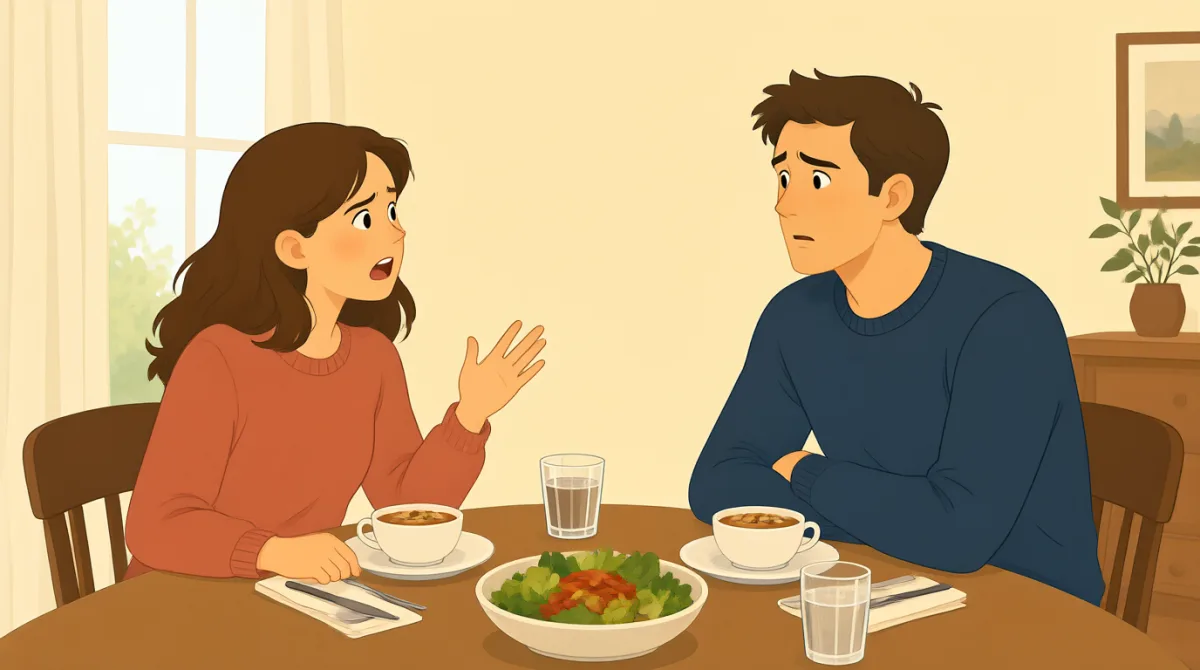
At a family dinner, Emma argues that AI could eliminate many jobs, while David says the greater change may be to the tasks people do. Their disagreement stays lively but respectful.
في عشاء عائلي، ترى إيما أن الذكاء الاصطناعي قد يلغي وظائف كثيرة، بينما يقول ديفيد إن التغيير الأكبر قد يطال المهام التي يؤديها الناس. يظل الخلاف بينهما حيويًا، لكنه يبقى محترمًا.
حوار12

I keep hearing that AI will make entire professions disappear. If a system can draft reports, answer customers, and analyze data in seconds, why would a company keep so many people on payroll?
أسمع باستمرار أن الذكاء الاصطناعي سيؤدي إلى اختفاء مهن بأكملها. إذا كان بإمكان نظام أن يكتب تقارير، ويرد على العملاء، ويحلل البيانات في ثوانٍ، فلماذا ستُبقي شركة ما هذا العدد الكبير من الموظفين على رأس عملهم؟

Because doing those tasks quickly isn’t the same as doing a whole job well. A job involves judgment, accountability, and dealing with situations the system wasn’t trained to handle.
لأن إنجاز تلك المهام بسرعة لا يعني إنجاز وظيفة كاملة على نحو جيد. فالوظيفة تتطلب حسن التقدير، والمساءلة، والتعامل مع مواقف لم يُدرَّب النظام على التعامل معها.
That distinction sounds reassuring, but companies don’t need AI to do a job perfectly. If it handles most of the workload, they may need fewer employees, even if a person still checks the final result.
قد يبدو هذا التمييز مطمئنًا، لكن الشركات لا تحتاج إلى أن يؤدي الذكاء الاصطناعي وظيفة كاملة بإتقان. فإذا تولى معظم عبء العمل، فقد تحتاج الشركات إلى عدد أقل من الموظفين، حتى لو ظل شخص ما يراجع النتيجة النهائية.
Fair point. Efficiency can reduce staffing, and I wouldn’t dismiss that risk. But technology can also make certain services cheaper, which may increase demand and create work that wasn’t viable before.
هذه نقطة وجيهة. قد تؤدي الكفاءة إلى تقليص عدد الموظفين، ولن أستخف بهذا الخطر. لكن التكنولوجيا قد تجعل بعض الخدمات أرخص أيضًا، وهذا قد يزيد الطلب ويوفر أعمالًا لم يكن تنفيذها مجديًا من قبل.
Sometimes, yes. But that assumes new demand arrives quickly enough and benefits the people whose jobs have vanished. A growing industry doesn’t automatically hire the workers displaced from another one.
أحيانًا، نعم. لكن هذا يفترض أن الطلب الجديد سيظهر بسرعة كافية وأنه سيفيد الأشخاص الذين اختفت وظائفهم. فنمو قطاع ما لا يعني تلقائيًا أنه سيوظف العاملين الذين فقدوا وظائفهم في قطاع آخر.
You’re right that the transition can be painful and uneven. Still, predictions about mass unemployment often treat every task exposed to automation as though the entire occupation were about to disappear.
أنت محقة في أن المرحلة الانتقالية قد تكون مؤلمة وغير متكافئة. ومع ذلك، غالبًا ما تتعامل التوقعات بشأن البطالة الجماعية مع كل مهمة معرضة للأتمتة كما لو أن المهنة بأكملها على وشك الاختفاء.
I’m not saying every exposed job vanishes overnight. I’m saying that when enough core tasks are automated, the role can shrink until there are only a few positions left—and those remaining workers may face much higher expectations.
لا أقول إن كل وظيفة تتأثر بالأتمتة ستختفي بين ليلة وضحاها. ما أقوله هو إن الدور قد يتقلص عندما تُؤتمت مهام أساسية كثيرة، إلى أن لا يبقى فيه سوى بضعة مناصب، وقد تُفرض على العاملين الذين يبقون توقعات أعلى بكثير.
That’s a stronger argument than simply saying, ‘AI takes all the jobs.’ I’d add that new roles often emerge, but there’s no guarantee they’ll appear in the same places or be accessible to the same workers.
هذه حجة أقوى من مجرد القول: «الذكاء الاصطناعي سيأخذ كل الوظائف». وأضيف أن أدوارًا جديدة تظهر غالبًا، لكن ليس هناك ما يضمن ظهورها في الأماكن نفسها أو أن تكون متاحة للعاملين أنفسهم.
Exactly. So when people say technology creates more jobs than it destroys, I want to know: for whom, where, and over what period? The total number can hide serious losses for particular communities.
بالضبط. لذلك عندما يقول الناس إن التكنولوجيا تخلق وظائف أكثر مما تلغي، أريد أن أعرف: لمن، وأين، وعلى مدى أي فترة؟ فقد يخفي العدد الإجمالي خسائر جسيمة تتكبدها مجتمعات بعينها.
That’s a fair challenge. I still think the biggest change may be what people do within their jobs, rather than the disappearance of work altogether. But that doesn’t make displacement imaginary—or painless.
هذا اعتراض وجيه. وما زلت أعتقد أن التغيير الأكبر قد يكون في طبيعة ما يفعله الناس ضمن وظائفهم، لا في اختفاء العمل كليًا. لكن هذا لا يعني أن فقدان الوظائف أمر وهمي أو أنه لا يسبب ألمًا.
And I can accept that many jobs will change rather than disappear. I just don’t want that possibility to become an excuse for ignoring people who may lose their livelihoods along the way.
وأنا أستطيع أن أقبل أن وظائف كثيرة ستتغير بدلًا من أن تختفي. لكنني لا أريد أن يتحول هذا الاحتمال إلى عذر لتجاهل الأشخاص الذين قد يفقدون مصادر رزقهم في أثناء ذلك.
Nor should we. Perhaps the honest answer is that AI won’t produce one uniform future: some jobs will vanish, many will be reshaped, and the consequences will depend partly on how deliberately we manage the transition.
ولا ينبغي لنا ذلك. لعل الإجابة الصادقة هي أن الذكاء الاصطناعي لن يقود إلى مستقبل واحد موحّد: بعض الوظائف ستختفي، وكثير منها سيعاد تشكيله، وستعتمد العواقب جزئيًا على مدى تعمّدنا في إدارة المرحلة الانتقالية.
المفردات8
- on payrollعلى رأس العمل
Employed by a company and receiving a regular salary. Here, Emma questions why a company would continue employing many people if AI can do their tasks.
تعني أن يكون الشخص موظفًا لدى شركة ويتقاضى منها راتبًا منتظمًا. هنا، تتساءل إيما لماذا ستواصل شركة توظيف هذا العدد الكبير من الأشخاص إذا كان الذكاء الاصطناعي قادرًا على أداء مهامهم.
- accountabilityالمساءلة
Responsibility for decisions and their results. In this discussion, it is one part of a job that may require human judgment.
هي تحمّل المسؤولية عن القرارات ونتائجها. وفي هذا النقاش، هي أحد جوانب الوظيفة التي قد تتطلب حكمًا بشريًا.
- wouldn’t dismiss that riskلن أستخف بهذا الخطر
A measured way to say you take a possible danger seriously. Use it to acknowledge a concern without claiming it is certain to happen.
طريقة متزنة للقول إنك تأخذ خطرًا محتملًا على محمل الجد. استخدمها للإقرار بوجود مصدر قلق من دون الادعاء بأن حدوثه مؤكد.
- viable beforeلم يكن مجديًا من قبل
Practical or financially possible in the past. Here, cheaper services could create work in areas that were previously too costly to operate.
أي لم يكن عمليًا أو ممكنًا من الناحية المالية في الماضي. هنا، قد تتيح الخدمات الأرخص أعمالًا في مجالات كانت تكاليف تشغيلها مرتفعة جدًا من قبل.
- displaced from another oneالذين فقدوا وظائفهم في قطاع آخر
Moved out of one job or industry, often because the work has changed or disappeared. The phrase highlights that new jobs may not go to the people who lost their old ones.
أي أُخرجوا من وظيفة أو قطاع، غالبًا بسبب تغير العمل أو اختفائه. وتبرز العبارة أن الوظائف الجديدة قد لا تذهب إلى الأشخاص الذين فقدوا وظائفهم القديمة.
- unevenغير متكافئ
Not happening equally or affecting everyone in the same way. It describes transitions in which some workers or communities face greater disruption than others.
أي لا يحدث بالتساوي أو لا يؤثر في الجميع بالطريقة نفسها. وتصف العبارة مراحل انتقالية تواجه فيها فئات من العاملين أو المجتمعات اضطرابًا أكبر من غيرها.
- core tasksالمهام الأساسية
The most important duties that make up a job. If enough of these are automated, the role itself may shrink.
هي أهم الواجبات التي تتكون منها الوظيفة. وإذا أُتمتت مهام أساسية كثيرة بما يكفي، فقد يتقلص الدور الوظيفي نفسه.
- livelihoodsمصادر الرزق
The work or income people depend on to support themselves. It is often used when discussing the serious personal consequences of job loss.
هي العمل أو الدخل الذي يعتمد عليه الناس لإعالة أنفسهم. وتُستخدم العبارة غالبًا عند الحديث عن العواقب الشخصية الخطيرة لفقدان الوظيفة.
الجمل الأساسية8
- 1
A job involves judgment, accountability, and dealing with situations the system wasn’t trained to handle.
تتطلب الوظيفة حسن التقدير، والمساءلة، والتعامل مع مواقف لم يُدرَّب النظام على التعامل معها.
This sentence explains why completing individual tasks is not the same as doing an entire job. Reuse the structure “A [role] involves...” to describe the skills and responsibilities a role requires.
توضح هذه الجملة لماذا لا يعادل إنجاز مهام منفردة أداء وظيفة كاملة. أعد استخدام التركيب “A [role] involves...” لوصف المهارات والمسؤوليات التي يتطلبها دور ما.
- 2
Efficiency can reduce staffing, and I wouldn’t dismiss that risk.
قد تؤدي الكفاءة إلى تقليص عدد الموظفين، ولن أستخف بهذا الخطر.
This is a concise way to concede a valid concern while keeping a measured tone. Reuse “I wouldn’t dismiss that risk” when you want to show that a possibility deserves serious consideration.
هذه طريقة موجزة للإقرار بمصدر قلق وجيه مع الحفاظ على نبرة متزنة. أعد استخدام “I wouldn’t dismiss that risk” عندما تريد إظهار أن احتمالًا ما يستحق النظر فيه بجدية.
- 3
A growing industry doesn’t automatically hire the workers displaced from another one.
لا يوظف القطاع المتنامي تلقائيًا العاملين الذين فقدوا وظائفهم في قطاع آخر.
This sentence distinguishes overall job growth from who actually gets hired. Use “doesn’t automatically...” to challenge an assumption without overstating your case.
تميز هذه الجملة بين نمو الوظائف عمومًا وبين الأشخاص الذين يحصلون فعلًا على وظائف. استخدم “doesn’t automatically...” للاعتراض على افتراض ما من دون المبالغة في طرحك.
- 4
You’re right that the transition can be painful and uneven.
أنت محق في أن المرحلة الانتقالية قد تكون مؤلمة وغير متكافئة.
This acknowledges another person’s point while adding a qualification. The pattern “You’re right that...” is useful for respectful disagreement and nuanced discussion.
تقر هذه العبارة بوجهة نظر شخص آخر، مع إضافة تحفظ. يفيد النمط “You’re right that...” في الاختلاف باحترام وفي النقاش الدقيق.
- 5
I’d add that new roles often emerge, but there’s no guarantee they’ll appear in the same places or be accessible to the same workers.
وأضيف أن أدوارًا جديدة تظهر غالبًا، لكن ليس هناك ما يضمن ظهورها في الأماكن نفسها أو أن تكون متاحة للعاملين أنفسهم.
This sentence balances a general trend with practical limits. Reuse “I’d add that...” to extend someone’s argument, and “there’s no guarantee...” to express uncertainty.
توازن هذه الجملة بين اتجاه عام وقيود عملية. أعد استخدام “I’d add that...” لتوسيع حجة شخص آخر، و“there’s no guarantee...” للتعبير عن عدم اليقين.
- 6
The total number can hide serious losses for particular communities.
قد يخفي العدد الإجمالي خسائر جسيمة تتكبدها مجتمعات بعينها.
This shows how broad statistics can obscure unequal effects. Use the structure “X can hide...” to explain why a headline figure may not tell the whole story.
توضح هذه العبارة كيف يمكن للإحصاءات العامة أن تحجب آثارًا غير متكافئة. استخدم التركيب “X can hide...” لتشرح لماذا قد لا يروي رقم بارز القصة كاملة.
- 7
I still think the biggest change may be what people do within their jobs, rather than the disappearance of work altogether.
ما زلت أعتقد أن التغيير الأكبر قد يكون في ما يفعله الناس ضمن وظائفهم، لا في اختفاء العمل كليًا.
This presents a qualified position and contrasts two possible outcomes. Reuse “I still think...” to maintain your view while acknowledging that the issue is complex.
تعرض هذه الجملة موقفًا متحفظًا وتقارن بين نتيجتين محتملتين. أعد استخدام “I still think...” للتمسك بوجهة نظرك مع الإقرار بتعقيد المسألة.
- 8
Perhaps the honest answer is that AI won’t produce one uniform future: some jobs will vanish, many will be reshaped, and the consequences will depend partly on how deliberately we manage the transition.
لعل الإجابة الصادقة هي أن الذكاء الاصطناعي لن يقود إلى مستقبل واحد موحّد: بعض الوظائف ستختفي، وكثير منها سيعاد تشكيله، وستعتمد العواقب جزئيًا على مدى تعمّدنا في إدارة المرحلة الانتقالية.
This is a useful way to conclude a debate with a nuanced summary rather than a simple yes-or-no claim. The colon introduces examples, while “will depend partly on...” identifies a factor that can influence the outcome.
هذه طريقة مفيدة لإنهاء نقاش بخلاصة دقيقة بدلًا من إجابة بسيطة بنعم أو لا. تقدم النقطتان أمثلة، بينما تحدد عبارة “will depend partly on...” عاملًا قد يؤثر في النتيجة.