Discussing Side Effects and Daily Habits
副作用と日々の習慣について話し合う
Before settling on a treatment plan, Mia asks about possible side effects and how medication might affect her work and exercise. Dr. Chen also suggests practical changes to diet, sleep, and activity, then helps her decide what she can realistically stick to.
治療方針を決める前に、ミアは起こりうる副作用や、薬が仕事や運動にどう影響するかを尋ねます。チェン医師は食事、睡眠、運動について無理なく取り入れられる工夫を提案し、ミアが現実的に続けられることを一緒に考えます。
会話10
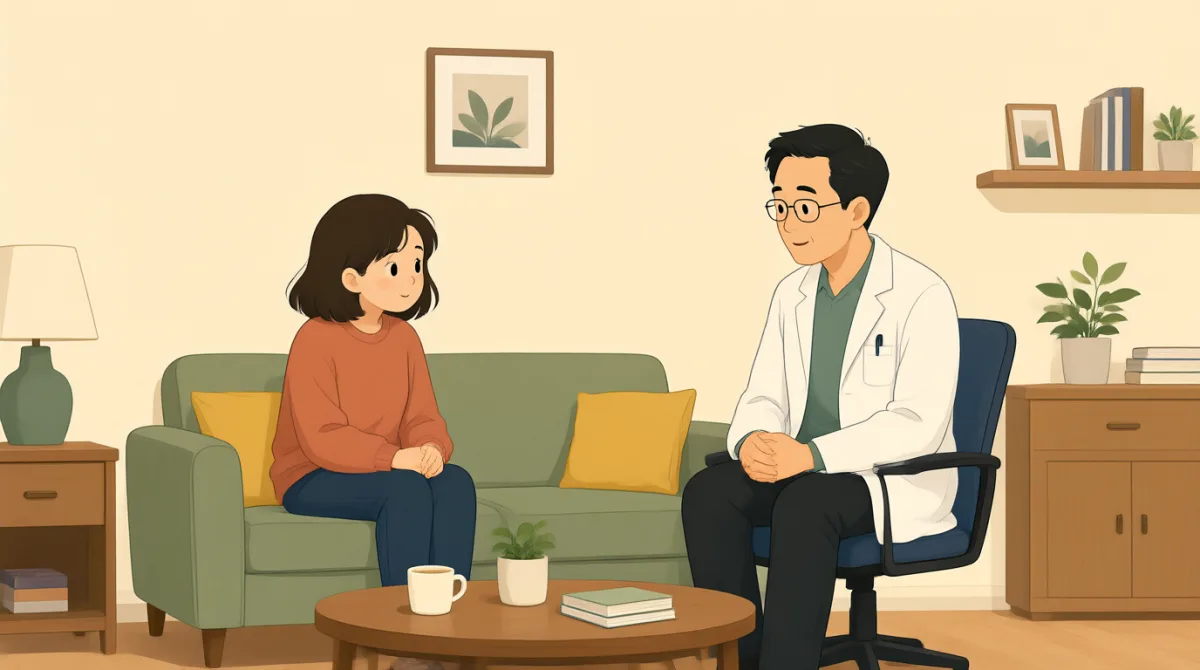

Before we settle on a plan, could we talk about side effects? If I start medication, how might it affect my work or my morning runs?
治療方針を決める前に、副作用についてお話ししてもいいですか?薬を飲み始めたら、仕事や朝のランニングにどんな影響があるでしょうか?

That depends on the medication, but many people have few problems. Some blood pressure medicines can cause dizziness or fatigue at first, so we’d start with a low dose and keep an eye on how you feel.
薬の種類によりますが、問題がほとんど起きない方も多いですよ。血圧の薬の中には、最初にめまいや疲れが出るものもあるので、少量から始めて、体調を注意深く見ていきましょう。
If I felt light-headed during a workout, should I stop exercising altogether, or would it be better to adjust the intensity while we see how I respond?
運動中にふらついたら、運動を完全にやめたほうがいいですか?それとも、様子を見ながら運動の強さを調整したほうがいいでしょうか?
You wouldn’t need to stop altogether, but don’t push through dizziness. Pause, sit down, and let me know if it keeps happening. We can review the dose or consider another option.
完全にやめる必要はありませんが、めまいがしても無理に続けないでください。いったん休んで座り、それでも繰り返すようなら知らせてください。薬の量を見直したり、別の選択肢を検討したりできます。
That’s reassuring. What changes would make the biggest difference alongside treatment? I’d rather focus on a few habits I can maintain than overhaul my whole routine overnight.
それなら安心です。治療と合わせて、どんなことを変えると一番効果がありますか?生活全体を一晩で変えるより、続けられる習慣をいくつか取り入れたいです。
That’s a sensible approach. Cutting back on salty, packaged foods can help; regular activity matters too. Even a brisk walk most days is useful, and you don’t have to join a gym.
それは現実的な考え方ですね。塩分の多い加工食品を控えると効果がありますし、定期的に体を動かすことも大切です。ほとんどの日に少し早足で歩くだけでも役立ちますし、ジムに通う必要はありません。
I can probably walk after work three times a week and check labels for sodium. My sleep has been inconsistent, though—does that affect blood pressure as well?
仕事のあと、週に3回くらいなら歩けそうです。それから、食品のラベルを見てナトリウムの量を確認します。睡眠時間が不規則なんですが、それも血圧に影響しますか?
It can. Try to keep a regular sleep schedule and limit caffeine later in the day. You don’t have to get everything right immediately; consistency is more important than perfection.
影響することがあります。睡眠時間をなるべく一定にして、午後遅くなってからのカフェインを控えてみてください。すぐに何もかも完璧にする必要はありません。完璧さより、続けることのほうが大切です。
Then I’d like to start with those changes and home monitoring, and hold off on medication for now, if that’s medically reasonable. Could we reassess in a few weeks?
では、まずその改善と自宅での血圧測定から始めて、医学的に問題がなければ、今は薬を始めずにおきたいです。数週間後にもう一度相談できますか?
That’s reasonable given your readings and preferences. Take measurements as we discussed, keep a brief record, and contact me sooner if you have concerning symptoms. We’ll review everything at your follow-up.
測定値とご希望を踏まえると、それでよいと思います。話し合ったとおりに測定して、簡単に記録をつけてください。気になる症状があれば、次の診察を待たずに連絡してください。次回の診察で、全体を一緒に確認しましょう。
語彙8
- settle on a plan方針を決める
To make a final decision about what to do. Here, Mia and her doctor are choosing how to manage her blood pressure.
これから何をするか、最終的な決定をすることです。この場面では、ミアと医師が血圧をどう管理するかを決めています。
- keep an eye on注意して様子を見る
To watch or check something carefully. The doctor will monitor how Mia feels after starting a low dose.
何かを注意深く観察したり、確認したりすることです。医師は、少量の薬を飲み始めたあと、ミアの体調を見守ります。
- light-headedふらつく、頭がくらくらする
Feeling faint or unsteady, as if you might lose your balance. It can be important to mention this symptom during exercise.
気を失いそうになったり、バランスを崩しそうになったりする感覚です。運動中にこの症状が出たら、医師に伝えることが大切です。
- push through無理をして続ける
To continue doing something despite discomfort or difficulty. The doctor advises Mia not to keep exercising if she feels dizzy.
不快さや困難があっても、何かを続けることです。医師は、ミアがめまいを感じたときに運動を続けないよう伝えています。
- cutting back on〜を控える
Reducing how much of something you use or consume. Here, it means eating fewer salty, packaged foods.
何かを使ったり摂取したりする量を減らすことです。ここでは、塩分の多い加工食品を食べる量を減らすという意味です。
- check labelsラベルを確認する
To read the information printed on product packaging. Mia plans to look at food labels to see how much sodium they contain.
商品の包装に印刷された情報を読むことです。ミアは食品ラベルを見て、ナトリウムがどれくらい含まれているか確認するつもりです。
- hold off on〜を見送る、先延ばしにする
To delay doing something or making a decision about it. Mia wants to wait before starting medication.
何かをすることや決めることを遅らせることです。ミアは薬を始めるのをしばらく待ちたいと思っています。
- reassess再評価する、見直す
To review a situation and decide whether anything should change. Mia and her doctor plan to do this at a later appointment.
状況をもう一度確認して、何かを変える必要があるか判断することです。ミアと医師は、後日の診察で見直す予定です。
重要な文8
- 1
If I start medication, how might it affect my work or my morning runs?
薬を飲み始めたら、仕事や朝のランニングにどんな影響があるでしょうか?
This is a polite way to ask about how treatment could affect daily activities. Reuse “If I start [treatment], how might it affect [activity]?” when discussing possible changes to your routine.
治療が日常の活動にどう影響するか、丁寧に尋ねる表現です。生活習慣への影響について話すときは、“If I start [treatment], how might it affect [activity]?”([治療]を始めたら、[活動]にどんな影響があるでしょうか?)を使ってみましょう。
- 2
You wouldn’t need to stop altogether, but don’t push through dizziness.
完全にやめる必要はありませんが、めまいがしても無理に続けないでください。
This sentence reassures someone while giving a clear safety warning. “You wouldn’t need to [action], but don’t [unsafe action]” can be adapted to explain what is and isn’t necessary.
相手を安心させながら、安全のための注意をはっきり伝える文です。“You wouldn’t need to [action], but don’t [unsafe action]”は、「[行動]する必要はありませんが、[危険な行動]はしないでください」という形で、必要なことと避けるべきことを説明するのに使えます。
- 3
I’d rather focus on a few habits I can maintain than overhaul my whole routine overnight.
生活全体を一晩で変えるより、続けられる習慣をいくつか取り入れたいです。
This explains a preference for realistic, sustainable changes. Use “I’d rather focus on [manageable goal] than [bigger change]” to set practical expectations.
現実的で長く続けられる変化を望んでいることを伝えています。“I’d rather focus on [manageable goal] than [bigger change]”は、「[大きな変化]をするより、[無理なく取り組める目標]に集中したいです」と、現実的な希望を伝えるときに使えます。
- 4
Even a brisk walk most days is useful, and you don’t have to join a gym.
ほとんどの日に少し早足で歩くだけでも役立ちますし、ジムに通う必要はありません。
This shows that a helpful change does not have to be complicated or expensive. It is useful when suggesting an achievable alternative to a more demanding option.
役立つ習慣は、複雑でお金がかかるものでなくてもよいと伝える表現です。負担の大きい方法に代わる、実行しやすい選択肢を提案するときに便利です。
- 5
You don’t have to get everything right immediately; consistency is more important than perfection.
すぐに何もかも完璧にする必要はありません。完璧さより、続けることのほうが大切です。
This offers encouragement by emphasizing steady effort over flawless results. Reuse the contrast “consistency is more important than perfection” when discussing habits or progress.
完璧な結果より、着実に続けることが大切だと伝えて相手を励ましています。習慣や進歩について話すときは、“consistency is more important than perfection”という対比を使ってみましょう。
- 6
Then I’d like to start with those changes and home monitoring, and hold off on medication for now, if that’s medically reasonable.
では、まずその改善と自宅での血圧測定から始めて、医学的に問題がなければ、今は薬を始めずにおきたいです。
This politely states a preference while recognizing that the other person has professional expertise. The phrase “if that’s [adjective] reasonable” helps make a request open to discussion.
相手に専門知識があることを認めながら、丁寧に希望を伝えています。“if that’s [adjective] reasonable”は、「それが[形容詞]妥当であれば」という意味で、相談の余地を残しながらお願いするときに役立ちます。
- 7
Could we reassess in a few weeks?
数週間後にもう一度相談できますか?
This is a concise, polite way to suggest reviewing a decision later. Replace “in a few weeks” with a time that suits your situation.
後日、決定を見直すことを簡潔かつ丁寧に提案する表現です。“in a few weeks”を状況に合った時期に置き換えて使いましょう。
- 8
Take measurements as we discussed, keep a brief record, and contact me sooner if you have concerning symptoms.
話し合ったとおりに測定して、簡単に記録をつけてください。気になる症状があれば、次の診察を待たずに連絡してください。
This gives clear follow-up instructions and explains when to seek help sooner. The conditional “if you have…” is useful for describing what to do if a particular situation arises.
次回の診察までにすることと、早めに助けを求めるべき場合を明確に伝えています。“if you have…”(もし〜があれば)という条件表現は、特定の状況が起きたときにどうするか説明するのに便利です。