Saying What You Do
仕事内容を伝える
At a community center, Emma meets Mia and says what she does. Mia asks a simple question about her job.
コミュニティセンターで、エマはミアに会い、自分の仕事について話します。ミアは仕事について簡単な質問をします。
会話7
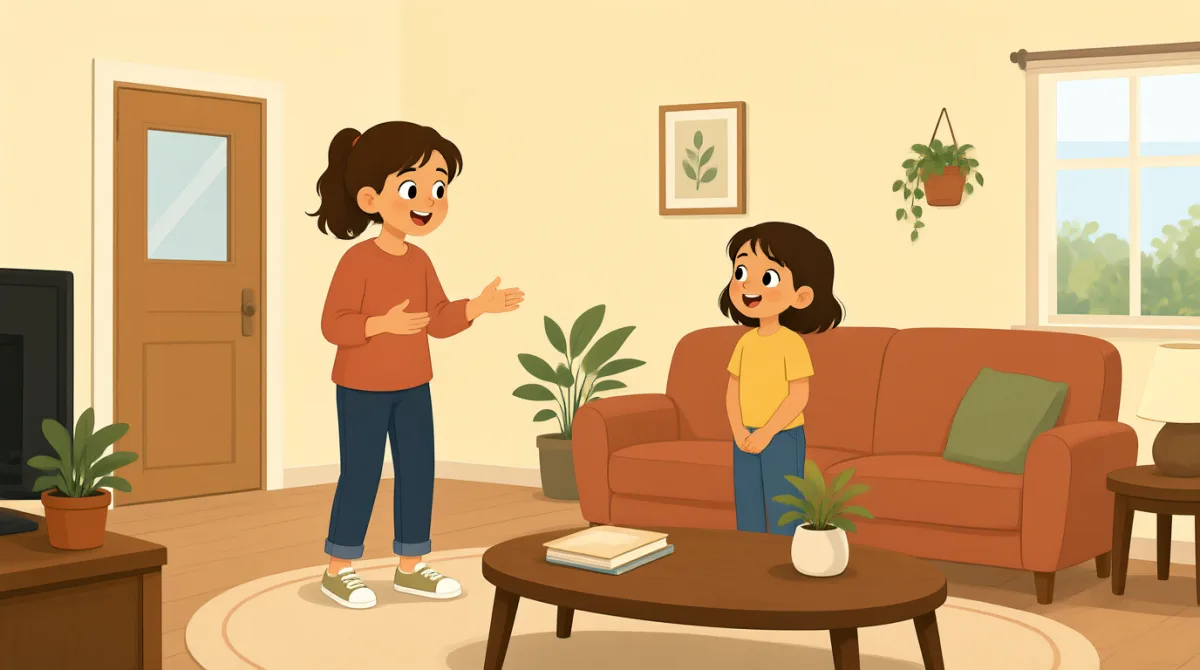

Hi, Mia. I’m Emma. Nice to meet you.
こんにちは、ミア。エマです。はじめまして。

Hi, Emma. Nice to meet you, too.
こんにちは、エマ。こちらこそ、はじめまして。
I work at a school. I’m a teacher.
学校で働いています。教師です。
Oh, nice! What do you teach?
へえ、いいですね!何を教えているんですか?
I teach English to children.
子どもたちに英語を教えています。
That sounds nice. Do you like your job?
いいですね。仕事は好きですか?
Yes, I do. I like helping my students.
はい。生徒たちの力になれるのが好きです。
語彙7
- Nice to meet you.はじめまして。
Say this when you meet someone for the first time. You can also say, “Nice to meet you, too.”
初めて会った人に言う表現です。“Nice to meet you, too.”(こちらこそ、はじめまして)と言うこともできます。
- work at a school学校で働く
Use this phrase to say where you work. You can replace “a school” with another workplace.
どこで働いているかを伝える表現です。“a school”を別の職場に置き換えられます。
- teacher教師
A teacher helps people learn. You can use this word to say what your job is.
教師は、人が学ぶのを助ける人です。自分の職業を伝えるときに使えます。
- What do you teach?何を教えているんですか?
Ask this to find out what subject someone teaches. You can change “teach” to ask about other kinds of work.
相手がどの教科を教えているのか尋ねる表現です。“teach”を別の仕事を尋ねる言葉に変えることもできます。
- children子どもたち
Children are young people. Use this word to say who someone works with.
子どもたちは、年齢の若い人たちのことです。誰と一緒に働いているかを伝えるときに使えます。
- Do you like your job?仕事は好きですか?
Ask this simple question to find out if someone enjoys their work. You can replace “your job” with another thing, such as “your school.”
相手が仕事を楽しんでいるかを尋ねる、簡単な質問です。“your job”を“your school”のような別のものに置き換えられます。
- helping my students生徒たちの力になること
This means giving support to the people you teach. Use “helping my…” to describe something you enjoy doing.
教えている人たちを支える、という意味です。“helping my…”を使うと、自分がするのを楽しんでいることを表せます。
重要な文8
- 1
I’m Emma.
エマです。
Use this short sentence to tell someone your name. Replace “Emma” with your own name.
名前を伝えるための短い文です。“Emma”を自分の名前に置き換えましょう。
- 2
Nice to meet you.
はじめまして。
Say this when you meet someone for the first time. You can use it after saying your name.
初めて会った人に言う表現です。名前を伝えたあとに使えます。
- 3
I work at a school.
学校で働いています。
Use this sentence to say where you work. Replace “a school” with your workplace.
どこで働いているかを伝える文です。“a school”を自分の職場に置き換えましょう。
- 4
I’m a teacher.
教師です。
Use this sentence to say what your job is. Replace “a teacher” with your job.
自分の職業を伝える文です。“a teacher”を自分の職業に置き換えましょう。
- 5
What do you teach?
何を教えているんですか?
Use this question to ask a teacher what subject they teach. You can ask, “What do you do?” to ask about someone's job in general.
教師に、何の教科を教えているのか尋ねる質問です。相手の仕事全般について聞くなら、“What do you do?”(どんなお仕事をしていますか?)と尋ねられます。
- 6
I teach English to children.
子どもたちに英語を教えています。
Use this sentence to say what you teach and who you teach. You can change “English” and “children” to give your own details.
何を誰に教えているかを伝える文です。“English”や“children”を変えて、自分のことを説明できます。
- 7
Do you like your job?
仕事は好きですか?
Use this question to ask if someone enjoys their work. It is a friendly, simple way to continue a conversation.
相手が仕事を楽しんでいるか尋ねる質問です。会話を続けるのに使える、親しみやすく簡単な表現です。
- 8
Yes, I do.
はい、好きです。
Use this short answer to say yes to a question that begins with “Do you…?” You can add a reason after it.
“Do you…?”で始まる質問に、はいと答える短い表現です。このあとに理由を付け加えることもできます。