Asking About Class Times
授業の時間を尋ねる
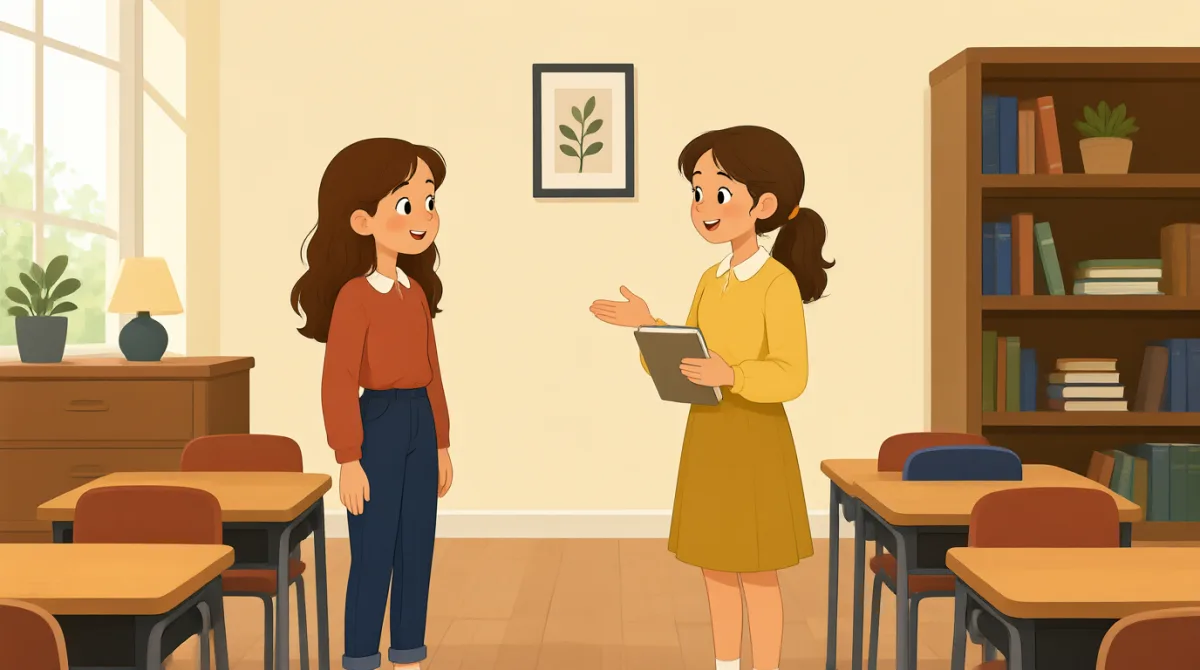
Emma asks when the class meets. Grace explains the days and times, and Emma checks that she understands.
エマが授業の日程を尋ねます。グレースが曜日と時間を説明し、エマは内容を確認します。
会話8

What days do we have class?
授業は何曜日にあるの?

We meet on Mondays and Wednesdays.
月曜日と水曜日だよ。
What time does class start?
授業は何時に始まるの?
It starts at six in the evening.
夕方の6時に始まるよ。
And when does it end?
それで、何時に終わるの?
It ends at seven thirty.
7時半に終わるよ。
Mondays and Wednesdays, six to seven thirty. Right?
月曜日と水曜日の、6時から7時半までだね?
That’s right. See you in class!
そうだよ。授業で会おうね!
語彙8
- What days何曜日
Use this phrase to ask which days something happens. Here, Emma asks about the class schedule.
何かが何曜日にあるのか尋ねるときに使う表現です。ここでは、エマが授業の日程を尋ねています。
- have class授業を受ける
This means to take part in a class. You can say, “We have class on Friday.”
授業に参加するという意味です。“We have class on Friday.”(金曜日に授業があります。)のように言えます。
- meet集まる
Here, “meet” means to get together for class. You can say, “We meet on Tuesdays.”
ここでの“meet”は、授業のために集まるという意味です。“We meet on Tuesdays.”(火曜日に集まります。)のように言えます。
- on Mondays and Wednesdays月曜日と水曜日に
This tells someone which days an event happens. Replace the days to talk about a different schedule.
予定が何曜日にあるのか伝える表現です。曜日を入れ替えれば、別の日程について話せます。
- What time何時
Use this phrase to ask about a specific time. You can say, “What time does the movie start?”
具体的な時間を尋ねるときに使う表現です。“What time does the movie start?”(映画は何時に始まりますか?)のように言えます。
- in the evening夕方に
This means the later part of the day, after the afternoon. You can use it to say when something happens.
午後より遅い時間帯を指します。何かがいつあるのか伝えるときに使えます。
- ends終わる
This means finishes. You can ask, “When does the meeting end?”
「終了する」という意味です。“When does the meeting end?”(会議はいつ終わりますか?)と尋ねられます。
- That’s right.そのとおり。
Use this to confirm that something is correct. It is a short, natural reply.
何かが正しいと確認するときに使います。短くて自然な返事です。
重要な文8
- 1
What days do we have class?
授業は何曜日にあるの?
Use this to ask which days a class meets. You can replace “class” with another activity, such as “What days do we have practice?”
授業が何曜日にあるのか尋ねる表現です。“class”を別の活動に置き換えて、“What days do we have practice?”(練習は何曜日にあるの?)のようにも言えます。
- 2
We meet on Mondays and Wednesdays.
月曜日と水曜日に集まるよ。
This gives the days when people get together. Replace the days with the correct ones for your schedule.
人が集まる曜日を伝える表現です。自分の日程に合わせて曜日を入れ替えてください。
- 3
What time does class start?
授業は何時に始まるの?
Use this to ask when a class or event begins. You can replace “class” with another event, such as “What time does the movie start?”
授業やイベントがいつ始まるのか尋ねる表現です。“class”を別のイベントに置き換えて、“What time does the movie start?”(映画は何時に始まるの?)のようにも言えます。
- 4
It starts at six in the evening.
夕方の6時に始まるよ。
This tells someone the start time. Replace “six” with another time to give a different answer.
始まる時間を伝える表現です。別の時間を答えるときは、“six”をその時間に置き換えます。
- 5
And when does it end?
それで、何時に終わるの?
Use this to ask when something finishes. “It” refers to the class or event you were just talking about.
何かがいつ終わるのか尋ねる表現です。“It”は、直前に話していた授業やイベントを指します。
- 6
It ends at seven thirty.
7時半に終わるよ。
This gives the finish time. You can use the same pattern to say when a meeting, lesson, or event ends.
終わる時間を伝える表現です。同じ形で、会議やレッスン、イベントがいつ終わるのかも言えます。
- 7
Mondays and Wednesdays, six to seven thirty. Right?
月曜日と水曜日の、6時から7時半までだね?
Use this to repeat the days and times and check that you understood correctly. You can repeat any schedule and add “Right?” to confirm it.
曜日と時間を繰り返して、正しく理解できたか確認するときに使います。予定を繰り返したあとに“Right?”を加えれば、確認できます。
- 8
That’s right.
そのとおり。
Use this simple sentence to confirm that someone has understood correctly. It works well after a question such as “Right?”.
相手の理解が正しいと確認する、シンプルな表現です。“Right?”のような質問への返事にぴったりです。