Saying Your English Level
英語のレベルを伝える
Grace asks Emma about her English. Emma says she is a beginner and wants to learn more.
グレースがエマに英語のレベルを尋ねます。エマは初心者で、もっと学びたいと伝えます。
会話6
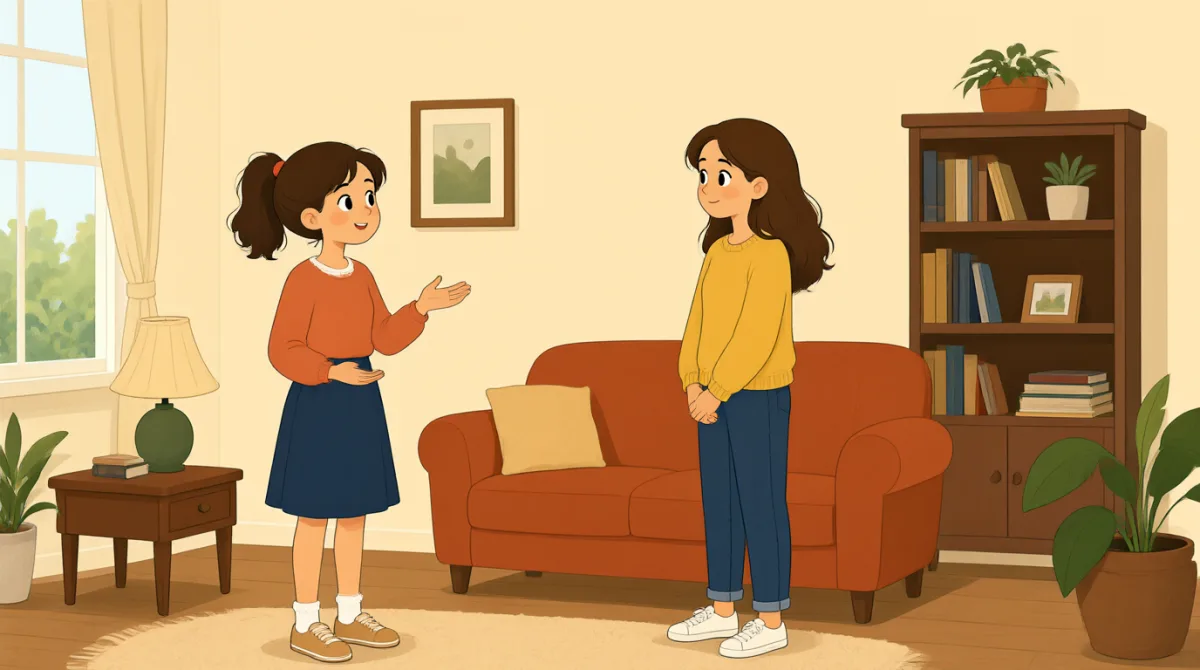

Good morning, Emma. How is your English?
おはよう、エマ。英語はどう?

I am a beginner. I know a little.
初心者だよ。少しだけ分かるよ。
That is okay. What do you want to learn?
大丈夫だよ。何を学びたい?
I want to speak English better.
英語をもっと上手に話せるようになりたいんだ。
Great. We can practice speaking in class.
いいね。授業で話す練習ができるよ。
Thank you. I want to learn more.
ありがとう。もっと学びたいな。
語彙7
- Good morningおはようございます
A greeting you use in the morning. You can say it when you meet your teacher or a classmate.
朝に使うあいさつです。先生やクラスメートに会ったときに言えます。
- beginner初心者
A beginner is someone who is new to a skill. You can use it to describe your level in English.
あるスキルを始めたばかりの人のことです。英語のレベルを説明するときにも使えます。
- a little少し
This means a small amount. You can say “I know a little” to talk about what you know.
量がわずかだという意味です。知っていることについて話すとき、「I know a little」と言えます。
- That is okay大丈夫です
This means something is all right or not a problem. You can use it to make someone feel comfortable.
問題ない、差し支えないという意味です。相手を安心させたいときに使えます。
- want to learn学びたい
This means you would like to learn something. You can say what you want to learn after this phrase.
何かを学びたいという意味です。この表現のあとに、学びたいことを続けて言えます。
- practice speaking話す練習をする
This means to speak so you can get better. You can practice speaking a language in class.
上達するために話すことです。授業で、言語を話す練習ができます。
- learn moreもっと学ぶ
This means to get more knowledge or skills. You can use it to say you want to keep learning.
知識やスキルをさらに身につけることです。学び続けたいと伝えるときに使えます。
重要な文8
- 1
Good morning, Emma.
おはよう、エマ。
Use this simple greeting when you meet someone in the morning. You can replace “Emma” with another person's name.
朝に人と会ったときに使う、簡単なあいさつです。「Emma」をほかの人の名前に変えて使えます。
- 2
How is your English?
英語はどう?
Use this question to ask about someone's English. You can replace “English” with another skill or subject.
相手の英語について尋ねるときに使う質問です。「English」を別のスキルや科目に変えて使えます。
- 3
I am a beginner.
初心者だよ。
Use this sentence to say that you are new to something. Replace “beginner” with your level or role when needed.
何かを始めたばかりだと伝える表現です。必要に応じて「beginner」を自分のレベルや役割に置き換えられます。
- 4
I know a little.
少しだけ分かるよ。
Use this sentence to say you know a small amount. You can use it when you are still learning a subject or skill.
知っていることが少しだけだと伝える表現です。科目やスキルをまだ学んでいる途中のときに使えます。
- 5
What do you want to learn?
何を学びたい?
Use this question to ask what someone would like to learn. You can replace “learn” with another action, such as “do” or “practice.”
相手が何を学びたいか尋ねるときに使う質問です。「learn」を「do」や「practice」など、別の動作を表す語に置き換えられます。
- 6
I want to speak English better.
英語をもっと上手に話せるようになりたいんだ。
Use this sentence to say what skill you want to improve. Replace “English” with another language or skill.
上達させたいスキルを伝える表現です。「English」を別の言語やスキルに置き換えられます。
- 7
We can practice speaking in class.
授業で一緒に話す練習ができるよ。
Use this sentence to suggest practicing together in class. You can replace “speaking” with another class activity.
授業で一緒に練習しようと提案するときに使う表現です。「speaking」を別の授業内の活動に置き換えられます。
- 8
Thank you.
ありがとう。
Use this polite phrase to show that you are grateful. You can say it after someone offers help or support.
感謝の気持ちを伝える丁寧な表現です。誰かが助けてくれたり、支えてくれたりしたあとに言えます。