Asking What to See Today
Preguntar qué visitar hoy
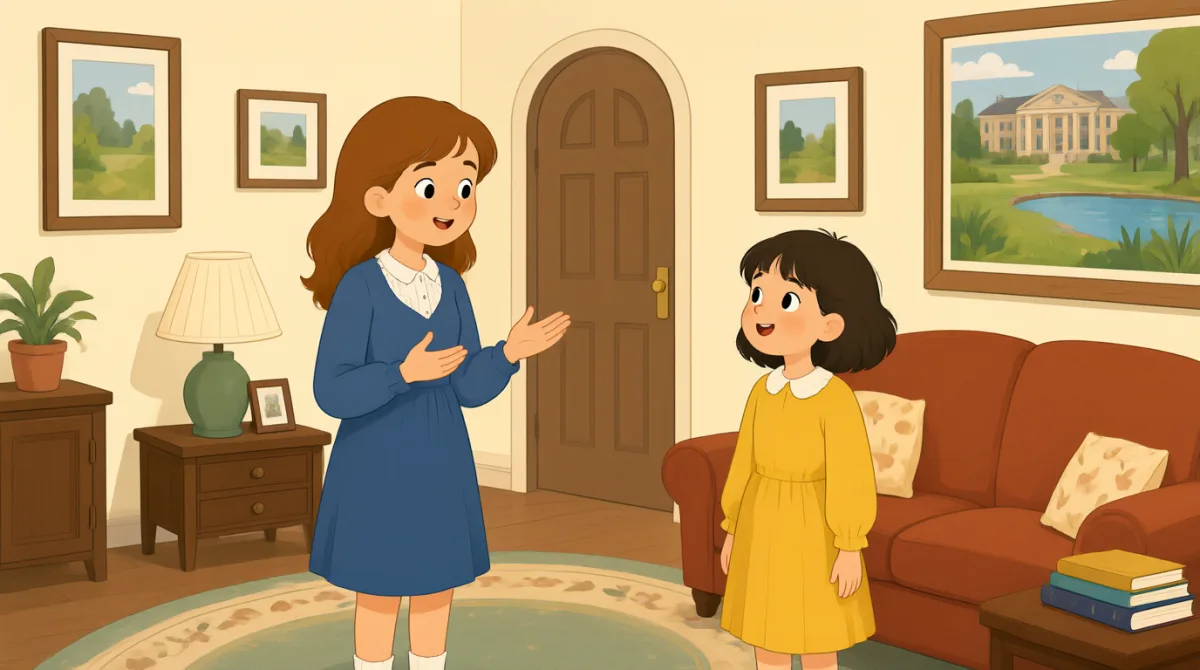
Emma asks Grace what places she can see today. Grace suggests a nearby museum and a park.
Emma le pregunta a Grace qué lugares puede visitar hoy. Grace le recomienda un museo cercano y un parque.
Diálogo8

What can I see today?
¿Qué puedo visitar hoy?

You can visit the museum and the park.
Puedes visitar el museo y el parque.
Is the museum near here?
¿El museo está cerca de aquí?
Yes, it is a short walk from here.
Sí, está a un corto paseo de aquí.
What can I see at the museum?
¿Qué puedo ver en el museo?
You can see art and local history.
Puedes ver arte e historia local.
Is the park nice today?
¿Está bonito el parque hoy?
Yes. It is sunny, so the park is lovely.
Sí. Hace sol, así que el parque está precioso.
Vocabulario8
- visitvisitar
To go to a place, such as a museum or park. Use “visit” to talk about places you want to see.
Ir a un lugar, como un museo o un parque. Usa “visit” para hablar de los lugares que quieres conocer.
- museummuseo
A place where people can see art, history, and other interesting things.
Un lugar donde la gente puede ver arte, historia y otras cosas interesantes.
- parkparque
An outdoor place where people can walk and enjoy nature.
Un espacio al aire libre donde la gente puede pasear y disfrutar de la naturaleza.
- near herecerca de aquí
Close to the place where you are now. Ask “Is it near here?” to find out if a place is close.
Cerca del lugar donde estás ahora. Pregunta “Is it near here?” para saber si un lugar está cerca.
- a short walka un corto paseo
A small amount of walking to get somewhere. Use “It is a short walk” to say that a place is close.
Una distancia que se recorre caminando en poco tiempo. Usa “It is a short walk” para decir que un lugar está cerca.
- local historyhistoria local
The history of a particular town or area. You can learn about local history at some museums.
La historia de una ciudad o una zona en particular. En algunos museos puedes aprender sobre la historia local.
- sunnysoleado
Bright with sunshine. Use it to describe the weather.
Que está despejado y hace sol. Se usa para describir el tiempo.
- lovelyprecioso
Very nice or pleasant. You can use it to describe a place or a day.
Muy bonito o agradable. Puedes usarlo para describir un lugar o un día.
Frases clave8
- 1
What can I see today?
¿Qué puedo visitar hoy?
Use this question to ask what places or sights are available to visit today. You can replace “today” with another time, such as “this afternoon.”
Usa esta pregunta para preguntar qué lugares o sitios de interés puedes visitar hoy. Puedes cambiar “today” por otro momento, como “this afternoon.”
- 2
You can visit the museum and the park.
Puedes visitar el museo y el parque.
Use “You can visit…” to suggest places someone may want to see. Replace the places with other local sights.
Usa “You can visit…” para recomendar lugares que alguien podría querer conocer. Cambia los lugares por otros sitios de interés de la zona.
- 3
Is the museum near here?
¿El museo está cerca de aquí?
Use this yes-or-no question to ask if a place is close to where you are. Replace “the museum” with another place.
Usa esta pregunta de sí o no para preguntar si un lugar está cerca de donde estás. Cambia “the museum” por otro lugar.
- 4
Yes, it is a short walk from here.
Sí, está a un corto paseo de aquí.
This is a simple way to say that a place is close and easy to reach on foot. Replace “it” with the place you are talking about.
Esta es una forma sencilla de decir que un lugar está cerca y es fácil llegar caminando. Cambia “it” por el lugar del que estás hablando.
- 5
What can I see at the museum?
¿Qué puedo ver en el museo?
Use this question to ask what is inside a place or what you can experience there. Replace “the museum” with another place.
Usa esta pregunta para saber qué hay dentro de un lugar o qué puedes ver allí. Cambia “the museum” por otro lugar.
- 6
You can see art and local history.
Puedes ver arte e historia local.
Use “You can see…” to explain what a visitor can find at a place. Replace “art and local history” with other things to see.
Usa “You can see…” para explicar qué puede encontrar un visitante en un lugar. Cambia “art and local history” por otras cosas que se puedan ver.
- 7
Is the park nice today?
¿Está bonito el parque hoy?
Use this question to ask if a place is pleasant at the moment. Replace “the park” with another place.
Usa esta pregunta para saber si un lugar está agradable en este momento. Cambia “the park” por otro lugar.
- 8
Yes. It is sunny, so the park is lovely.
Sí. Hace sol, así que el parque está precioso.
This sentence gives a reason why a place is nice today. Use “It is [weather], so…” to connect the weather with how a place feels.
Esta frase explica por qué un lugar está agradable hoy. Usa “It is [weather], so…” para relacionar el tiempo con cómo se siente un lugar.