Asking What to See Today
आज क्या देखें, यह पूछना
Emma asks Grace what places she can see today. Grace suggests a nearby museum and a park.
एमा ग्रेस से पूछती है कि वह आज कौन-कौन सी जगहें देख सकती है। ग्रेस पास के एक संग्रहालय और एक पार्क जाने का सुझाव देती है।
संवाद8
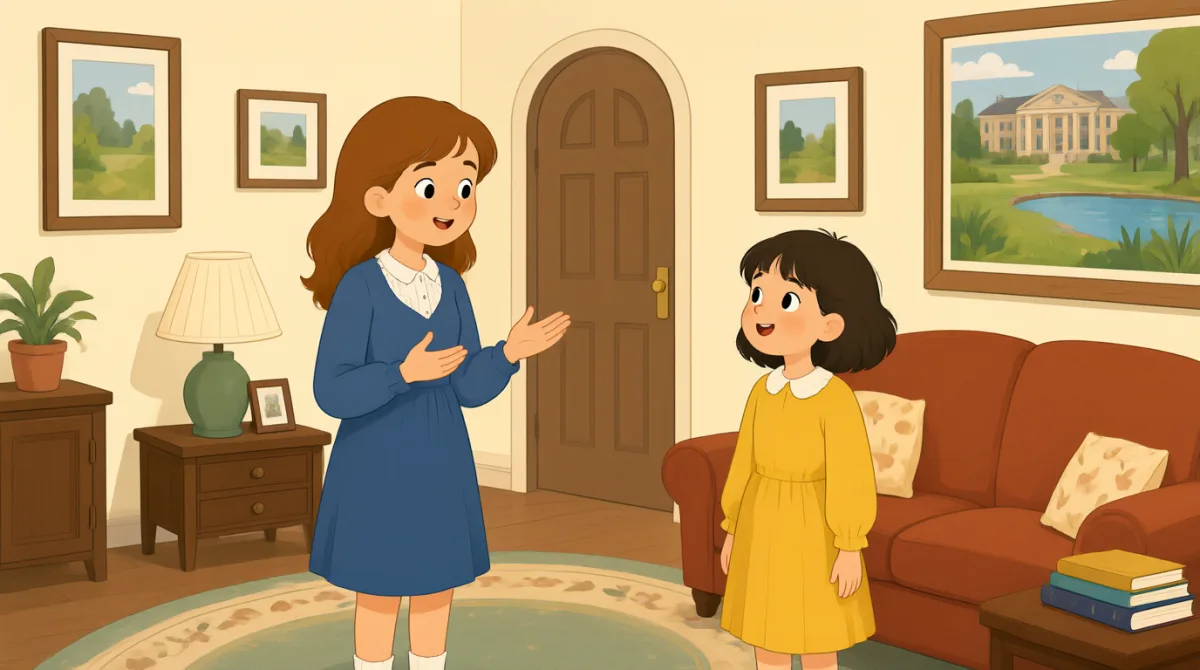

What can I see today?
मैं आज क्या देख सकती हूँ?

You can visit the museum and the park.
तुम संग्रहालय और पार्क जा सकती हो।
Is the museum near here?
क्या संग्रहालय यहाँ पास में है?
Yes, it is a short walk from here.
हाँ, यहाँ से थोड़ी ही दूर पैदल चलना पड़ता है।
What can I see at the museum?
मैं संग्रहालय में क्या देख सकती हूँ?
You can see art and local history.
तुम वहाँ कला और स्थानीय इतिहास देख सकती हो।
Is the park nice today?
क्या आज पार्क अच्छा है?
Yes. It is sunny, so the park is lovely.
हाँ। धूप खिली है, इसलिए पार्क बहुत सुंदर लग रहा है।
शब्दावली8
- visitजाना
To go to a place, such as a museum or park. Use “visit” to talk about places you want to see.
किसी जगह पर जाना, जैसे किसी संग्रहालय या पार्क में। जिन जगहों को आप देखना चाहते हैं, उनके बारे में बात करते समय “visit” का इस्तेमाल करें।
- museumसंग्रहालय
A place where people can see art, history, and other interesting things.
ऐसी जगह जहाँ लोग कला, इतिहास और अन्य दिलचस्प चीज़ें देख सकते हैं।
- parkपार्क
An outdoor place where people can walk and enjoy nature.
खुली जगह जहाँ लोग टहल सकते हैं और प्रकृति का आनंद ले सकते हैं।
- near hereयहाँ पास में
Close to the place where you are now. Ask “Is it near here?” to find out if a place is close.
उस जगह के करीब जहाँ आप अभी हैं। यह जानने के लिए कि कोई जगह पास में है या नहीं, पूछें “Is it near here?” (क्या यह यहाँ पास में है?)
- a short walkथोड़ी दूर पैदल
A small amount of walking to get somewhere. Use “It is a short walk” to say that a place is close.
किसी जगह तक पहुँचने के लिए थोड़ी देर पैदल चलना। यह बताने के लिए कि कोई जगह पास में है, “It is a short walk” (वहाँ पैदल जाने में थोड़ी ही देर लगती है) कहें।
- local historyस्थानीय इतिहास
The history of a particular town or area. You can learn about local history at some museums.
किसी खास शहर या इलाके का इतिहास। कुछ संग्रहालयों में आप स्थानीय इतिहास के बारे में जान सकते हैं।
- sunnyधूप वाला
Bright with sunshine. Use it to describe the weather.
जहाँ धूप खिली हो। इसका इस्तेमाल मौसम का वर्णन करने के लिए करें।
- lovelyसुंदर
Very nice or pleasant. You can use it to describe a place or a day.
बहुत अच्छा या सुखद। आप किसी जगह या दिन का वर्णन करने के लिए इसका इस्तेमाल कर सकते हैं।
मुख्य वाक्य8
- 1
What can I see today?
मैं आज क्या देख सकती हूँ?
Use this question to ask what places or sights are available to visit today. You can replace “today” with another time, such as “this afternoon.”
आज घूमने के लिए कौन-कौन सी जगहें या दर्शनीय स्थल उपलब्ध हैं, यह पूछने के लिए इस सवाल का इस्तेमाल करें। “today” की जगह कोई और समय, जैसे “this afternoon”, रख सकते हैं।
- 2
You can visit the museum and the park.
तुम संग्रहालय और पार्क जा सकती हो।
Use “You can visit…” to suggest places someone may want to see. Replace the places with other local sights.
किसी को ऐसी जगहों के सुझाव देने के लिए “You can visit…” का इस्तेमाल करें जिन्हें वे देखना चाहें। जगहों की जगह आस-पास के दूसरे दर्शनीय स्थल रख सकते हैं।
- 3
Is the museum near here?
क्या संग्रहालय यहाँ पास में है?
Use this yes-or-no question to ask if a place is close to where you are. Replace “the museum” with another place.
आप जहाँ हैं, वहाँ से कोई जगह पास में है या नहीं, यह पूछने के लिए इस हाँ-या-नहीं वाले सवाल का इस्तेमाल करें। “the museum” की जगह किसी दूसरी जगह का नाम रख सकते हैं।
- 4
Yes, it is a short walk from here.
हाँ, यहाँ से थोड़ी ही दूर पैदल चलना पड़ता है।
This is a simple way to say that a place is close and easy to reach on foot. Replace “it” with the place you are talking about.
यह बताने का आसान तरीका है कि कोई जगह पास में है और वहाँ पैदल आसानी से पहुँचा जा सकता है। जिस जगह की बात हो रही है, उसके नाम की जगह “it” रख सकते हैं।
- 5
What can I see at the museum?
मैं संग्रहालय में क्या देख सकती हूँ?
Use this question to ask what is inside a place or what you can experience there. Replace “the museum” with another place.
किसी जगह के अंदर क्या है या वहाँ आप क्या अनुभव कर सकते हैं, यह पूछने के लिए इस सवाल का इस्तेमाल करें। “the museum” की जगह किसी दूसरी जगह का नाम रख सकते हैं।
- 6
You can see art and local history.
तुम वहाँ कला और स्थानीय इतिहास देख सकती हो।
Use “You can see…” to explain what a visitor can find at a place. Replace “art and local history” with other things to see.
किसी जगह पर आने वाला व्यक्ति क्या देख सकता है, यह बताने के लिए “You can see…” का इस्तेमाल करें। “art and local history” की जगह देखने लायक दूसरी चीज़ें रख सकते हैं।
- 7
Is the park nice today?
क्या आज पार्क अच्छा है?
Use this question to ask if a place is pleasant at the moment. Replace “the park” with another place.
यह पूछने के लिए इस सवाल का इस्तेमाल करें कि कोई जगह इस समय सुखद है या नहीं। “the park” की जगह किसी दूसरी जगह का नाम रख सकते हैं।
- 8
Yes. It is sunny, so the park is lovely.
हाँ। धूप खिली है, इसलिए पार्क बहुत सुंदर लग रहा है।
This sentence gives a reason why a place is nice today. Use “It is [weather], so…” to connect the weather with how a place feels.
यह वाक्य बताता है कि आज कोई जगह अच्छी क्यों है। मौसम को किसी जगह के एहसास से जोड़ने के लिए “It is [weather], so…” का इस्तेमाल करें।