First Piano Lesson Introduction
প্রথম পিয়ানো পাঠের পরিচিতি
A student has their first piano lesson, meeting the teacher, learning about posture, and identifying basic keys.
একজন শিক্ষার্থী প্রথম পিয়ানো পাঠে শিক্ষকের সঙ্গে পরিচিত হয়, সঠিক ভঙ্গি শেখে এবং পিয়ানোর মৌলিক কী-গুলো চিনতে শেখে।
সংলাপ9
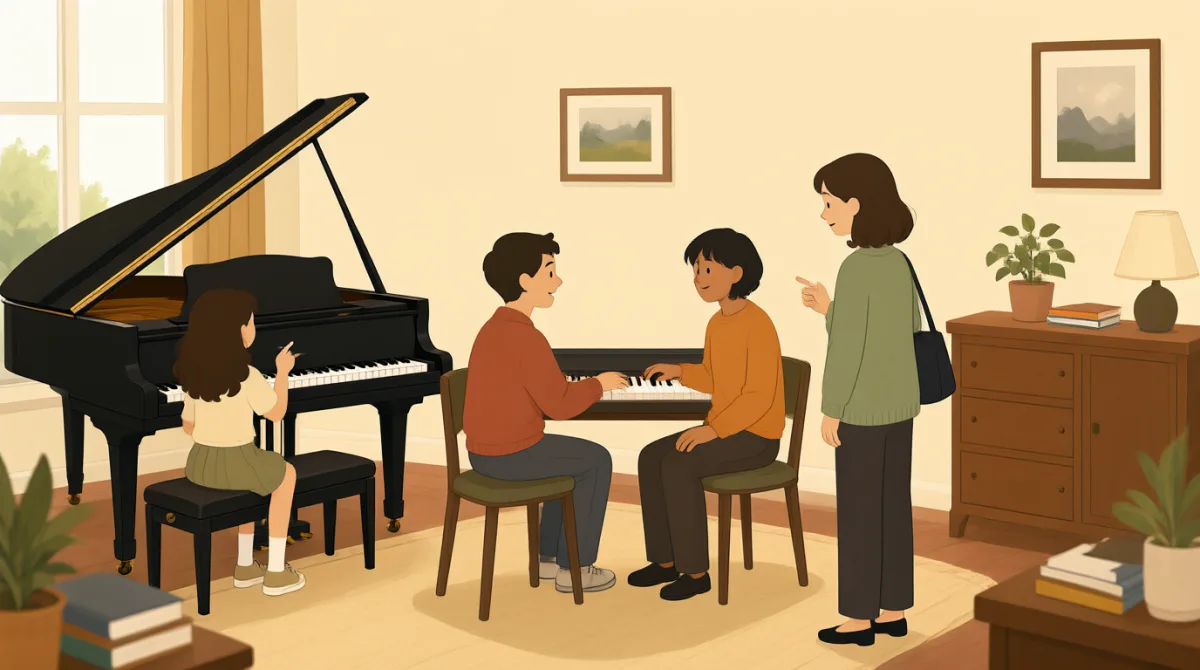

Welcome! Are you excited for your first piano lesson?
স্বাগতম! তোমার প্রথম পিয়ানো পাঠ নিয়ে কি খুব উত্তেজিত?

Yes, I am! I've always wanted to learn the piano.
হ্যাঁ, খুব! আমি সব সময়ই পিয়ানো শিখতে চেয়েছি।
That's great to hear! Let's start with proper posture. Sit up straight, shoulders relaxed, and make sure your forearms are parallel to the floor.
শুনে খুব ভালো লাগল! চলো, সঠিক ভঙ্গি দিয়ে শুরু করি। সোজা হয়ে বসো, কাঁধ শিথিল রাখো, আর খেয়াল রেখো যেন তোমার বাহুর নিচের অংশ মেঝের সমান্তরাল থাকে।
Like this?
এভাবে?
Perfect! Now, let's look at the keys. Do you see the pattern of two black keys and three black keys?
একদম ঠিক! এবার চাবিগুলোর দিকে তাকাই। তুমি কি দুইটি কালো চাবি আর তিনটি কালো চাবির এই বিন্যাসটা দেখতে পাচ্ছ?
Yes, I do.
হ্যাঁ, দেখতে পাচ্ছি।
Great! The white key to the left of every two black keys is always C. Can you find all the Cs on the piano?
দারুণ! প্রতি দুইটি কালো চাবির ঠিক বাঁ পাশের সাদা চাবিটিই সব সময় C। পিয়ানোর সব C কি খুঁজে বের করতে পারবে?
Let me try... Is this one C, and this one?
দেখি চেষ্টা করে... এটা কি C? আর এটা?
That's right! You've got it. We'll work on finger placement next. You're doing great for your first lesson!
ঠিক বলেছ! পেরেছ। এরপর আমরা আঙুল রাখার জায়গা নিয়ে কাজ করব। প্রথম পাঠের জন্য তুমি দারুণ করছ!
শব্দভান্ডার6
- excitedউত্তেজিত
Feeling very happy and enthusiastic about something, like starting a new activity. Use it to express positive emotions, e.g., 'I'm excited about the trip.'
কোনো কিছু নিয়ে খুব খুশি ও উৎসাহী বোধ করা, যেমন নতুন কোনো কাজ শুরু করার সময়। ইতিবাচক অনুভূতি প্রকাশ করতে শব্দটি ব্যবহার করো; যেমন, 'I'm excited about the trip.' (ভ্রমণটা নিয়ে আমি খুব উত্তেজিত।)
- postureবসার বা দাঁড়ানোর ভঙ্গি
The way you hold your body when sitting or standing. Important in music lessons to avoid strain, e.g., 'Good posture helps you play better.'
বসে বা দাঁড়িয়ে তুমি যেভাবে শরীর ধরে রাখো, সেটাই posture। পেশিতে চাপ এড়াতে সংগীতের পাঠে সঠিক ভঙ্গি জরুরি; যেমন, 'Good posture helps you play better.' (সঠিক ভঙ্গি তোমাকে আরও ভালো বাজাতে সাহায্য করে।)
- relaxedশিথিল
Calm and not tense. In lessons, it means keeping your body loose for better control, e.g., 'Keep your hands relaxed.'
শান্ত এবং পেশিতে টান নেই—এমন অবস্থাকে relaxed বলে। পাঠের সময় ভালো নিয়ন্ত্রণের জন্য শরীরকে ঢিলেঢালা রাখতে হয়; যেমন, 'Keep your hands relaxed.' (হাত শিথিল রাখো।)
- parallelসমান্তরাল
Two lines or surfaces that are always the same distance apart and never meet. Here, it describes forearm position level with the floor for proper piano playing.
দুটি রেখা বা পৃষ্ঠ সব সময় পরস্পর থেকে একই দূরত্বে থাকে এবং কখনো মিলিত হয় না—তখন তারা parallel বা সমান্তরাল। এখানে পিয়ানো বাজানোর সঠিক ভঙ্গিতে বাহুর নিচের অংশ মেঝের সমান স্তরে রাখার কথা বলা হয়েছে।
- patternবিন্যাস
A repeated design or arrangement. On the piano, it refers to the repeating groups of black and white keys to help identify notes.
বারবার ফিরে আসে এমন নকশা বা সাজানো ক্রমকে pattern বলে। পিয়ানোতে কালো ও সাদা চাবির পুনরাবৃত্ত গুচ্ছের বিন্যাস বোঝায়, যা সুরের নোট চিনতে সাহায্য করে।
- keysচাবি
The buttons on a piano or keyboard that you press to play notes. There are white and black keys in a specific order.
পিয়ানো বা কিবোর্ডে যে বোতামগুলো টিপে সুরের নোট বাজানো হয়, সেগুলোকে keys বলে। এগুলো নির্দিষ্ট ক্রমে সাদা ও কালো রঙের হয়।
গুরুত্বপূর্ণ বাক্য6
- 1
Are you excited for your first piano lesson?
তোমার প্রথম পিয়ানো পাঠ নিয়ে কি খুব উত্তেজিত?
This is a question to show interest and build rapport. Use 'Are you excited for [event]?' to ask about someone's feelings. 'For' is used with future events; it's useful for starting conversations in classes or activities.
আগ্রহ দেখিয়ে কারও সঙ্গে সহজে আলাপ জমাতে এই প্রশ্নটি করা হয়। কারও অনুভূতি জানতে 'Are you excited for [event]?' (তুমি কি [অনুষ্ঠান/ঘটনা] নিয়ে উত্তেজিত?) ব্যবহার করো। ভবিষ্যতে হতে যাওয়া কোনো ঘটনা বোঝাতে 'for' ব্যবহৃত হয়। ক্লাস বা কোনো কাজ শুরু করার সময় কথোপকথন শুরু করতে এটি কাজে লাগে।
- 2
I've always wanted to learn the piano.
আমি সব সময়ই পিয়ানো শিখতে চেয়েছি।
Expresses a long-term desire using present perfect 'I've always wanted' for ongoing wishes. Useful for sharing personal goals, like in introductions or hobby discussions. Grammar: Present perfect for experiences up to now.
'I've always wanted' দিয়ে দীর্ঘদিনের ইচ্ছা প্রকাশ করা হয়। present perfect-এর এই রূপটি এখন পর্যন্ত চলতে থাকা ইচ্ছা বোঝায়। পরিচিতি দেওয়ার সময় বা শখ নিয়ে কথা বলার সময় নিজের লক্ষ্য জানাতে এটি কাজে লাগে। এখানে এখন পর্যন্ত অভিজ্ঞতা বা ইচ্ছা বোঝাতে present perfect ব্যবহার করা হয়েছে।
- 3
Sit up straight, shoulders relaxed, and make sure your forearms are parallel to the floor.
সোজা হয়ে বসো, কাঁধ শিথিল রাখো, আর খেয়াল রেখো যেন তোমার বাহুর নিচের অংশ মেঝের সমান্তরাল থাকে।
Imperative instructions for posture. Use commands like 'Sit up straight' in teaching situations. 'Make sure' means ensure something happens. Practical for giving advice on body position in sports or music.
এখানে ভঙ্গি ঠিক রাখার নির্দেশ দেওয়া হয়েছে। কাউকে শেখানোর সময় 'Sit up straight' (সোজা হয়ে বসো)-এর মতো আদেশসূচক বাক্য ব্যবহার করো। 'Make sure' মানে কোনো কিছু ঠিকমতো হচ্ছে কি না তা নিশ্চিত করা। খেলাধুলা বা সংগীতের সময় শরীর কীভাবে রাখতে হবে, সে বিষয়ে পরামর্শ দিতে এই কথাগুলো কাজে লাগে।
- 4
Do you see the pattern of two black keys and three black keys?
তুমি কি দুইটি কালো চাবি আর তিনটি কালো চাবির এই বিন্যাসটা দেখতে পাচ্ছ?
A yes/no question to check understanding. 'Do you see' asks about observation. Useful in lessons to confirm if someone notices a feature. The phrase describes piano key arrangement, helping learners visualize repeats.
কেউ কিছু বুঝেছে কি না যাচাই করতে হ্যাঁ-না উত্তর দেওয়া যায়—এমন প্রশ্ন করা হয়। 'Do you see' দিয়ে কেউ কোনো কিছু দেখতে পাচ্ছে কি না জানতে চাওয়া হয়। পাঠের সময় কোনো বিষয় তার নজরে পড়েছে কি না যাচাই করতে এটি কাজে লাগে। বাক্যটি পিয়ানোর চাবির বিন্যাস বর্ণনা করে, যা পুনরাবৃত্ত অংশগুলো কল্পনা করতে সাহায্য করে।
- 5
The white key to the left of every two black keys is always C.
প্রতি দুইটি কালো চাবির বাঁ পাশের সাদা চাবিটিই সব সময় C।
Descriptive sentence explaining a rule. 'To the left of' shows position; 'every' means all instances; 'always' emphasizes consistency. Great for learning facts in music or any patterned subject like math.
এটি একটি নিয়ম বোঝানো বর্ণনামূলক বাক্য। 'To the left of' অবস্থান বোঝায়; 'every' মানে প্রতিটি; আর 'always' দিয়ে বোঝানো হয় যে নিয়মটি সব সময় একই থাকে। সংগীত বা গণিতের মতো নিয়মভিত্তিক বিষয়ের তথ্য শেখার সময় এই ধরনের বাক্য কাজে লাগে।
- 6
You're doing great for your first lesson!
প্রথম পাঠের জন্য তুমি দারুণ করছ!
Positive encouragement using 'You're doing great' (present continuous for current action). 'For your first lesson' adds context. Use this to motivate beginners; it's common in teaching to build confidence.
'You're doing great' দিয়ে এই মুহূর্তের কাজের প্রশংসা করা হয়; এখানে বর্তমান চলমান কাল ব্যবহার করা হয়েছে। 'For your first lesson' জানায় যে প্রশংসাটি প্রথম পাঠের জন্য। নতুনদের উৎসাহিত করে আত্মবিশ্বাস বাড়াতে শিক্ষকরা প্রায়ই এই কথাটি বলেন।