Learning a New Skill/Hobby
學習新技能/愛好
Someone is discussing their progress or challenges in learning a new skill for a hobby (e.g., playing a musical instrument, painting, coding). They might be asking for advice or sharing their learning journey.
某人正在討論他們在學習一項愛好新技能(例如,演奏樂器、繪畫、程式設計)方面的進展或挑戰。他們可能在尋求建議或分享他們的學習歷程。
對話9
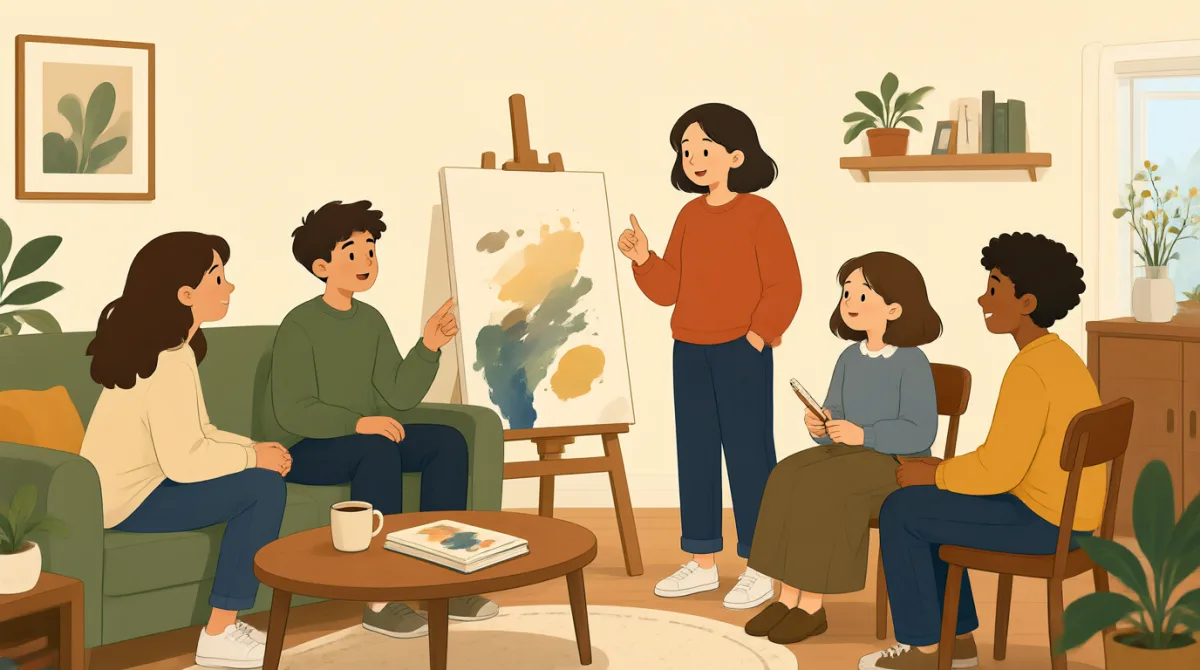

Hey Leo, how's that guitar learning going? You mentioned you picked it up a few months ago.
嗨,利奧,你學吉他學得怎麼樣了?你幾個月前提過你開始學了。

Oh, hey Emma! It's… a work in progress, I guess. Some days it feels like I'm making real headway, and others it's just endless buzzing strings.
哦,嗨,艾瑪!進展嘛……算是在進行中吧。有時候我覺得進步很大,但有時候就只是無休止的琴絃嗡嗡聲。
Totally understand! I had the same struggle when I started painting. What's the biggest challenge you're facing right now?
完全理解!我剛開始畫畫的時候也遇到了同樣的困難。你現在面臨的最大挑戰是什麼?
Definitely changing chords smoothly. My fingers just don't want to cooperate sometimes. And barre chords? Forget about it.
肯定是和絃轉換不流暢。我的手指有時候就是不聽使喚。還有大橫按?簡直別提了。
Ah, the dreaded barre chords! Everyone struggles with those. Have you tried practicing a specific exercise for transitions? Like, just two chords back and forth really slowly?
啊,可怕的大橫按!每個人都會為那些而掙扎。你有沒有嘗試過針對過渡練習特定的練習?比如,只是兩個和絃非常緩慢地來回切換?
I have a bit, but maybe not consistently enough. I tend to just jump into trying to play actual songs, which probably isn't the best approach.
我試過一點,但可能不夠持之以恆。我傾向於直接嘗試彈奏實際歌曲,這可能不是最好的方法。
That's a common trap! Breaking it down into smaller, manageable chunks really helps. And don't underestimate the power of just 15-20 minutes of focused practice every day instead of one long session once a week.
那是個常見的誤區!把它分解成更小、更容易管理的部分確實有幫助。而且不要低估每天專注練習15-20分鐘的力量,而不是每週一次長時間練習。
That's smart advice. I probably need to be more disciplined with my daily routine. Thanks, Emma, I'll definitely give that a try.
這是個很棒的建議。我可能需要對我的日常安排更有紀律性。謝謝你,艾瑪,我一定會試試的。
No problem! Keep at it, you'll get there. And let me know if you discover any good online resources or apps for guitar, I'm always curious.
沒問題!堅持下去,你會成功的。如果你發現任何好的吉他線上資源或應用程式,告訴我,我總是很好奇。
詞彙10
- headway進展
Headway means progress or advancement in something you are learning or doing. Use it to talk about making improvements, like 'I'm making good headway in my guitar lessons.'
Headway 表示你在學習或做某件事時取得的進步。可以用它來談進展,比如 'I'm making good headway in my guitar lessons.'(我學吉他進步很大。)
- buzzing嗡嗡聲
Buzzing describes a low, vibrating sound, often negative when referring to guitar strings that sound wrong due to poor playing. It's useful for describing frustrating sounds in music practice.
Buzzing 描述一種低沉、帶振動感的聲音。用來形容吉他弦時,往往帶有負面意思,指彈得不好、聲音不對。練習音樂時,可以用它來描述讓人煩惱的聲音。
- challenge挑戰
A challenge is a difficult task or problem that tests your skills. In hobbies, say 'The biggest challenge is changing chords' to discuss obstacles in learning.
Challenge 指考驗你能力的困難任務或問題。談愛好時,可以說 'The biggest challenge is changing chords'(最大的挑戰是轉換和絃),來聊學習過程中遇到的困難。
- chords和絃
Chords are groups of musical notes played together on an instrument like a guitar. Essential for music learners to know when discussing playing songs.
Chords 指一起演奏的一組音符,比如在吉他上彈奏的和絃。討論彈奏歌曲時,學音樂的人很有必要了解這個詞。
- cooperate配合
To cooperate means to work together willingly. Here, 'fingers don't cooperate' humorously means they don't move as you want. Use it for body parts not responding during practice.
To cooperate 意思是願意配合、一起行動。這裡的 'fingers don't cooperate' 是一種幽默說法,意思是手指不聽使喚。練習時身體部位不按你的想法行動,就可以這樣說。
- barre chords大橫按和絃
Barre chords are guitar chords where you press multiple strings with one finger across the fret. They're tough for beginners; mention them when sharing guitar struggles.
Barre chords 是一種吉他和絃,需要用一根手指橫按多個琴絃。初學者彈這種和絃往往很吃力,聊到學吉他的困難時可以提到它。
- consistently堅持不懈地
Consistently means doing something regularly without stopping. Important for learning skills, like 'Practice consistently every day to improve.'
Consistently 表示有規律地持續做某件事,不半途而廢。學習技能時很重要,比如 'Practice consistently every day to improve.'(每天堅持練習,才能進步。)
- disciplined自律的
Disciplined means having self-control and following a plan strictly. Use it for routines, such as 'I need to be more disciplined with my practice schedule.'
Disciplined 指能自我約束並嚴格按計劃做事。可以用來談日常安排,比如 'I need to be more disciplined with my practice schedule.'(我得更自律地安排練習時間。)
- manageable容易應付的
Manageable means easy to handle or control. In learning, break tasks into 'manageable chunks' to make big goals less overwhelming.
Manageable 指容易處理或掌控的。學習時,可以把任務分成 'manageable chunks'(容易應付的小部分),這樣大目標就不會讓人覺得壓力太大。
- resources學習資源
Resources are materials or tools that help you learn, like books or websites. Say 'online resources' when recommending learning aids for hobbies.
Resources 指能幫助你學習的材料或工具,比如書籍或網站。推薦愛好學習材料時,可以說 'online resources'(線上資源)。
關鍵句9
- 1
How's that guitar learning going? You mentioned you picked it up a few months ago.
你學吉他學得怎麼樣了?你提過幾個月前開始學的。
This is a casual way to ask about someone's progress in a hobby. 'Picked it up' is an idiom meaning 'started learning.' Useful for starting conversations about personal interests; use it with friends to show you remember their hobbies.
這是一種隨意地詢問別人愛好進展的說法。'Picked it up' 是習語,意思是“開始學習”。和朋友聊興趣愛好時,可以用它開啟話題,也能讓對方知道你記得他們的愛好。
- 2
It's a work in progress, I guess.
我覺得還在慢慢進步吧。
This idiom means something is still developing and not complete. 'I guess' adds uncertainty. Great for intermediate learners to express ongoing efforts humbly, like in skill-building talks.
這個習語表示事情還在發展中,尚未完成。'I guess' 帶有不太確定的語氣。談到培養技能時,可以用這句話謙遜地表示自己還在努力。
- 3
Totally understand! I had the same struggle when I started painting.
完全理解!我剛開始畫畫的時候也遇到過同樣的困難。
'Totally understand' shows empathy. 'Had the same struggle' shares a similar experience using past tense. Use this pattern to build rapport when someone describes challenges in hobbies.
'Totally understand' 表示感同身受。'Had the same struggle' 用過去時分享相似的經歷。別人聊到愛好上的困難時,可以用這個表達拉近彼此的距離。
- 4
What's the biggest challenge you're facing right now?
你現在面臨的最大挑戰是什麼?
This question uses present continuous 'you're facing' to ask about current problems. It's useful for deepening discussions on learning difficulties; the superlative 'biggest' focuses on the main issue.
這個問句用現在進行時 'you're facing' 詢問目前遇到的問題。它適合用來深入聊學習上的困難;最高階 'biggest' 則把重點放在最主要的問題上。
- 5
My fingers just don't want to cooperate sometimes.
有時候我的手指就是不聽使喚。
This personifies body parts for humor, using 'don't want to' for reluctance. Present simple for habits, 'sometimes' for frequency. Fun way to describe physical challenges in activities like playing instruments.
這裡把身體部位擬人化,帶有幽默感,並用 'don't want to' 表示不情願。一般現在時表示經常發生的情況,'sometimes' 則表示頻率。演奏樂器等活動中遇到身體上的困難時,可以用這種有趣的說法。
- 6
Have you tried practicing a specific exercise for transitions?
你試過專門練習和絃轉換嗎?
This suggests advice with 'Have you tried' (present perfect) to check past actions. 'For transitions' specifies purpose. Ideal for offering help in learning new skills without being pushy.
這裡用 'Have you tried'(現在完成時)詢問對方以前是否嘗試過某種做法,來委婉地提出建議。'For transitions' 說明練習的目的。學習新技能時,這種說法很適合用來幫忙,又不會顯得咄咄逼人。
- 7
That's a common trap!
這是個常見的誤區!
'Common trap' means a frequent mistake people fall into. Exclamation adds emphasis. Use this to point out errors in a friendly way during advice-giving in hobby conversations.
'Common trap' 指人們常犯的一種錯誤。感嘆號能加強語氣。聊愛好、給建議時,可以用這句話友善地指出問題。
- 8
Breaking it down into smaller, manageable chunks really helps.
把它拆分成更小、更容易應付的部分,會很有幫助。
'Breaking it down' is a phrasal verb meaning dividing into parts. Gerund as subject, 'really helps' emphasizes benefit. Practical advice sentence for teaching better learning methods.
'Breaking it down' 是一個短語動詞,意思是把事情拆分成幾個部分。動名詞短語在這裡作主語,'really helps' 則強調這樣做很有用。這句話可以用來分享更有效的學習方法。
- 9
Keep at it, you'll get there.
堅持下去,你會成功的。
'Keep at it' means continue trying persistently. Future 'you'll get there' idiom for eventual success. Encouraging contraction for informal motivation; use to cheer up friends learning hobbies.
'Keep at it' 意思是堅持努力。'You'll get there' 是一種習語,表示最終會成功。這種帶縮寫的說法語氣隨意又鼓舞人心,可以用來給正在培養愛好的朋友加油。