Getting Ready in the Morning
Poranne przygotowania
Mia helps her child get dressed and pack a school bag. They check that everything is ready.
Mia pomaga swojemu dziecku się ubrać i spakować plecak. Sprawdzają, czy wszystko jest gotowe.
Dialog8
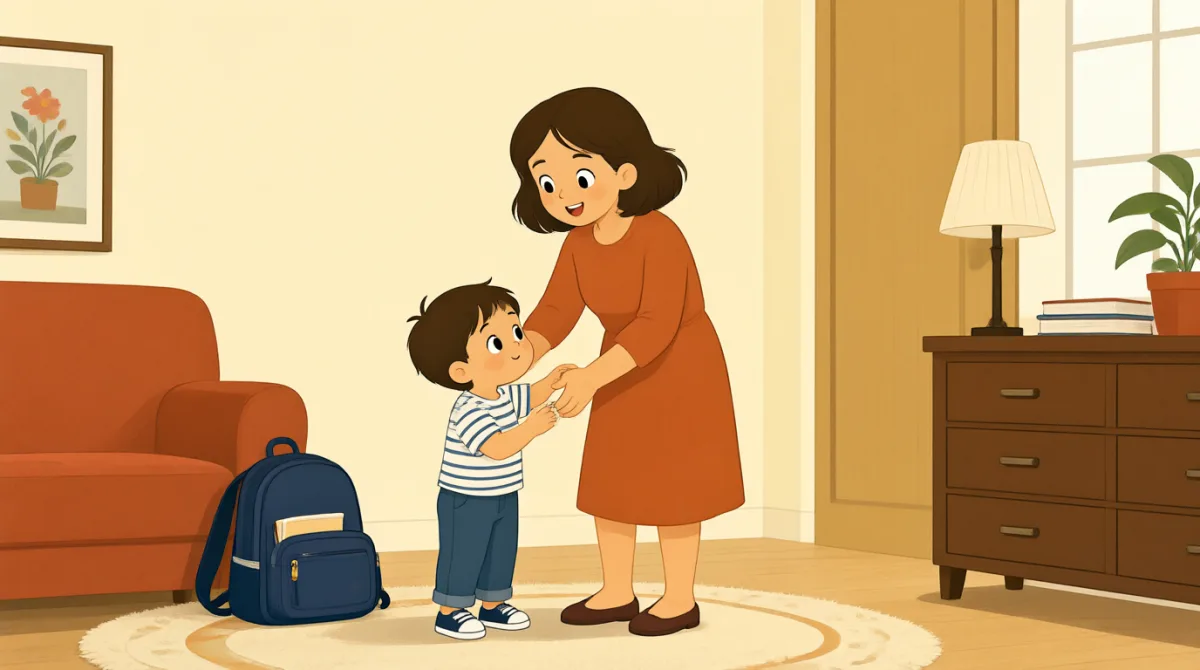

Good morning, Emma. Let’s get dressed.
Dzień dobry, Emma. Ubieramy się.

Okay, Mom. Where is my shirt?
Dobrze, mamo. Gdzie jest moja koszulka?
It’s on the bed. Put it on, please.
Leży na łóżku. Załóż ją, proszę.
I have my shirt on. Where are my shoes?
Mam już na sobie koszulkę. Gdzie są moje buty?
By the door. Now, let’s pack your school bag.
Przy drzwiach. A teraz spakujmy twój plecak.
My book and lunch are in the bag.
Moja książka i lunch są w plecaku.
Good. Do you have your water bottle?
Dobrze. Masz swoją butelkę z wodą?
Yes, it’s here. I’m ready for school!
Tak, jest tutaj. Jestem gotowa do szkoły!
Słownictwo7
- get dressedubierać się
To get dressed means to put on your clothes. You can say, “Let’s get dressed” in the morning.
„Get dressed” znaczy „ubrać się”, czyli założyć na siebie ubrania. Rano możesz powiedzieć: „Let’s get dressed” (Ubieramy się).
- shirtkoszulka
A shirt is a piece of clothing you wear on your upper body. You can ask, “Where is my shirt?”
„Shirt” to część garderoby noszona na górnej części ciała. Możesz zapytać: „Where is my shirt?” (Gdzie jest moja koszulka?).
- Put it onZałóż ją
This means to put a piece of clothing on your body. Use “Put it on” when you tell someone to wear something.
To znaczy, żeby założyć na siebie jakąś część garderoby. Powiedz „Put it on”, gdy chcesz, żeby ktoś coś na siebie założył.
- shoesbuty
Shoes are things you wear on your feet. You can ask where your shoes are when you are getting ready to go out.
„Shoes” to rzeczy, które nosisz na stopach. Gdy szykujesz się do wyjścia, możesz zapytać, gdzie są twoje buty.
- pack your school bagspakować plecak szkolny
This means to put the things you need for school into your bag. You can say, “Let’s pack your school bag” before school.
To znaczy włożyć do plecaka rzeczy potrzebne do szkoły. Przed wyjściem możesz powiedzieć: „Let’s pack your school bag” (Spakujmy twój plecak).
- water bottlebutelka z wodą
A water bottle is a bottle you use to carry water. You can ask, “Do you have your water bottle?”
„Water bottle” to butelka, w której nosisz wodę. Możesz zapytać: „Do you have your water bottle?” (Masz swoją butelkę z wodą?).
- ready for schoolgotowy do szkoły
This means you have everything you need and can go to school. You can say, “I’m ready for school!”
„Ready for school” znaczy, że masz już wszystko, czego potrzebujesz, i możesz iść do szkoły. Możesz powiedzieć: „I’m ready for school!” (Jestem gotowa do szkoły!).
Kluczowe zdania7
- 1
Good morning, Emma.
Dzień dobry, Emma.
Use this to greet someone in the morning. You can use another person’s name at the end.
Tego zwrotu używa się, by przywitać kogoś rano. Na końcu możesz dodać imię tej osoby.
- 2
Let’s get dressed.
Ubieramy się.
Use “Let’s” to suggest doing something together. You can say, “Let’s get dressed” when it is time to put on clothes.
Użyj „Let’s”, by zaproponować wspólne zrobienie czegoś. Możesz powiedzieć „Let’s get dressed”, gdy pora się ubrać.
- 3
Where is my shirt?
Gdzie jest moja koszulka?
Use this question to ask where one thing is. Change “my shirt” to the thing you are looking for.
Tym pytaniem zapytasz, gdzie znajduje się jedna rzecz. Zamiast „my shirt” wstaw nazwę rzeczy, której szukasz.
- 4
Put it on, please.
Załóż ją, proszę.
Use this to ask someone to wear a piece of clothing. Say “please” to make the request polite.
Tego zwrotu użyj, gdy prosisz kogoś, by założył część garderoby. Dodaj „please”, żeby prośba brzmiała uprzejmie.
- 5
Now, let’s pack your school bag.
A teraz spakujmy twój plecak.
Use this sentence to suggest packing a school bag together. You can change “school bag” to another bag.
Tym zdaniem możesz zaproponować wspólne spakowanie plecaka do szkoły. Zamiast „school bag” możesz podać nazwę innej torby.
- 6
Do you have your water bottle?
Masz swoją butelkę z wodą?
Use this question to check whether someone has a needed item. Change “water bottle” to another thing, such as a book.
Tym pytaniem sprawdzisz, czy ktoś ma potrzebną rzecz. Zamiast „water bottle” możesz podać coś innego, na przykład książkę.
- 7
I’m ready for school!
Jestem gotowa do szkoły!
Use this to say that you are prepared to go to school. You can change “school” to another place or activity.
Tego zwrotu użyj, by powiedzieć, że jesteś przygotowana do wyjścia do szkoły. Zamiast „school” możesz podać inne miejsce lub zajęcie.