A Council Member Responds
David, speaking as a council member, asks Mia how her proposed safeguards could be enforced and funded. Mia responds with practical suggestions and clarifies which changes she considers essential.
Dialogue12
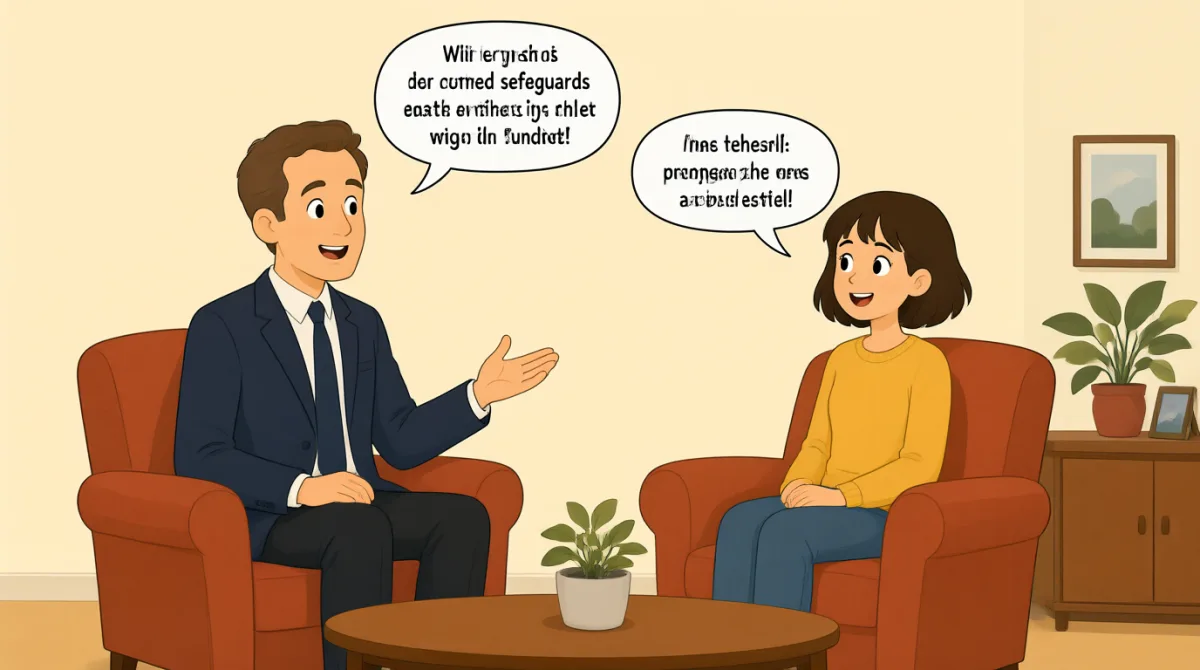

Ms. Patel, your proposed safeguards sound reasonable in principle. How would you ensure they’re enforceable, though, rather than simply becoming conditions on paper once construction begins?

I’d ask the council to make them binding conditions of approval, with clear benchmarks and deadlines. For example, the traffic study should be completed before permits are issued, not after work is underway.
And who would monitor compliance? Our planning staff are already stretched, and a requirement without a responsible party can be difficult to enforce consistently.
The developer could fund independent monitoring through a fee set in the approval, while the city retains oversight. Reports should be public, and missed benchmarks should trigger corrective action—not just another meeting.
That would require administrative capacity and a reliable funding mechanism. Would you support a per-unit fee, or are you concerned that it might make the housing less affordable?
A modest, transparent fee seems preferable to shifting the cost onto residents. It should be tied to actual monitoring expenses, reviewed periodically, and not used as a general revenue source.
Let’s turn to your essential changes. If the council can secure only a few safeguards without delaying the project substantially, which ones would you prioritize?
First, a credible traffic plan before construction permits, including safe pedestrian access and a response if congestion exceeds agreed limits. Second, a binding tree-replacement plan with survival checks, not merely a planting promise.
The developer may argue that traffic conditions are affected by factors beyond its control. How would you distinguish a fair, enforceable threshold from an obligation it cannot realistically meet?
I wouldn’t hold them responsible for every increase in traffic. The threshold should be based on a published baseline and measurements at agreed locations; if the project causes a sustained rise, the developer funds specified mitigations.
That distinction is helpful. Please submit the proposed benchmarks and funding language in writing. The council can assess the details before the final vote, though I can’t promise the exact terms will be adopted.
I understand. My aim isn’t to block housing; it’s to make sure the project’s costs don’t quietly fall on the neighborhood. I’ll submit specific, measurable conditions for the record.
Vocabulary8
- binding conditions of approval
Requirements that become legally enforceable as part of a project’s approval. Here, Mia wants the safeguards to be more than informal promises.
- benchmarks and deadlines
Specific standards and dates used to measure whether work is on track. This phrase helps make a plan concrete and verifiable.
- independent monitoring
Checking compliance through a monitor who is separate from the party being monitored. It suggests a way to make reports more credible.
- administrative capacity
The staff, time, and systems an organization needs to carry out its responsibilities. It is useful when discussing whether a proposal can be put into practice.
- a reliable funding mechanism
A dependable way to pay for an ongoing responsibility. In this discussion, it refers to funding the monitoring work.
- a general revenue source
A source of money that can be used for a government’s broad range of expenses. Mia argues that the fee should instead cover actual monitoring costs.
- sustained rise
An increase that continues over time rather than happening briefly. Here, it helps define when traffic changes should trigger action.
- fall on the neighborhood
To become a burden or cost borne by local residents. Mia uses this phrase to explain why she wants the project’s impacts addressed.
Key Sentences8
- 1
I’d ask the council to make them binding conditions of approval, with clear benchmarks and deadlines.
This sentence proposes a practical way to make safeguards enforceable. Reuse the structure “make [requirements] binding conditions of approval” when discussing formal commitments.
- 2
The developer could fund independent monitoring through a fee set in the approval, while the city retains oversight.
This sentence balances who pays with who remains responsible for supervision. It is useful when proposing a funding arrangement without giving up public oversight.
- 3
A modest, transparent fee seems preferable to shifting the cost onto residents.
This is a tactful way to state a preference and explain the alternative you want to avoid. Reuse “seems preferable to” to compare policy options diplomatically.
- 4
First, a credible traffic plan before construction permits, including safe pedestrian access and a response if congestion exceeds agreed limits.
This sentence clearly prioritizes a safeguard and specifies what it should include. Use “First” and “including” to organize a proposal and make it more specific.
- 5
I wouldn’t hold them responsible for every increase in traffic.
This sentence acknowledges the limits of a fair obligation before proposing a threshold. It is useful for showing nuance rather than making an overly broad demand.
- 6
The threshold should be based on a published baseline and measurements at agreed locations; if the project causes a sustained rise, the developer funds specified mitigations.
This sentence explains how to make a standard measurable and connect it to a response. Reuse the pattern “if [condition occurs], [party] [specific action]” when outlining enforceable terms.
- 7
The council can assess the details before the final vote, though I can’t promise the exact terms will be adopted.
This sentence explains what can happen next while carefully avoiding a guarantee. It is useful in formal discussions when setting realistic expectations.
- 8
My aim isn’t to block housing; it’s to make sure the project’s costs don’t quietly fall on the neighborhood.
This sentence clarifies intent and counters a possible misunderstanding. The structure “My aim isn’t to [X]; it’s to [Y]” is useful for framing a position constructively.