Choosing Clothes
옷 고르기
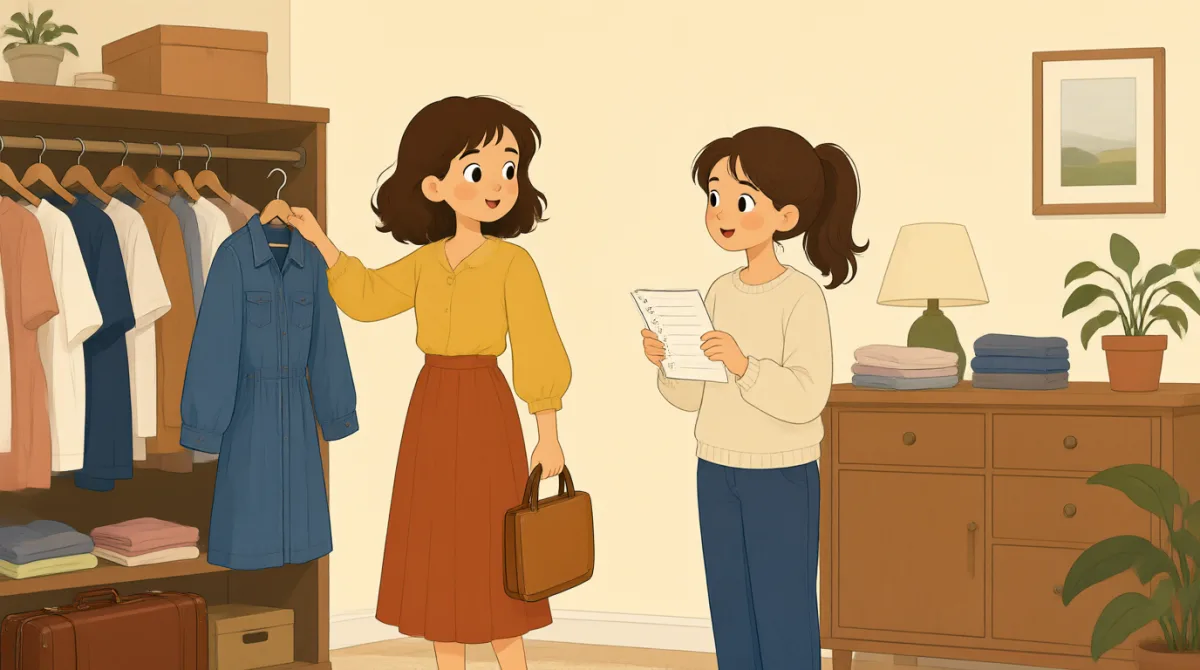
Emma chooses clothes for the trip, and Mia helps her decide what to pack. They keep the list simple.
에마가 여행에 입고 갈 옷을 고르고, 미아가 무엇을 챙길지 함께 고민해 줘. 둘은 목록을 간단하게 정리해.
대화8

What clothes should I pack for our trip?
우리 여행에 무슨 옷을 챙겨 가야 할까?

How many days are we going?
우리 며칠 동안 가는 거야?
Just two days. I want to pack light.
딱 이틀이야. 짐을 가볍게 싸고 싶어.
Take two shirts and one pair of pants.
셔츠 두 장이랑 바지 한 벌 챙겨.
Should I bring a warm jacket?
따뜻한 재킷도 가져가야 할까?
Yes, bring one. It may be cold.
응, 하나 가져가. 추울 수도 있어.
Okay. I'll pack one jacket and two shirts.
알겠어. 재킷 하나랑 셔츠 두 장 챙길게.
Good. Keep it simple.
좋아. 간단하게 챙겨.
어휘7
- pack light짐을 가볍게 싸다
To pack only a few things. You can use this phrase when you do not want to bring many clothes.
짐을 가볍게 싼다는 건 물건을 몇 가지만 챙긴다는 뜻이에요. 옷을 많이 가져가고 싶지 않을 때 쓸 수 있어요.
- two days이틀
This means a period of two days. Use it to say how long a trip or visit lasts.
이틀은 이틀 동안의 기간을 뜻해요. 여행이나 방문이 얼마나 오래 이어지는지 말할 때 써요.
- two shirts셔츠 두 장
This means two pieces of clothing worn on the upper body. Use it to say how many shirts you want to bring.
상체에 입는 옷 두 벌을 뜻해요. 셔츠를 몇 장 가져가고 싶은지 말할 때 써요.
- one pair of pants바지 한 벌
This means one item of clothing that covers your legs. Use “a pair of pants” when talking about pants.
다리를 덮는 옷 한 벌을 뜻해요. 영어에서는 바지를 말할 때 “a pair of pants”라고 해요.
- warm jacket따뜻한 재킷
A warm jacket helps you stay comfortable in cold weather. You can use “warm” to describe clothes for cold days.
따뜻한 재킷은 추운 날에도 편안하게 지낼 수 있도록 도와줘요. 추운 날 입는 옷을 설명할 때 “warm”을 쓸 수 있어요.
- bring one하나 가져가
This means to take one item with you. Use it when the item is clear from the conversation.
물건 하나를 가지고 간다는 뜻이에요. 대화에서 어떤 물건을 말하는지 분명할 때 쓸 수 있어요.
- keep it simple간단하게 하다
This means to avoid making something complicated. You can use it when you want to choose or do only what is needed.
무언가를 복잡하게 만들지 않는다는 뜻이에요. 꼭 필요한 것만 고르거나 하고 싶을 때 쓸 수 있어요.
핵심 문장8
- 1
What clothes should I pack for our trip?
우리 여행에 무슨 옷을 챙겨 가야 할까?
Use this to ask what clothes you need to bring. You can change “clothes” to another item, such as “shoes” or “food.”
가져가야 할 옷이 무엇인지 물을 때 쓰는 표현이에요. “clothes”를 “shoes”나 “food”처럼 다른 물건으로 바꿔 쓸 수 있어요.
- 2
How many days are we going?
우리 며칠 동안 가는 거야?
Use this to ask how long a trip will last. You can also ask, “How many days are you staying?”
여행이 얼마나 오래 이어지는지 물을 때 쓰는 표현이에요. “How many days are you staying?”이라고 물어도 돼요.
- 3
Just two days.
딱 이틀이야.
This is a short way to say the trip lasts only two days. Replace “two” with another number to give a different length.
여행이 이틀밖에 안 된다고 짧게 말하는 표현이에요. 기간을 다르게 말하고 싶다면 “two”를 다른 숫자로 바꿔 보세요.
- 4
I want to pack light.
짐을 가볍게 싸고 싶어.
Use this to say you want to bring only a few things. You can use it when packing for a trip.
물건을 몇 가지만 가져가고 싶다고 말할 때 쓰는 표현이에요. 여행 짐을 쌀 때 쓸 수 있어요.
- 5
Take two shirts and one pair of pants.
셔츠 두 장이랑 바지 한 벌 챙겨.
Use this to suggest what someone should bring. Change the clothes and numbers to give different suggestions.
상대방에게 무엇을 가져가면 좋을지 제안할 때 쓰는 표현이에요. 옷 종류와 숫자를 바꾸면 다른 제안을 할 수 있어요.
- 6
Should I bring a warm jacket?
따뜻한 재킷도 가져가야 할까?
Use this to ask if you need to take something with you. Replace “a warm jacket” with another item.
무언가를 가지고 가야 하는지 물을 때 쓰는 표현이에요. “a warm jacket”을 다른 물건으로 바꿔 보세요.
- 7
It may be cold.
추울 수도 있어.
Use this to say that the weather could be cold. You can replace “cold” with another weather word, such as “rainy.”
날씨가 추울 가능성이 있다고 말할 때 쓰는 표현이에요. “cold”를 “rainy”처럼 다른 날씨 표현으로 바꿀 수 있어요.
- 8
Keep it simple.
간단하게 해.
Use this to encourage someone not to make a choice or plan complicated. It is also useful when you want to focus on only the basics.
상대방에게 선택이나 계획을 복잡하게 만들지 말라고 말할 때 쓰는 표현이에요. 꼭 필요한 것에만 집중하고 싶을 때도 유용해요.