Saying Your English Level
說明英語水平
Grace asks Emma about her English. Emma says she is a beginner and wants to learn more.
Grace詢問Emma的英語水平。Emma說自己是初學者,想學更多英語。
對話6
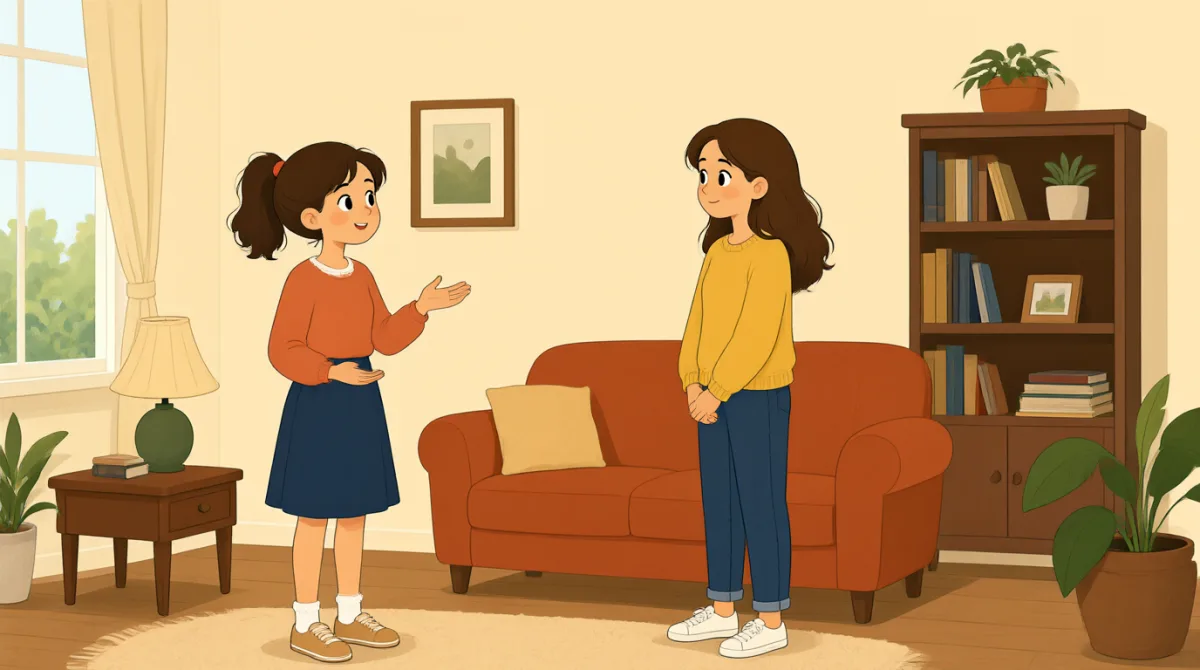

Good morning, Emma. How is your English?
早上好,Emma。你的英語怎麼樣?

I am a beginner. I know a little.
我是初學者。我會一點兒英語。
That is okay. What do you want to learn?
沒關係。你想學什麼?
I want to speak English better.
我想把英語說得更好。
Great. We can practice speaking in class.
很好。我們可以在課堂上練習口語。
Thank you. I want to learn more.
謝謝。我想學更多。
詞彙7
- Good morning早上好
A greeting you use in the morning. You can say it when you meet your teacher or a classmate.
早上打招呼時會用到的問候語。早上見到老師或同學時可以這樣說。
- beginner初學者
A beginner is someone who is new to a skill. You can use it to describe your level in English.
初學者是指剛開始學習某項技能的人。你可以用這個詞來描述自己的英語水平。
- a little一點兒
This means a small amount. You can say “I know a little” to talk about what you know.
表示數量不多。你可以說“I know a little”(我會一點兒)來表達自己掌握的程度。
- That is okay沒關係
This means something is all right or not a problem. You can use it to make someone feel comfortable.
表示沒問題或不要緊。你可以這樣說,讓對方放鬆下來。
- want to learn想學
This means you would like to learn something. You can say what you want to learn after this phrase.
表示你希望學習某樣東西。可以在這個短語後面說出你想學的內容。
- practice speaking練習口語
This means to speak so you can get better. You can practice speaking a language in class.
指透過開口說話來提高。你可以在課堂上練習說一門語言。
- learn more學更多
This means to get more knowledge or skills. You can use it to say you want to keep learning.
表示獲得更多知識或技能。你可以用它來表達自己想繼續學習。
關鍵句8
- 1
Good morning, Emma.
早上好,Emma。
Use this simple greeting when you meet someone in the morning. You can replace “Emma” with another person's name.
早上見到別人時,可以用這句簡單的問候語。你可以把“Emma”換成其他人的名字。
- 2
How is your English?
你的英語怎麼樣?
Use this question to ask about someone's English. You can replace “English” with another skill or subject.
可以用這個問題詢問某人的英語水平。你可以把“English”換成其他技能或學科。
- 3
I am a beginner.
我是初學者。
Use this sentence to say that you are new to something. Replace “beginner” with your level or role when needed.
可以用這句話表示自己剛開始接觸某樣東西。需要時,可以把“beginner”換成自己的水平或身份。
- 4
I know a little.
我會一點兒。
Use this sentence to say you know a small amount. You can use it when you are still learning a subject or skill.
可以用這句話表示自己掌握得不多。學習某門學科或技能時,你可以這樣說。
- 5
What do you want to learn?
你想學什麼?
Use this question to ask what someone would like to learn. You can replace “learn” with another action, such as “do” or “practice.”
可以用這個問題詢問別人想學什麼。你可以把“learn”換成其他動作,比如“do”或“practice”。
- 6
I want to speak English better.
我想把英語說得更好。
Use this sentence to say what skill you want to improve. Replace “English” with another language or skill.
可以用這句話說出自己想提升哪項技能。你可以把“English”換成其他語言或技能。
- 7
We can practice speaking in class.
我們可以在課堂上練習口語。
Use this sentence to suggest practicing together in class. You can replace “speaking” with another class activity.
可以用這句話提議在課堂上一起練習。你可以把“speaking”換成其他課堂活動。
- 8
Thank you.
謝謝。
Use this polite phrase to show that you are grateful. You can say it after someone offers help or support.
可以用這句禮貌的話表達感激。別人提供幫助或支援後,你可以這樣說。