Mia’s Living Room
मिया का बैठक का कमरा
Mia shows Emma the living room. They name the sofa, table, and other furniture and say where things are.
मिया एमा को बैठक का कमरा दिखाती है। वे सोफ़ा, मेज़ और दूसरे फर्नीचर के नाम लेते हैं और बताते हैं कि चीज़ें कहाँ हैं।
संवाद7
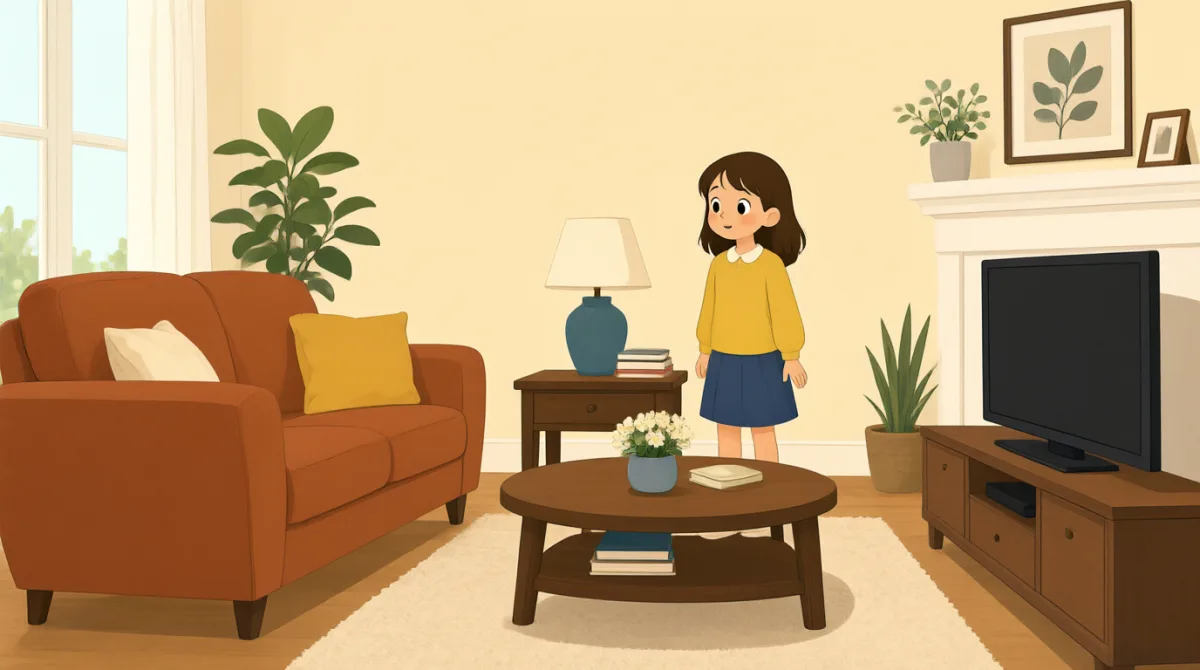

Come in, Emma. This is my living room.
अंदर आओ, एमा। यह मेरा बैठक का कमरा है।

It’s nice! Where is the sofa?
अच्छा है! सोफ़ा कहाँ है?
The sofa is by the window.
सोफ़ा खिड़की के पास है।
And where is the table?
और मेज़ कहाँ है?
The small table is in front of the sofa.
छोटी मेज़ सोफ़े के सामने है।
I see a lamp. Is it on the table?
मुझे एक लैम्प दिख रहा है। क्या वह मेज़ पर है?
Yes, it is. The TV is across from the sofa.
हाँ, है। टीवी सोफ़े के सामने दूसरी ओर है।
शब्दावली7
- living roomबैठक का कमरा
A living room is a room in a home where people sit and spend time together.
बैठक का कमरा घर का वह कमरा होता है जहाँ लोग बैठते हैं और साथ समय बिताते हैं।
- sofaसोफ़ा
A sofa is a long, soft seat for two or more people.
सोफ़ा दो या उससे अधिक लोगों के बैठने के लिए एक लंबी, मुलायम सीट होती है।
- by the windowखिड़की के पास
This means next to the window.
“by the window” का मतलब है खिड़की के बगल में।
- small tableछोटी मेज़
A small table is a little piece of furniture with a flat top.
छोटी मेज़ थोड़ा-सा फर्नीचर होती है, जिसका ऊपरी हिस्सा सपाट होता है।
- in front ofके सामने
This tells us that something is before another thing.
“in front of” से पता चलता है कि कोई चीज़ दूसरी चीज़ के आगे है।
- lampलैम्प
A lamp gives light in a room.
लैम्प कमरे में रोशनी देता है।
- across fromके सामने दूसरी ओर
This means on the other side, facing something.
“across from” का मतलब है दूसरी ओर, किसी चीज़ की तरफ़ मुँह करके।
मुख्य वाक्य8
- 1
This is my living room.
यह मेरा बैठक का कमरा है।
Use this sentence to show someone a room in your home. You can change “living room” to another room name.
अपने घर का कोई कमरा किसी को दिखाते समय इस वाक्य का इस्तेमाल करें। आप “living room” की जगह किसी दूसरे कमरे का नाम रख सकते हैं।
- 2
Where is the sofa?
सोफ़ा कहाँ है?
Use this question to ask where something is. Change “the sofa” to another object.
किसी चीज़ के स्थान के बारे में पूछने के लिए इस सवाल का इस्तेमाल करें। “the sofa” की जगह किसी दूसरी वस्तु का नाम रखें।
- 3
The sofa is by the window.
सोफ़ा खिड़की के पास है।
This sentence tells where the sofa is. Use “by the” plus a place to describe where something is.
यह वाक्य बताता है कि सोफ़ा कहाँ है। किसी चीज़ का स्थान बताने के लिए “by the” के बाद किसी जगह का नाम लगाएँ।
- 4
And where is the table?
और मेज़ कहाँ है?
Use this question to ask about the location of another object. Start with “And” to continue asking questions.
किसी दूसरी वस्तु के स्थान के बारे में पूछने के लिए इस सवाल का इस्तेमाल करें। सवालों का सिलसिला जारी रखने के लिए “And” से शुरुआत करें।
- 5
The small table is in front of the sofa.
छोटी मेज़ सोफ़े के सामने है।
This sentence describes where the table is. Use “in front of” to say that one thing is before another.
यह वाक्य बताता है कि मेज़ कहाँ है। यह कहने के लिए “in front of” का इस्तेमाल करें कि एक चीज़ दूसरी चीज़ के आगे है।
- 6
I see a lamp.
मुझे एक लैम्प दिख रहा है।
Use this simple sentence to say that you notice something. Change “a lamp” to name another object.
किसी चीज़ पर ध्यान जाने की बात कहने के लिए इस सरल वाक्य का इस्तेमाल करें। किसी दूसरी वस्तु का नाम लेने के लिए “a lamp” की जगह उसका नाम रखें।
- 7
Is it on the table?
क्या वह मेज़ पर है?
Use this yes-or-no question to check if something is on a surface. Change “it” to the object you mean.
किसी सतह पर कोई चीज़ रखी है या नहीं, यह जाँचने के लिए इस हाँ-या-नहीं वाले सवाल का इस्तेमाल करें। जिस वस्तु की बात हो रही है, उसके अनुसार “it” बदलें।
- 8
The TV is across from the sofa.
टीवी सोफ़े के सामने दूसरी ओर है।
This sentence tells where the TV is. Use “across from” to describe something on the other side, facing an object.
यह वाक्य बताता है कि टीवी कहाँ है। किसी वस्तु के सामने दूसरी ओर स्थित किसी चीज़ का वर्णन करने के लिए “across from” का इस्तेमाल करें।