Seeking Gardening Advice
बागवानी की सलाह लेना
Asking experienced gardeners or the garden coordinator for advice on planting specific crops, pest control, or general garden maintenance.
खास फसलें लगाने, कीटों से बचाव या बगीचे की सामान्य देखभाल के बारे में अनुभवी माली या बगीचे के समन्वयक से सलाह लेना।
संवाद10
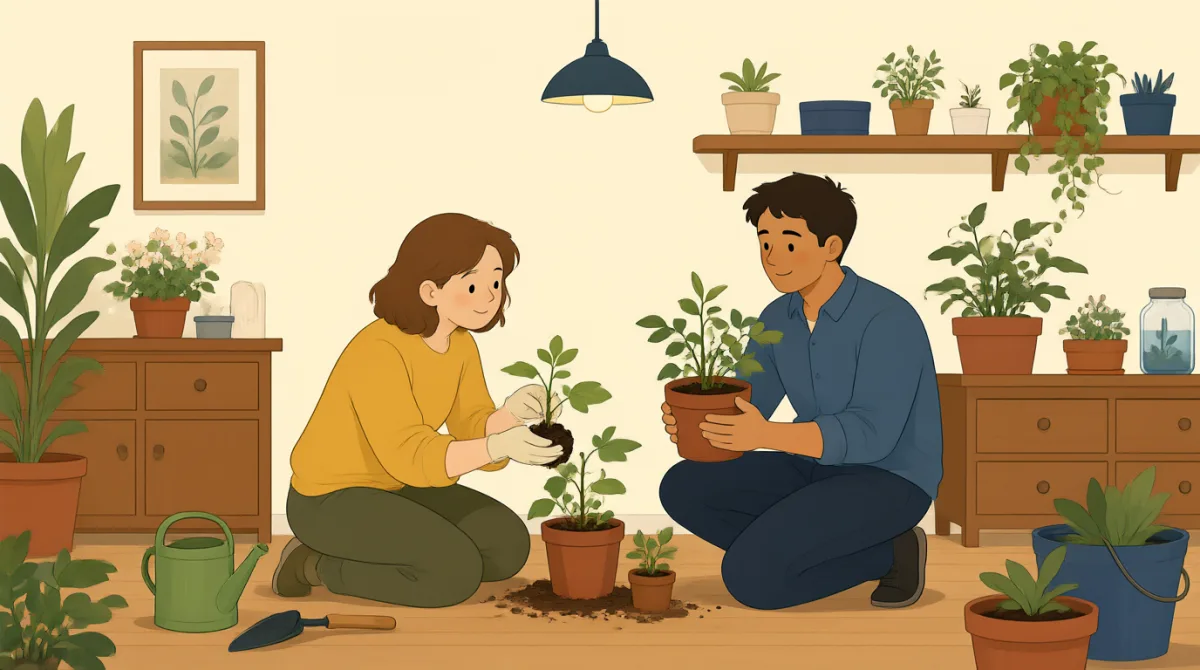

Hi David, do you have a moment? I was hoping to pick your brain about something.
हाय डेविड, क्या तुम्हारे पास एक मिनट है? मैं तुमसे एक बात पर सलाह लेना चाहती थी।

Sure, Emma, what's up? Always happy to help a fellow gardener.
ज़रूर, एमा, बताओ क्या बात है? साथी माली की मदद करके हमेशा खुशी होती है।
Thanks! I'm pretty new to gardening, and I'm trying to grow tomatoes this year. I was wondering if you have any tips on getting them to really thrive? Mine always seem to struggle.
धन्यवाद! मैं बागवानी में अभी नई हूँ और इस साल टमाटर उगाने की कोशिश कर रही हूँ। सोच रही थी कि उन्हें अच्छी तरह उगाने के लिए तुम्हारे पास कोई सुझाव है? मेरे टमाटर हमेशा ठीक से बढ़ते ही नहीं।
Tomatoes can be a bit finicky, but they're so rewarding. First, make sure they get plenty of sun – at least 6-8 hours a day. And good drainage is key, too.
टमाटर थोड़े नाज़ुक मिज़ाज के हो सकते हैं, लेकिन उन्हें उगाने का फल बहुत अच्छा मिलता है। सबसे पहले, ध्यान रखना कि उन्हें भरपूर धूप मिले—दिन में कम से कम 6-8 घंटे। और मिट्टी से पानी का अच्छी तरह निकलना भी ज़रूरी है।
Okay, sun and drainage, got it. What about pests? I had some tiny green bugs on my basil last year, and I'm worried about them spreading.
अच्छा, धूप और पानी की निकासी—समझ गई। कीटों का क्या? पिछले साल मेरी तुलसी पर कुछ छोटे हरे कीड़े थे, और मुझे चिंता है कि वे फैल न जाएँ।
Ah, aphids! A common nuisance. For basil, you can often just spray them off with a strong stream of water. For a more persistent problem, try a neem oil spray – it's organic and effective.
अरे, वे माहू थे! ये अक्सर परेशान करते हैं। तुलसी पर लगे माहुओं को तुम अक्सर पानी की तेज़ धार से आसानी से हटा सकती हो। अगर समस्या बनी रहे, तो नीम के तेल का स्प्रे आज़माना—यह जैविक भी है और असरदार भी।
Neem oil, I'll remember that. And for general maintenance, is there anything I should be doing regularly besides watering and weeding?
नीम का तेल, मैं याद रखूँगी। और बगीचे की आम देखभाल के लिए, पानी देने और खरपतवार निकालने के अलावा क्या मुझे कुछ और नियमित रूप से करना चाहिए?
Definitely. Fertilizing every few weeks can make a big difference, especially for heavy feeders like tomatoes. Also, 'pruning' off the suckers on tomato plants helps direct energy to the fruit. There's a good demo video on the garden's website for that, too.
बिल्कुल। हर कुछ हफ़्तों में खाद डालने से बहुत फ़र्क पड़ सकता है, खासकर टमाटर जैसी ज़्यादा पोषक तत्व लेने वाली फसलों के लिए। साथ ही, टमाटर के पौधों से अतिरिक्त टहनियाँ काटने, यानी 'pruning', से पौधे की ऊर्जा फलों तक पहुँचती है। इसके लिए बगीचे की वेबसाइट पर एक अच्छा प्रदर्शन वीडियो भी है।
That's super helpful, David. I really appreciate you taking the time to explain all this. I feel much more confident now.
यह बहुत काम की बात है, डेविड। यह सब समझाने के लिए समय निकालने की मैं सचमुच आभारी हूँ। अब मुझे कहीं ज़्यादा भरोसा महसूस हो रहा है।
No problem at all, Emma! We're all learning here. Don't hesitate to ask if anything else comes up. And good luck with your tomatoes!
कोई बात नहीं, एमा! यहाँ हम सब सीख रहे हैं। आगे कोई और सवाल हो, तो बेझिझक पूछना। और तुम्हारे टमाटरों के लिए शुभकामनाएँ!
शब्दावली9
- pick your brainसलाह लेना
This idiom means to ask someone for advice or information on a topic, often used when seeking informal help from an expert.
यह मुहावरा किसी विषय पर किसी से सलाह या जानकारी माँगने के लिए इस्तेमाल होता है। अक्सर किसी जानकार व्यक्ति से अनौपचारिक मदद माँगते समय इसका उपयोग करते हैं।
- thriveअच्छी तरह बढ़ना
To grow or develop very well and healthily, especially for plants; useful for talking about success in gardening or other activities.
पौधों के संदर्भ में इसका अर्थ है अच्छी सेहत के साथ बढ़ना या विकसित होना। बागवानी या दूसरी गतिविधियों में सफलता के बारे में बात करते समय यह उपयोगी है।
- finickyनाज़ुक मिज़ाज
Describes something that is difficult to please or requires a lot of care; here, it means tomatoes are sensitive to conditions.
यह ऐसे व्यक्ति या चीज़ का वर्णन करता है जिसे संभालना मुश्किल हो या जिसे बहुत देखभाल की ज़रूरत हो। यहाँ इसका मतलब है कि टमाटर उगने की परिस्थितियों के प्रति संवेदनशील होते हैं।
- drainageपानी की निकासी
The system or process by which water moves away from an area, important in gardening to prevent root rot in plants.
वह व्यवस्था या प्रक्रिया जिससे पानी किसी जगह से बाहर निकलता है। बागवानी में यह ज़रूरी है, क्योंकि इससे पौधों की जड़ें सड़ने से बचती हैं।
- pestsकीट
Insects or animals that damage plants or crops; common term in gardening discussions for problems like bugs.
ऐसे कीड़े या जानवर जो पौधों या फसलों को नुकसान पहुँचाते हैं। बागवानी की बातचीत में कीड़ों जैसी समस्याओं के लिए यह आम शब्द है।
- aphidsमाहू
Small green insects that suck sap from plants and can harm them; a specific type of pest often found on herbs like basil.
छोटे हरे कीड़े जो पौधों का रस चूसते हैं और उन्हें नुकसान पहुँचा सकते हैं। ये एक खास तरह के कीट हैं, जो अक्सर तुलसी जैसी जड़ी-बूटियों पर मिलते हैं।
- nuisanceपरेशानी
Something or someone that causes annoyance or trouble; used here to describe aphids as a common gardening problem.
कोई चीज़ या व्यक्ति जो झुंझलाहट या परेशानी पैदा करे। यहाँ माहुओं को बागवानी की आम समस्या बताने के लिए यह शब्द इस्तेमाल हुआ है।
- pruningछँटाई
The act of cutting off parts of a plant to improve growth or shape; essential for directing energy to fruits in tomato plants.
पौधे की बढ़त या आकार सुधारने के लिए उसके कुछ हिस्सों को काटने की क्रिया। टमाटर के पौधों में इससे ऊर्जा फलों तक पहुँचाने में मदद मिलती है।
- suckersअतिरिक्त टहनियाँ
In gardening, these are small shoots that grow from the base of tomato plants; removing them helps the plant focus on fruit production.
बागवानी में ये छोटी टहनियाँ होती हैं जो टमाटर के पौधों के आधार से निकलती हैं। इन्हें हटाने से पौधे को फल उगाने पर ध्यान देने में मदद मिलती है।
मुख्य वाक्य9
- 1
Hi David, do you have a moment? I was hoping to pick your brain about something.
हाय डेविड, क्या तुम्हारे पास एक मिनट है? मैं तुमसे एक बात पर सलाह लेना चाहती थी।
This is a polite way to start a conversation and ask for advice. 'Do you have a moment?' checks if the person is available, and 'pick your brain' is an idiom for seeking knowledge. Useful for informal requests in everyday situations.
बातचीत शुरू करने और सलाह माँगने का यह एक विनम्र तरीका है। 'Do you have a moment?' पूछकर आप पता करते हैं कि सामने वाला बात करने के लिए उपलब्ध है या नहीं, और 'pick your brain' किसी से जानकारी या सलाह लेने का मुहावरा है। रोज़मर्रा की स्थितियों में अनौपचारिक रूप से कुछ माँगने के लिए यह उपयोगी है।
- 2
Sure, Emma, what's up? Always happy to help a fellow gardener.
ज़रूर, एमा, बताओ क्या बात है? साथी माली की मदद करके हमेशा खुशी होती है।
A friendly response to an offer for help. 'What's up?' is casual for 'What's the matter?' and 'fellow gardener' shows community spirit. Good for building rapport in group activities like community gardens.
मदद माँगे जाने पर यह एक दोस्ताना जवाब है। 'What's up?' का अनौपचारिक अर्थ है 'क्या बात है?', और 'fellow gardener' से समुदाय की भावना झलकती है। सामुदायिक बगीचे जैसी समूह गतिविधियों में आपसी मेल-जोल बढ़ाने के लिए यह अच्छा है।
- 3
I'm pretty new to gardening, and I'm trying to grow tomatoes this year.
मैं बागवानी में अभी नई हूँ और इस साल टमाटर उगाने की कोशिश कर रही हूँ।
This introduces a beginner's experience and specific goal. 'Pretty new' means somewhat inexperienced, using present continuous 'I'm trying' for ongoing efforts. Helpful for explaining your level when asking for tips.
इस वाक्य में एक शुरुआती माली का अनुभव और उसका खास लक्ष्य बताया गया है। 'Pretty new' का अर्थ है कि आपको अभी थोड़ा ही अनुभव है। जारी कोशिश के लिए वर्तमान निरंतर काल 'I'm trying' का इस्तेमाल किया गया है। सुझाव माँगते समय अपना अनुभव बताने के लिए यह उपयोगी है।
- 4
Tomatoes can be a bit finicky, but they're so rewarding.
टमाटर थोड़े नाज़ुक मिज़ाज के हो सकते हैं, लेकिन उन्हें उगाने का फल बहुत अच्छा मिलता है।
Gives balanced advice on plant challenges and benefits. 'A bit finicky' softens the difficulty, and 'rewarding' means satisfying. Use this pattern to discuss pros and cons in hobbies.
इसमें पौधा उगाने की चुनौतियों और उसके फ़ायदों, दोनों की बात की गई है। 'A bit finicky' कहने से कठिनाई कुछ कम करके बताई जाती है, और 'rewarding' का अर्थ है संतोष या खुशी देने वाला। अपने शौक के फ़ायदों और नुकसानों पर बात करने के लिए इस ढाँचे का इस्तेमाल करें।
- 5
What about pests? I had some tiny green bugs on my basil last year.
कीटों का क्या? पिछले साल मेरी तुलसी पर कुछ छोटे हरे कीड़े थे।
This shifts the topic to a new concern with a past experience. 'What about...?' is a natural way to ask follow-up questions. Useful for continuing conversations about problems.
यह वाक्य बीते अनुभव के बाद बातचीत को एक नई चिंता की ओर ले जाता है। 'What about...?' आगे का सवाल पूछने का स्वाभाविक तरीका है। समस्याओं पर बातचीत जारी रखने के लिए यह उपयोगी है।
- 6
For basil, you can often just spray them off with a strong stream of water.
तुलसी पर लगे माहुओं को तुम अक्सर पानी की तेज़ धार से आसानी से हटा सकती हो।
Offers practical advice with a simple solution. 'Spray them off' uses imperative 'you can' for suggestions, and 'often just' implies it's easy. Great for giving or sharing home remedies.
यह एक आसान उपाय के साथ व्यावहारिक सलाह देता है। 'Spray them off' का अर्थ है पानी का स्प्रे करके उन्हें हटा देना। सुझाव देने के लिए 'you can' का इस्तेमाल हुआ है, और 'often just' से पता चलता है कि काम अक्सर आसानी से हो जाता है। घरेलू उपाय बताने या साझा करने के लिए यह बढ़िया है।
- 7
Fertilizing every few weeks can make a big difference, especially for heavy feeders like tomatoes.
हर कुछ हफ़्तों में खाद डालने से बहुत फ़र्क पड़ सकता है, खासकर टमाटर जैसी ज़्यादा पोषक तत्व लेने वाली फसलों के लिए।
Explains a maintenance tip with condition and emphasis. 'Can make a big difference' shows potential impact, and 'especially for' highlights specifics. Useful for routine advice in learning contexts.
इसमें देखभाल की सलाह और उसके संभावित असर पर ज़ोर दिया गया है। 'Can make a big difference' बताता है कि इससे बड़ा फ़र्क पड़ सकता है, जबकि 'especially for' किसी खास बात पर ध्यान दिलाता है। सीखने के दौरान नियमित सलाह देने के लिए यह उपयोगी है।
- 8
That's super helpful, David. I really appreciate you taking the time to explain all this.
यह बहुत काम की बात है, डेविड। यह सब समझाने के लिए समय निकालने की मैं सचमुच आभारी हूँ।
Expresses thanks after receiving advice. 'Super helpful' is informal praise, and 'I really appreciate' uses gerund 'taking the time' for gratitude. Essential for polite endings in conversations.
सलाह मिलने के बाद धन्यवाद जताने का यह तरीका है। 'Super helpful' अनौपचारिक तौर पर बहुत उपयोगी चीज़ की तारीफ़ करता है। 'I really appreciate' के बाद 'taking the time' का इस्तेमाल समय निकालने के लिए आभार जताने को किया गया है। बातचीत के अंत में विनम्रता से धन्यवाद देना ज़रूरी है।
- 9
No problem at all, Emma! We're all learning here. Don't hesitate to ask if anything else comes up.
कोई बात नहीं, एमा! यहाँ हम सब सीख रहे हैं। आगे कोई और सवाल हो, तो बेझिझक पूछना।
A reassuring close to the talk. 'No problem at all' downplays the effort, 'don't hesitate' encourages future questions, and present continuous 'comes up' for future issues. Perfect for supportive responses.
यह बातचीत को आश्वस्त करने वाले अंदाज़ में समाप्त करता है। 'No problem at all' सामने वाले को बताता है कि मदद करना कोई परेशानी नहीं थी, और 'don't hesitate' आगे सवाल पूछने के लिए प्रोत्साहित करता है। आगे होने वाली समस्याओं के लिए 'comes up' का प्रयोग किया गया है। सहायक और उत्साह बढ़ाने वाले जवाबों के लिए यह बढ़िया है।