Opening Speech and Introduction
आरंभिक भाषण और परिचय
The student delivers an opening speech, introduces themselves, their thesis topic, research questions, and the structure of their presentation to the examination committee.
छात्र परीक्षा समिति के सामने आरंभिक भाषण देता है और अपना परिचय, शोध-प्रबंध का विषय, शोध-प्रश्न तथा प्रस्तुति की रूपरेखा बताता है।
संवाद7
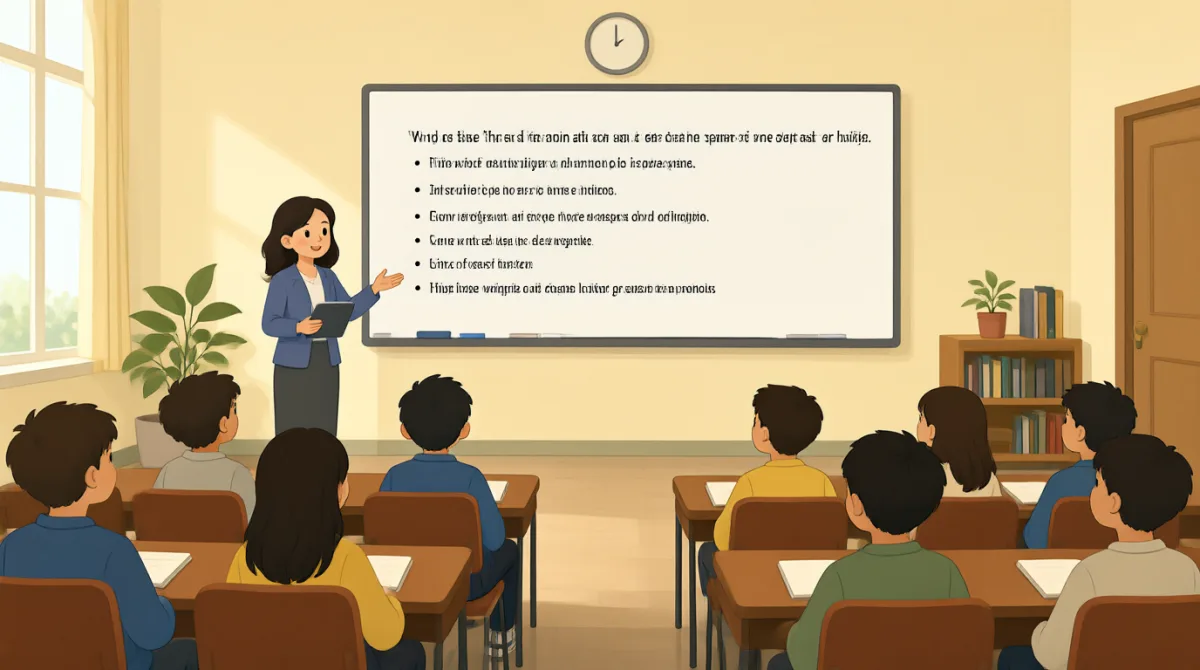

Good morning, esteemed committee members. Thank you for being here today. My name is Emma Carter, and I am a doctoral candidate in the Department of Computer Science.
सुप्रभात, आदरणीय समिति के सदस्यों। आज यहाँ उपस्थित होने के लिए आपका धन्यवाद। मेरा नाम एमा कार्टर है और मैं कंप्यूटर विज्ञान विभाग में डॉक्टरेट की उपाधि के लिए शोध कर रही हूँ।

Good morning, Emma. Please proceed when you're ready.
सुप्रभात, एमा। जब आप तैयार हों, तो शुरू कीजिए।
Thank you, Professor Chen. Today, I will be defending my thesis titled 'Optimizing Machine Learning Models for Real-time Anomaly Detection in Network Traffic'.
धन्यवाद, प्रोफेसर चेन। आज मैं अपने शोध-प्रबंध का बचाव प्रस्तुत करूँगी, जिसका शीर्षक है 'Optimizing Machine Learning Models for Real-time Anomaly Detection in Network Traffic'।

And could you briefly state your primary research questions before delving into the details?
और क्या आप विस्तार में जाने से पहले अपने मुख्य शोध-प्रश्न संक्षेप में बता सकती हैं?
Certainly, Professor Wilson. My research primarily addresses two key questions: Firstly, how can we develop highly accurate and efficient machine learning models for anomaly detection with minimal computational overhead? And secondly, what architectural design principles are crucial for integrating these models into high-throughput network environments?
ज़रूर, प्रोफेसर विल्सन। मेरा शोध मुख्य रूप से दो अहम प्रश्नों पर केंद्रित है। पहला, न्यूनतम कंप्यूटेशनल लागत के साथ विसंगतियों का पता लगाने के लिए हम अत्यधिक सटीक और कुशल मशीन लर्निंग मॉडल कैसे विकसित कर सकते हैं? और दूसरा, उच्च डेटा-प्रवाह वाले नेटवर्क परिवेशों में इन मॉडलों को शामिल करने के लिए वास्तुशिल्पीय डिज़ाइन के कौन-से सिद्धांत ज़रूरी हैं?
Regarding the structure of my presentation, I will begin with an overview of the problem, followed by a review of relevant literature. I will then discuss my methodology, present the experimental results, and finally, conclude with a discussion of implications and future work. I anticipate the presentation will take approximately 20 minutes, leaving ample time for questions.
अपनी प्रस्तुति की रूपरेखा के बारे में बताऊँ, तो मैं समस्या का अवलोकन प्रस्तुत करके शुरू करूँगी, जिसके बाद संबंधित साहित्य की समीक्षा होगी। फिर मैं अपनी कार्यप्रणाली पर चर्चा करूँगी, प्रयोगों के परिणाम प्रस्तुत करूँगी और अंत में उनके निहितार्थों तथा भविष्य के काम पर चर्चा के साथ समापन करूँगी। मेरा अनुमान है कि प्रस्तुति में लगभग 20 मिनट लगेंगे, जिससे प्रश्नों के लिए पर्याप्त समय बचेगा।
Thank you, Emma. That sounds like a clear roadmap. Please proceed.
धन्यवाद, एमा। आपकी रूपरेखा स्पष्ट लगती है। कृपया आगे बढ़िए।
शब्दावली7
- esteemedआदरणीय
Esteemed means highly respected or honored. Use it to show politeness when addressing important people, like 'esteemed committee members' in formal settings.
Esteemed का अर्थ है बहुत सम्मानित या प्रतिष्ठित। औपचारिक अवसरों पर महत्वपूर्ण लोगों को संबोधित करते समय, जैसे 'esteemed committee members', यह शब्द सम्मान जताने के लिए इस्तेमाल करें।
- doctoral candidateडॉक्टरेट शोधार्थी
A doctoral candidate is a student working on a PhD degree. It's a formal term used in academic introductions to describe your status.
A doctoral candidate वह छात्र होता है जो पीएचडी की उपाधि के लिए काम कर रहा हो। अपनी शैक्षणिक स्थिति बताने के लिए परिचय में इस औपचारिक पद का इस्तेमाल किया जाता है।
- defendingबचाव प्रस्तुत करना
Defending means presenting and explaining your work to answer questions and prove its value. In academics, say 'defending my thesis' during a presentation.
Defending का अर्थ है अपने काम को प्रस्तुत करके समझाना, सवालों के जवाब देना और उसका महत्व साबित करना। अकादमिक प्रस्तुति में अपने शोध-प्रबंध की चर्चा करते हुए 'defending my thesis' कहें।
- thesisशोध-प्रबंध
A thesis is a long research paper written for a university degree, like a master's or PhD. It's the main topic in academic defenses.
A thesis विश्वविद्यालय की डिग्री, जैसे मास्टर या पीएचडी, के लिए लिखा गया विस्तृत शोध-पत्र होता है। अकादमिक शोध-प्रबंध के बचाव में यही मुख्य विषय होता है।
- methodologyकार्यप्रणाली
Methodology refers to the methods and processes used in research. Use it when describing how you conducted your study in presentations.
Methodology का मतलब है शोध में इस्तेमाल की गई विधियाँ और प्रक्रियाएँ। प्रस्तुति में यह बताते समय इस शब्द का इस्तेमाल करें कि आपने अपना अध्ययन कैसे किया।
- implicationsनिहितार्थ
Implications mean the possible effects or importance of your findings. Discuss them at the end of a presentation to show real-world impact.
Implications का अर्थ है आपके निष्कर्षों के संभावित प्रभाव या उनका महत्व। प्रस्तुति के अंत में इन पर चर्चा करने से पता चलता है कि आपके काम का वास्तविक दुनिया पर क्या असर हो सकता है।
- roadmapरूपरेखा
A roadmap is a plan or outline of steps. In presentations, use it like 'clear roadmap' to describe the structure of your talk.
A roadmap कदमों की योजना या रूपरेखा होती है। प्रस्तुति में अपनी बातचीत की संरचना बताने के लिए 'clear roadmap' जैसे प्रयोग का इस्तेमाल करें।
मुख्य वाक्य6
- 1
Good morning, esteemed committee members. Thank you for being here today.
सुप्रभात, आदरणीय समिति के सदस्यों। आज यहाँ उपस्थित होने के लिए आपका धन्यवाद।
This is a polite opening greeting for formal events. It uses 'esteemed' to show respect and 'thank you for being here' to express gratitude. Use it at the start of academic presentations to set a professional tone.
औपचारिक कार्यक्रमों में अभिवादन की यह एक विनम्र शुरुआत है। इसमें 'esteemed' से सम्मान और 'thank you for being here' से आभार व्यक्त होता है। पेशेवर माहौल बनाने के लिए अकादमिक प्रस्तुति की शुरुआत में इसका इस्तेमाल करें।
- 2
My name is Emma Carter, and I am a doctoral candidate in the Department of Computer Science.
मेरा नाम एमा कार्टर है और मैं कंप्यूटर विज्ञान विभाग में डॉक्टरेट की उपाधि के लिए शोध कर रही हूँ।
This is a standard self-introduction. The structure 'My name is [name], and I am [role] in [department]' is simple and formal. It's useful for introducing yourself in professional or academic settings.
यह अपना परिचय देने का एक सामान्य तरीका है। 'My name is [name], and I am [role] in [department]' की संरचना सरल और औपचारिक है। पेशेवर या अकादमिक अवसरों पर अपना परिचय देने के लिए यह उपयोगी है।
- 3
Today, I will be defending my thesis titled 'Optimizing Machine Learning Models for Real-time Anomaly Detection in Network Traffic'.
आज मैं अपने शोध-प्रबंध का बचाव प्रस्तुत करूँगी, जिसका शीर्षक है 'Optimizing Machine Learning Models for Real-time Anomaly Detection in Network Traffic'।
This sentence announces the topic clearly. 'Titled' introduces the full name of the work. Use this pattern to state your presentation's main focus at the beginning.
इस वाक्य में विषय स्पष्ट रूप से बताया गया है। 'Titled' के बाद काम का पूरा शीर्षक आता है। शुरुआत में अपनी प्रस्तुति का मुख्य विषय बताने के लिए इस ढाँचे का इस्तेमाल करें।
- 4
My research primarily addresses two key questions: Firstly, how can we develop highly accurate and efficient machine learning models for anomaly detection with minimal computational overhead? And secondly, what architectural design principles are crucial for integrating these models into high-throughput network environments?
मेरा शोध मुख्य रूप से दो अहम प्रश्नों पर केंद्रित है। पहला, न्यूनतम कंप्यूटेशनल लागत के साथ विसंगतियों का पता लगाने के लिए हम अत्यधिक सटीक और कुशल मशीन लर्निंग मॉडल कैसे विकसित कर सकते हैं? और दूसरा, उच्च डेटा-प्रवाह वाले नेटवर्क परिवेशों में इन मॉडलों को शामिल करने के लिए वास्तुशिल्पीय डिज़ाइन के कौन-से सिद्धांत ज़रूरी हैं?
This explains research questions using 'primarily addresses' for main focus, and 'Firstly... And secondly...' for listing. It's useful for outlining key problems in academic talks; the questions use 'how' and 'what' for inquiry.
इसमें 'primarily addresses' से मुख्य विषय बताया गया है और 'Firstly... And secondly...' से प्रश्नों की सूची दी गई है। अकादमिक भाषण में मुख्य समस्याएँ बताने के लिए यह उपयोगी है; प्रश्नों में पूछताछ के लिए 'how' और 'what' का प्रयोग किया गया है।
- 5
Regarding the structure of my presentation, I will begin with an overview of the problem, followed by a review of relevant literature.
अपनी प्रस्तुति की रूपरेखा के बारे में बताऊँ, तो मैं समस्या का अवलोकन प्रस्तुत करके शुरू करूँगी, जिसके बाद संबंधित साहित्य की समीक्षा होगी।
This outlines the presentation flow. 'Regarding' means 'about', and 'followed by' shows sequence. Use this to give a clear structure, helping listeners follow along in formal speeches.
यह प्रस्तुति के क्रम की रूपरेखा देता है। 'Regarding' का अर्थ है 'के बारे में', जबकि 'followed by' से क्रम का पता चलता है। श्रोताओं को बात समझने में मदद देने के लिए औपचारिक भाषण में इसका इस्तेमाल करें।
- 6
I anticipate the presentation will take approximately 20 minutes, leaving ample time for questions.
मेरा अनुमान है कि प्रस्तुति में लगभग 20 मिनट लगेंगे, जिससे प्रश्नों के लिए पर्याप्त समय बचेगा।
This manages time expectations. 'Anticipate' means 'expect', 'approximately' softens numbers, and 'leaving ample time' ensures room for interaction. Say this at the end of an intro to show consideration for the audience.
इस वाक्य से समय की अपेक्षा स्पष्ट होती है। 'Anticipate' का अर्थ है 'उम्मीद करना', 'approximately' संख्या को अनुमानित बनाता है और 'leaving ample time' बताता है कि बातचीत के लिए पर्याप्त समय रहेगा। श्रोताओं का ध्यान रखते हुए परिचय के अंत में यह बात कहें।