Seeking Clarification on a Complex Theory
एक जटिल सिद्धांत पर स्पष्टीकरण माँगना
A student or junior researcher asks for clarification on a complex theoretical concept or an intricate experimental design from a more senior or experienced academic.
एक विद्यार्थी या कनिष्ठ शोधकर्ता किसी जटिल सैद्धांतिक अवधारणा या पेचीदा प्रयोगात्मक रूपरेखा के बारे में किसी वरिष्ठ या अनुभवी शिक्षाविद् से स्पष्टीकरण माँगता है।
संवाद8
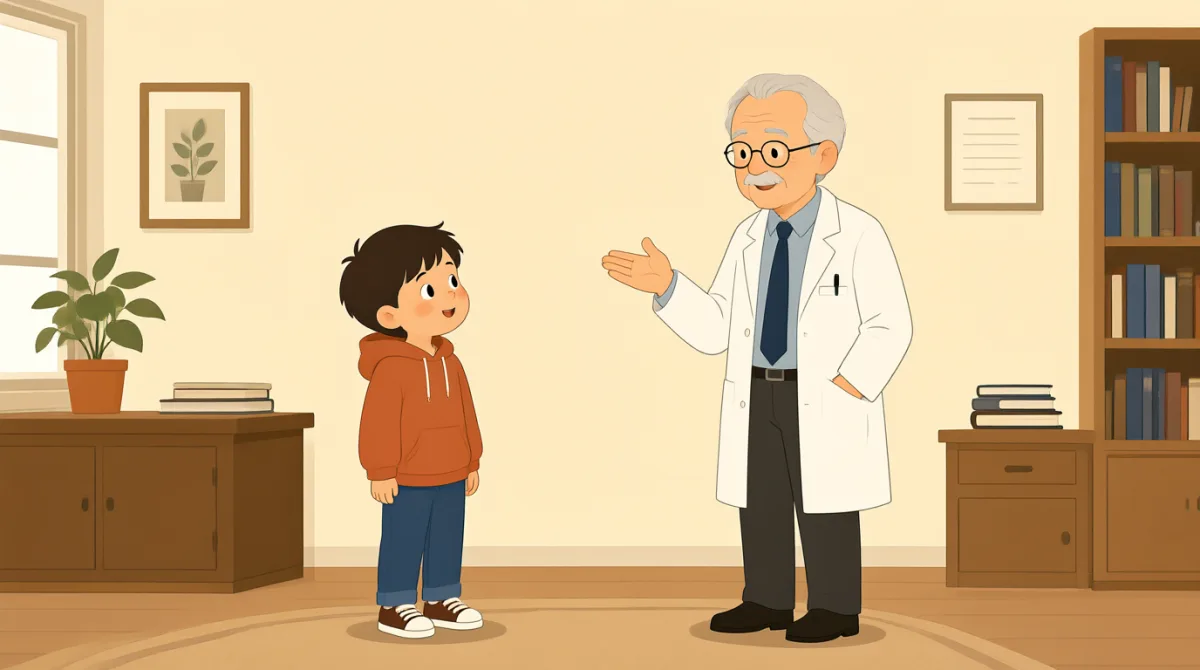

Professor Chen, do you have a moment? I was reading your recent paper on the "Quantum Entanglement Loop Theory" and I'm somewhat stumped by the interaction dynamics you describe.
प्रोफेसर Chen, क्या आपके पास थोड़ा समय है? मैं आपके हालिया शोध-पत्र में "Quantum Entanglement Loop Theory" के बारे में पढ़ रही थी, और उसमें बताए गए अंतःक्रिया के व्यवहार को लेकर मैं कुछ उलझ गई हूँ।

Certainly, Emma. Pull up a chair. What precisely is causing the confusion? Is it the mathematical formalism or the conceptual implications?
ज़रूर, Emma। कुर्सी खींचकर बैठिए। आपको ठीक किस बात से उलझन हो रही है? गणितीय औपचारिकता से या वैचारिक निहितार्थों से?
It's more the latter, Professor. Specifically, the part where you discuss the 'self-correcting feedback mechanisms' – my understanding is that entanglement typically leads to decoherence, not a reinforcing loop. Could you elaborate on how that counter-intuitive aspect functions?
बात दूसरी वाली है, प्रोफेसर। खास तौर पर, जहाँ आप 'self-correcting feedback mechanisms' की चर्चा करते हैं—मेरी समझ से क्वांटम उलझाव आम तौर पर डीकोहेरेंस की ओर ले जाता है, न कि किसी ऐसे चक्र की ओर जो उसे और मज़बूत करे। क्या आप समझा सकते हैं कि यह सहज-बोध के विपरीत पहलू कैसे काम करता है?
That's an excellent point, and it's where the theory diverges from classical interpretations. The key lies in the non-linear coupling with the environmental degrees of freedom. Think of it not as direct information transfer, but as a probabilistic resonance that maintains coherence through a specific energy exchange pathway.
बहुत अच्छा सवाल है, और यहीं यह सिद्धांत शास्त्रीय व्याख्याओं से अलग होता है। इसका मुख्य आधार पर्यावरण की स्वतंत्रताओं के साथ होने वाला गैर-रैखिक युग्मन है। इसे सीधे सूचना के आदान-प्रदान की तरह नहीं, बल्कि एक संभाव्य अनुनाद की तरह समझिए, जो ऊर्जा-विनिमय के एक खास मार्ग से सुसंगति बनाए रखता है।
A probabilistic resonance... so it's not about preventing decoherence entirely, but rather about channeling it into a specific, measurable pathway that paradoxically reinforces the original state during measurement intervals?
संभाव्य अनुनाद... यानी बात डीकोहेरेंस को पूरी तरह रोकने की नहीं है, बल्कि उसे एक खास, मापे जा सकने वाले मार्ग में मोड़ने की है, जो विरोधाभासी ढंग से मापन के अंतरालों के दौरान मूल अवस्था को और मज़बूत करता है?
Precisely! You've grasped the core nuance. It's about how the system 'selects' its environment, rather than being passively subjected to it. We're observing a form of adaptive entanglement, which we hypothesize is fundamental to complex biological systems.
बिल्कुल! आपने इस बारीक पहलू को समझ लिया है। बात यह है कि प्रणाली अपने पर्यावरण को कैसे 'चुनती' है, न कि वह बस निष्क्रिय रूप से उसके प्रभाव में रहती है। हम अनुकूलनशील क्वांटम उलझाव का एक रूप देख रहे हैं, जिसके बारे में हमारी परिकल्पना है कि यह जटिल जैविक प्रणालियों के लिए बुनियादी है।
That makes so much more sense! I think I was getting stuck on the classical physics analogy. Thank you for clarifying that, Professor. It really opens up a new way of looking at these phenomena.
अब यह बात कहीं ज़्यादा समझ में आ रही है! शायद मैं शास्त्रीय भौतिकी वाली उपमा में ही उलझ गई थी। समझाने के लिए धन्यवाद, प्रोफेसर। इससे इन घटनाओं को देखने का एक नया नज़रिया मिलता है।
You're most welcome, Emma. Don't hesitate to ask if anything else surfaces. These concepts can be quite counter-intuitive at first glance, but with continued engagement, they begin to reveal their elegance.
कोई बात नहीं, Emma। अगर कोई और सवाल मन में आए, तो बेझिझक पूछिएगा। पहली नज़र में ये अवधारणाएँ सहज-बोध के विपरीत लग सकती हैं, लेकिन लगातार इनके साथ जुड़ने पर इनकी सुंदरता सामने आने लगती है।
शब्दावली8
- stumpedउलझन में पड़ा
Feeling confused or unable to understand something, like being stuck on a problem. Use it when you're puzzled by an idea in a discussion.
किसी बात को लेकर उलझन महसूस करना या उसे समझ न पाना—जैसे किसी समस्या पर अटक जाना। चर्चा में किसी विचार को लेकर परेशानी हो, तो इस शब्द का इस्तेमाल करें।
- preciselyठीक-ठीक
Means exactly or accurately. It's useful in academic talks to ask for or give specific details.
इसका अर्थ है बिल्कुल सही या सटीक। अकादमिक बातचीत में किसी खास जानकारी के बारे में पूछने या बताने के लिए यह उपयोगी है।
- elaborateविस्तार से समझाना
To explain something in more detail. Common in conversations when you need clarification on a topic.
किसी बात को और विस्तार से समझाना। किसी विषय पर स्पष्टीकरण चाहिए हो, तो बातचीत में यह शब्द अक्सर काम आता है।
- counter-intuitiveसहज-बोध के विपरीत
Something that goes against what seems logical or obvious at first. Helpful for describing complex ideas in science or theory.
ऐसी बात जो पहली नज़र में तर्कसंगत या स्पष्ट लगने वाली धारणा के उलट हो। विज्ञान या सिद्धांतों के जटिल विचारों का वर्णन करते समय यह उपयोगी है।
- divergesअलग होना
To differ or separate from the usual way. Use it when explaining how a new theory is different from traditional ones.
सामान्य तरीके से अलग होना या उससे हटना। किसी नए सिद्धांत और पारंपरिक सिद्धांतों के बीच अंतर बताते समय इसका इस्तेमाल करें।
- graspसमझ लेना
To understand something fully. It's a polite way to say someone has understood a difficult concept.
किसी बात को पूरी तरह समझ लेना। किसी के कठिन अवधारणा को समझने पर उसकी सराहना करने का यह एक विनम्र तरीका है।
- nuanceबारीकी
A subtle or slight difference in meaning. Useful in academic discussions to highlight fine details.
अर्थ में बहुत सूक्ष्म या हल्का-सा अंतर। अकादमिक चर्चाओं में किसी छोटी-सी बारीकी को रेखांकित करने के लिए यह उपयोगी है।
- hypothesizeपरिकल्पना करना
To suggest or form an idea as a possible explanation. Common in research talks when proposing theories.
किसी संभावित व्याख्या के रूप में कोई विचार सुझाना या बनाना। शोध-संबंधी बातचीत में सिद्धांत प्रस्तुत करते समय यह शब्द आम तौर पर इस्तेमाल होता है।
मुख्य वाक्य7
- 1
Do you have a moment?
क्या आपके पास थोड़ा समय है?
A polite way to ask if someone is free to talk right now. Use it to start a conversation without being too direct. It's simple and common in professional settings.
किसी से विनम्रता से पूछने का तरीका कि क्या वह अभी बात करने के लिए खाली है। बातचीत शुरू करते समय, बिना ज़्यादा सीधे हुए, इसका इस्तेमाल करें। पेशेवर माहौल में यह एक सरल और आम वाक्य है।
- 2
What precisely is causing the confusion?
आपको ठीक किस बात से उलझन हो रही है?
This asks for exact details about a problem. The word 'precisely' adds emphasis for clarity. Useful in discussions to focus on specifics; note the question structure with 'what' for seeking information.
यह किसी समस्या के बारे में सटीक जानकारी पूछता है। 'precisely' शब्द बात को स्पष्ट करने के लिए ज़ोर देता है। चर्चा में किसी खास बात पर ध्यान केंद्रित करने के लिए यह उपयोगी है। ध्यान दें कि जानकारी माँगने के लिए सवाल की शुरुआत 'what' से होती है।
- 3
Could you elaborate on how that functions?
क्या आप बता सकते हैं कि यह कैसे काम करता है?
A polite request for more explanation. 'Could you' makes it courteous, and 'elaborate on' is key for academic talks. Use when you need details on a process or idea.
यह और जानकारी माँगने का एक विनम्र तरीका है। 'Could you' अनुरोध को शिष्ट बनाता है और 'elaborate on' अकादमिक बातचीत में काम आने वाला वाक्यांश है। किसी प्रक्रिया या विचार के बारे में और जानकारी चाहिए हो, तो इसका इस्तेमाल करें।
- 4
That's an excellent point.
यह बहुत अच्छा सवाल है।
Acknowledges a good question or idea positively. It's encouraging and builds rapport in debates. Simple structure; use it to respond to others' insights.
इससे किसी अच्छे सवाल या विचार की सकारात्मक सराहना होती है। यह प्रोत्साहित करता है और बहस में आपसी समझ बढ़ाता है। इसकी बनावट सरल है; दूसरों की अच्छी बातों पर प्रतिक्रिया देने के लिए इसका इस्तेमाल करें।
- 5
You've grasped the core nuance.
आपने इस बारीक पहलू को समझ लिया है।
Praises someone's understanding of a subtle point. 'You've grasped' uses present perfect for recent achievement. Useful for positive feedback in learning situations.
यह किसी की सूक्ष्म बात को समझने की सराहना करता है। 'You've grasped' में वर्तमान पूर्ण काल का इस्तेमाल हाल ही में हासिल हुई समझ को बताने के लिए हुआ है। सीखने के दौरान सकारात्मक प्रतिक्रिया देने में यह उपयोगी है।
- 6
That makes so much more sense!
अब यह बात कहीं ज़्यादा समझ में आ रही है!
Expresses that an explanation has cleared up confusion. The exclamation adds enthusiasm. Use after getting clarification; 'so much more' compares to before.
इससे पता चलता है कि किसी स्पष्टीकरण से उलझन दूर हो गई है। विस्मयादिबोधक चिह्न उत्साह दिखाता है। स्पष्टीकरण मिलने के बाद इसका इस्तेमाल करें; 'so much more' पहले की तुलना में बहुत ज़्यादा समझ आने का भाव देता है।
- 7
Don't hesitate to ask if anything else surfaces.
अगर कोई और सवाल मन में आए, तो बेझिझक पूछिएगा।
Encourages further questions politely. 'Don't hesitate' means 'feel free,' and 'if anything else surfaces' implies future issues. Great for ending academic talks openly.
यह विनम्रता से आगे सवाल पूछने के लिए प्रोत्साहित करता है। 'Don't hesitate' का अर्थ है 'बेझिझक पूछें', और 'if anything else surfaces' का आशय है कि आगे कोई और सवाल या समस्या सामने आ सकती है। अकादमिक बातचीत को खुले अंदाज़ में समाप्त करने के लिए यह बढ़िया वाक्य है।