Choosing a Time
Eine Uhrzeit auswählen
Emma and Jack choose a time to play. They agree to meet on Saturday morning.
Emma und Jack suchen eine Zeit zum Tennisspielen aus. Sie vereinbaren, sich am Samstagmorgen zu treffen.
Dialog6
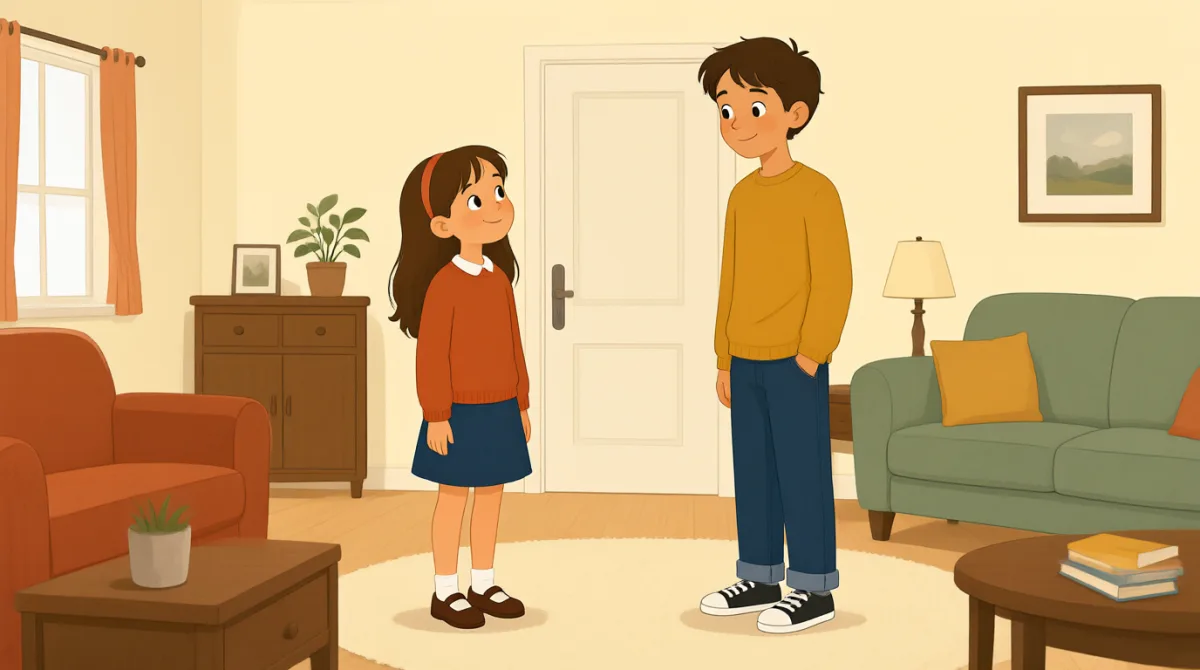

When do you want to play tennis?
Wann möchtest du Tennis spielen?

How about Saturday morning?
Wie wäre es mit Samstagmorgen?
That sounds good. What time?
Klingt gut. Um wie viel Uhr?
Can you play at nine?
Kannst du um neun spielen?
Yes, I can. Where should we meet?
Ja, kann ich. Wo sollen wir uns treffen?
Let's meet at the tennis courts.
Lass uns an den Tennisplätzen treffen.
Wortschatz8
- When do you want to play tennis?When do you want to play tennis?
Ask this to find out when someone wants to play tennis. You can use “When do you want to…” to ask about other plans.
Frag damit, wann jemand Tennis spielen möchte. Mit “When do you want to…” kannst du auch nach anderen Plänen fragen.
- How about Saturday morning?How about Saturday morning?
Suggest Saturday morning as a time. Use “How about…” to make a simple suggestion.
Schlag Samstagmorgen als Zeitpunkt vor. Mit “How about…” kannst du einen einfachen Vorschlag machen.
- That sounds good.That sounds good.
Say this when you like someone’s idea. You can use it to agree to a plan.
Das sagst du, wenn dir die Idee von jemandem gefällt. Damit kannst du einem Plan zustimmen.
- What time?What time?
Ask for the exact time. Use this short question when you know the day but not the hour.
Frag nach der genauen Uhrzeit. Diese kurze Frage passt, wenn du den Tag, aber noch nicht die Uhrzeit kennst.
- Can you play at nine?Can you play at nine?
Ask if someone is free to play at nine. You can change “play” and “nine” to ask about other activities and times.
Frag, ob jemand um neun Zeit zum Spielen hat. Du kannst “play” und “nine” austauschen, um nach anderen Aktivitäten und Uhrzeiten zu fragen.
- Yes, I can.Yes, I can.
Use this to say that you are able to do something. It answers a question that begins with “Can you…?”.
Damit sagst du, dass du etwas tun kannst. Die Antwort passt auf eine Frage, die mit “Can you…?” beginnt.
- Where should we meet?Where should we meet?
Ask someone to choose or suggest a place to meet. You can use “Where should we…” to plan other activities.
Bitte jemanden, einen Treffpunkt auszuwählen oder vorzuschlagen. Mit “Where should we…” kannst du auch andere Aktivitäten planen.
- Let's meet at the tennis courts.Let's meet at the tennis courts.
Suggest meeting at the tennis courts. Use “Let’s meet at…” to suggest a place to meet.
Schlag vor, euch an den Tennisplätzen zu treffen. Mit “Let’s meet at…” kannst du einen Treffpunkt vorschlagen.
Wichtige Sätze8
- 1
When do you want to play tennis?
Wann möchtest du Tennis spielen?
This is a useful way to ask when someone wants to do an activity. Replace “play tennis” with another activity to make a new question.
So kannst du fragen, wann jemand etwas unternehmen möchte. Ersetze “play tennis” durch eine andere Aktivität, um eine neue Frage zu bilden.
- 2
How about Saturday morning?
Wie wäre es mit Samstagmorgen?
Use this sentence to suggest a time. You can replace “Saturday morning” with another day or time.
Mit diesem Satz kannst du eine Zeit vorschlagen. Ersetze “Saturday morning” durch einen anderen Tag oder eine andere Uhrzeit.
- 3
That sounds good.
Klingt gut.
This is a simple way to agree with a suggestion. Use it when you like someone’s idea or plan.
So kannst du einem Vorschlag einfach zustimmen. Sag das, wenn dir die Idee oder der Plan gefällt.
- 4
What time?
Um wie viel Uhr?
Ask this when you need to know the exact time. It is short and natural after someone suggests a day.
Frag das, wenn du die genaue Uhrzeit wissen möchtest. Die kurze Frage klingt natürlich, nachdem jemand einen Tag vorgeschlagen hat.
- 5
Can you play at nine?
Kannst du um neun spielen?
Use this question to check if someone is free at a certain time. Change “nine” to a different time as needed.
Mit dieser Frage kannst du herausfinden, ob jemand zu einer bestimmten Zeit Zeit hat. Ändere “nine” nach Bedarf in eine andere Uhrzeit.
- 6
Yes, I can.
Ja, kann ich.
This is a clear way to say that you are free or able to do something. It answers questions that begin with “Can you…?”.
So kannst du klar sagen, dass du Zeit hast oder etwas tun kannst. Die Antwort passt auf Fragen, die mit “Can you…?” beginnen.
- 7
Where should we meet?
Wo sollen wir uns treffen?
Use this question to ask about the place for a meeting. You can use it when making plans with a friend.
Mit dieser Frage kannst du nach dem Treffpunkt fragen. Du kannst sie verwenden, wenn du mit einem Freund oder einer Freundin etwas planst.
- 8
Let's meet at the tennis courts.
Lass uns an den Tennisplätzen treffen.
This sentence suggests a place to meet. Replace “the tennis courts” with another place to make a different plan.
Dieser Satz schlägt einen Treffpunkt vor. Ersetze “the tennis courts” durch einen anderen Ort, um einen anderen Plan zu machen.