Discussing Dog Behavior
討論狗狗行為問題
Dog owners observe their dogs playing and comment on their behavior, potentially asking for or offering advice on training or common dog issues.
狗主人觀察他們的狗狗玩耍,評論它們的行為,並可能就訓練或常見狗狗問題尋求或提供建議。
對話8
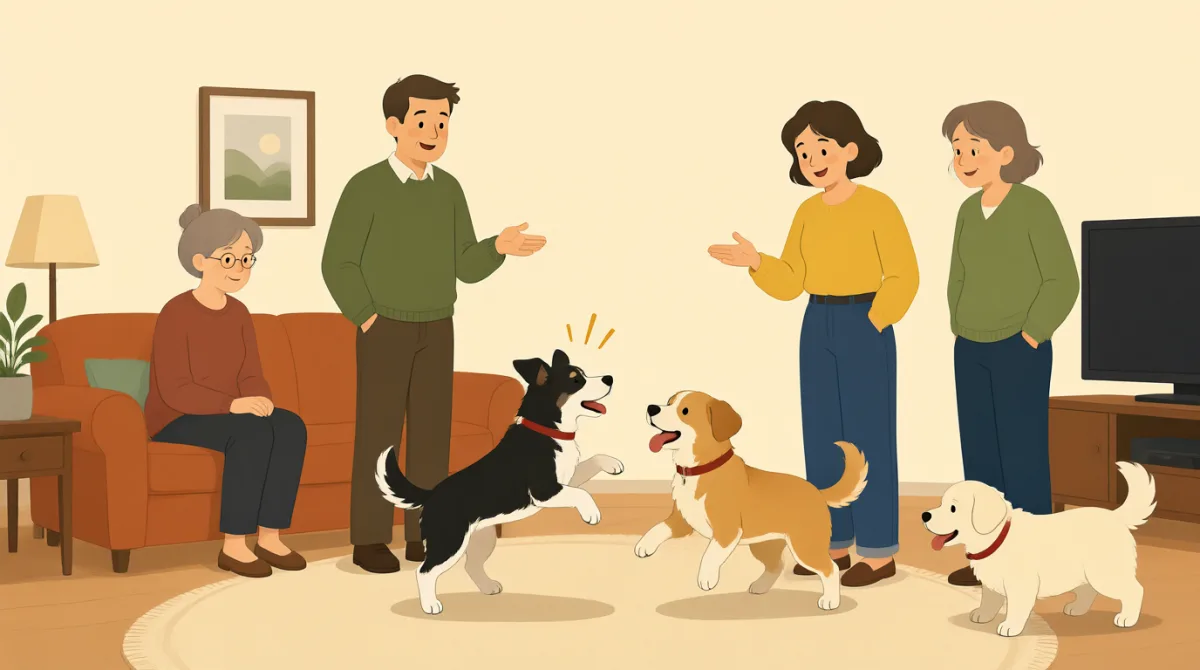

Your dog, Buster, is so well-behaved! My golden retriever, Max, just can't seem to stop pulling on the leash when we're walking.
您的狗狗巴斯特真聽話!我的金毛獵犬麥克斯走路時就是拉不住牽引繩。

Thanks! He used to be the same way. We tried a few things, but what really helped was a no-pull harness. Have you ever considered one?
謝謝!他以前也那樣。我們試過一些方法,但真正有用的是防拉胸揹帶。你有沒有考慮過用一個?
Hmm, I've seen them but wasn't sure if they actually worked. Max is pretty strong, so I'm a bit skeptical.
嗯,我見過,但不知道它們是否真的有效。麥克斯力氣很大,所以我有點懷疑。
They do! It redistributes the pressure, so when they pull, it turns them to the side instead of letting them drag you forward. It’s pretty effective.
它們確實有效!它重新分配了壓力,所以當它們拉的時候,會把它們轉向一邊,而不是讓它們把你往前拽。這非常有效。
That sounds promising. Max also has a habit of jumping on people when he gets excited, which can be a bit embarrassing. Any tips for that?
聽起來很有希望。麥克斯還有一個習慣,就是興奮的時候喜歡撲人,這有點尷尬。有什麼建議嗎?
Ah, the jumping! We worked on that with Buster by teaching him to sit when greeting people. When he jumps, you turn your back and ignore him, then reward him when all four paws are on the ground.
啊,撲人!我們透過教巴斯特在打招呼時坐下,來解決這個問題。當他撲人的時候,你轉身背對他並忽略他,當他四肢著地時再獎勵他。
That makes sense. It's tough to be consistent, especially when everyone wants to pet him, but I'll try that more often. Thanks for the advice, Jack!
有道理。很難始終如一,尤其是當每個人都想摸摸他的時候,但我會更頻繁地嘗試。謝謝你的建議,傑克!
No problem, Emma! Good luck with Max. Consistency is definitely key.
不客氣,艾瑪!祝麥克斯好運。保持一致性絕對是關鍵。
詞彙10
- well-behaved聽話的
This adjective describes someone or something, like a dog, that behaves correctly and follows rules without causing trouble. It's useful when complimenting pets or children in casual conversations.
這個形容詞用來形容行為得體、遵守規則又不惹麻煩的人或動物,比如狗狗。日常聊天中,可以用它來誇獎寵物或孩子。
- pulling on the leash拉牽引繩
This phrase means when a dog tugs or pulls hard on the rope (leash) while walking, making it hard for the owner to control. Common in dog training talks.
這個短語指狗狗散步時使勁拽牽引繩,讓主人很難控制它。談論狗狗訓練時經常會用到。
- harness胸揹帶
A harness is a piece of equipment that goes around a dog's body, not just the neck, to help control pulling during walks. It's safer than a collar for strong dogs.
胸揹帶是套在狗狗身上的裝備,不像項圈那樣只套在脖子上,可以幫助控制狗狗散步時拉扯。對於力氣大的狗狗來說,它比項圈更安全。
- skeptical懷疑的;持懷疑態度的
If you're skeptical about something, you doubt it will work or be true. Use this word when expressing hesitation about advice or products.
如果你對某件事感到懷疑,說明你不確定它是否有效或是否屬實。表達你對某項建議或產品有所顧慮時,可以用這個詞。
- redistributes重新分配
This verb means to change the way something, like pressure, is spread out. Here, it explains how a harness moves pulling force to make it less effective for the dog.
這個動詞表示改變某種東西的分佈方式,比如壓力的分佈。在這裡,它說明胸揹帶如何轉移拉扯的力量,讓狗狗不那麼容易使勁往前拽。
- promising有希望的;很有前景的
Something promising sounds hopeful or likely to succeed. Use it to show interest in a suggestion, like new training methods.
形容一件事“有希望”或“很有前景”,表示它聽起來可能會成功。你可以用它來表達對新訓練方法等建議感興趣。
- habit習慣
A habit is a regular behavior that someone or an animal does often, sometimes without thinking. It's useful for describing repeated actions in daily life.
習慣是指某人或動物經常做的一種行為,有時甚至會不假思索地去做。描述日常生活中反覆出現的行為時,可以用這個詞。
- consistent始終如一的;堅持的
Consistent means doing something the same way every time without changing. In training, it emphasizes the importance of steady practice for good results.
始終如一,指每次都用同樣的方式做事,不輕易改變。在訓練中,這個詞強調持續穩定地練習對取得好效果很重要。
- reward獎勵
To reward means to give something nice, like a treat, as a prize for good behavior. It's key in positive dog training to encourage repeats of actions.
獎勵就是給一些好東西,比如零食,作為良好行為的獎賞。在狗狗的正向訓練中,獎勵很重要,因為它能鼓勵狗狗重複做出這些行為。
- paws爪子
Paws are the feet of animals like dogs or cats. 'All four paws on the ground' means the dog is standing calmly without jumping.
“Paws”指狗或貓等動物的腳。“All four paws on the ground”是說狗狗安靜地站著,沒有撲起來。
關鍵句8
- 1
Your dog, Buster, is so well-behaved!
你的狗狗巴斯特真聽話!
This is a compliment using 'so' to emphasize the adjective 'well-behaved.' It's useful for starting friendly conversations at places like a dog park by praising someone's pet.
這句話用“so”來加強形容詞“well-behaved”的語氣,是在誇獎對方的狗狗。像在狗狗公園這樣的地方,稱讚別人的寵物是開啟友好對話的好方式。
- 2
He used to be the same way.
他以前也那樣。
'Used to' describes a past habit that has changed. This sentence shows empathy and shares experience, common when giving advice to others facing similar issues.
“Used to”用來描述過去有、但現在已經改變的習慣。這句話表達了理解,也分享了自己的經歷,常用於給遇到類似問題的人提建議。
- 3
Have you ever considered one?
你有沒有考慮過用一個?
This is a polite question using the present perfect 'have you ever' to suggest an idea without pushing. Use it when recommending products or solutions gently.
這是用現在完成時“have you ever”提出建議的委婉問法,不會讓人覺得被逼著接受。你可以在輕聲推薦產品或解決辦法時使用。
- 4
I'm a bit skeptical.
我有點懷疑。
'A bit' softens the doubt expressed by 'skeptical.' It's a natural way to express hesitation in discussions, helping keep the conversation open.
“A bit”弱化了“skeptical”表達的懷疑。這是討論時自然表達顧慮的方式,也能讓對話繼續保持開放。
- 5
That sounds promising.
聽起來很有希望。
This response shows interest using 'sounds' for opinions on ideas. It's practical for reacting positively to suggestions in casual advice exchanges.
這句話用“sounds”來表達對某個想法的看法,表示你對此感興趣。在輕鬆交流建議時,可以用它來積極回應對方的提議。
- 6
Any tips for that?
有什麼建議嗎?
'Tips' means helpful advice. This short question is informal and direct, ideal for asking for practical help in everyday situations like training pets.
“Tips”指有用的建議。這種簡短直接的問法比較隨意,很適合在日常情境中尋求實際幫助,比如詢問寵物訓練方法。
- 7
When he jumps, you turn your back and ignore him.
他撲人的時候,你就轉過身背對他,別理他。
This uses a 'when' clause for instructions on handling behavior. It's useful for explaining step-by-step training methods, with imperative 'turn' and 'ignore' for actions.
這句話用“when”從句來說明如何應對某種行為,並用祈使句“turn”和“ignore”給出具體做法。解釋一步步的訓練方法時,這種表達很有用。
- 8
Consistency is definitely key.
堅持始終如一絕對是關鍵。
'Key' means most important, and 'definitely' adds emphasis. This proverb-like sentence summarizes advice, great for ending conversations on habits or training.
“Key”在這裡表示“最重要的”,而“definitely”則加強語氣。這句像格言一樣的話總結了建議,很適合用來結束關於習慣或訓練的對話。