Drafting the Daily Itinerary
दिनभर का यात्रा कार्यक्रम बनाना
Travelers outlining a day-by-day plan for activities, attractions, and meals, considering transportation between locations.
यात्री गतिविधियों, दर्शनीय स्थलों और भोजन की दिन-प्रतिदिन की योजना बनाते हैं और अलग-अलग जगहों के बीच आने-जाने के साधनों पर विचार करते हैं।
संवाद8
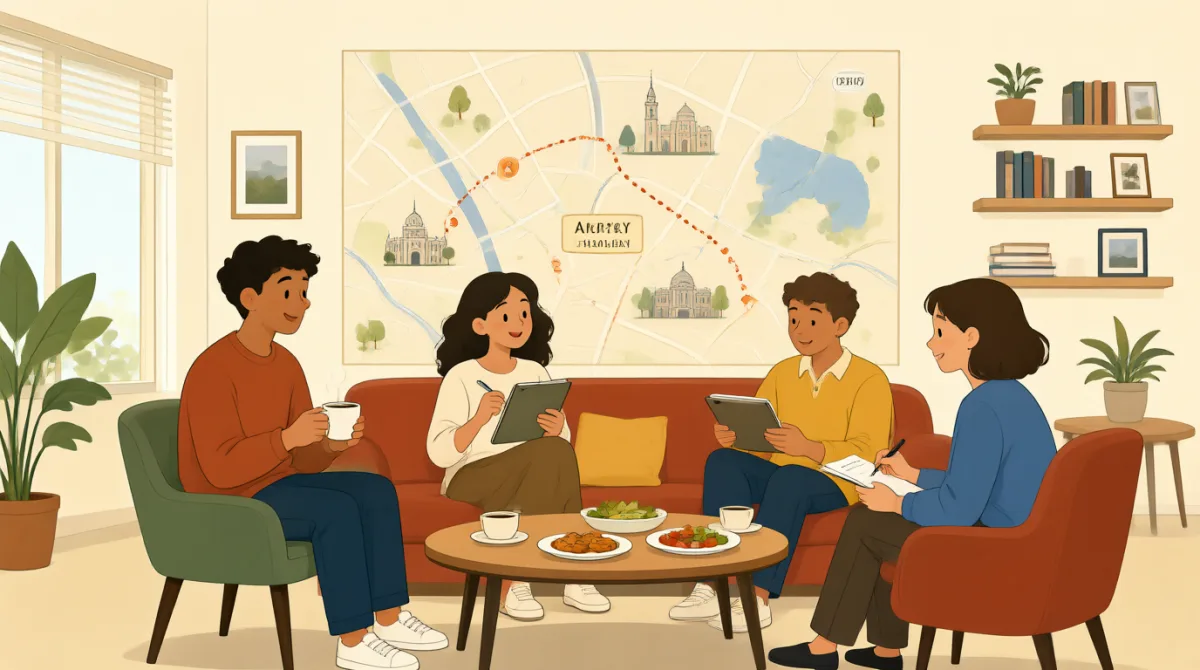

Okay, so for day three, after breakfast, I was thinking we could head straight to the ancient temple site. It opens at 9 AM.
ठीक है, तो तीसरे दिन नाश्ते के बाद हम सीधे प्राचीन मंदिर परिसर जा सकते हैं। वह सुबह 9 बजे खुलता है।

That sounds good. How long do you think we'll need there? And how far is it from our hotel? Should we factor in travel time?
अच्छा लग रहा है। तुम्हारे हिसाब से हमें वहाँ कितनी देर लगेगी? और वह हमारे होटल से कितनी दूर है? क्या हमें आने-जाने का समय भी योजना में जोड़ना चाहिए?
I checked, it's about a 20-minute drive. So if we leave by 8:40 AM, we should be there right when it opens. I'd say give it about two to three hours to explore thoroughly.
मैंने पता किया—गाड़ी से करीब 20 मिनट लगते हैं। तो अगर हम सुबह 8:40 तक निकलें, तो खुलते ही वहाँ पहुँच जाएँगे। मेरा कहना है कि वहाँ अच्छी तरह घूमने के लिए करीब दो से तीन घंटे रखो।
Okay, so Temple from 9 AM to noon. Then maybe we could find a local spot for lunch near the temple? That would save us some travel time looking for food.
ठीक है, तो सुबह 9 बजे से दोपहर तक मंदिर। फिर मंदिर के पास दोपहर के खाने के लिए कोई स्थानीय जगह ढूँढ़ लें? इससे खाना ढूँढ़ने के लिए इधर-उधर जाने में समय बचेगा।
Excellent idea! I'll look up some highly-rated eateries in that area. After lunch, how about we visit the botanical gardens? It's usually very peaceful and a nice contrast to the historical site.
बहुत बढ़िया सुझाव! मैं उस इलाके के अच्छे रेटिंग वाले कुछ खाने-पीने के ठिकाने देखता हूँ। दोपहर के खाने के बाद वनस्पति उद्यान चलें? वहाँ आम तौर पर बहुत शांति रहती है और ऐतिहासिक स्थल के बाद जाना भी अच्छा रहेगा।
The botanical gardens sound lovely. Is it walkable from the temple, or will we need another taxi? We want to avoid too much back and forth.
वनस्पति उद्यान तो बहुत अच्छे लगते हैं। क्या मंदिर से वहाँ पैदल जा सकते हैं, या हमें एक और टैक्सी लेनी होगी? हम बार-बार आगे-पीछे जाने से बचना चाहते हैं।
Good point. It’s a bit too far to walk, probably another 15-minute taxi ride. We could spend a couple of hours there, and then head back towards the city center for dinner.
अच्छी बात है। पैदल जाने के लिए यह थोड़ा ज़्यादा दूर है—शायद टैक्सी से 15 मिनट और लगेंगे। हम वहाँ कुछ घंटे बिता सकते हैं, फिर रात के खाने के लिए शहर के केंद्र की ओर लौट चलेंगे।
Perfect. So, breakfast, temple, lunch, botanical gardens, and then dinner in the city center. That fills up the day nicely without feeling too rushed. We've got a solid plan for day three!
बढ़िया। तो नाश्ता, मंदिर, दोपहर का खाना, वनस्पति उद्यान और फिर शहर के केंद्र में रात का खाना। इससे दिन अच्छा-सा भर जाएगा, लेकिन बहुत भागदौड़ भी नहीं लगेगी। तीसरे दिन की योजना पक्की है!
शब्दावली8
- head toकिसी जगह जाना
This phrasal verb means to go directly to a place. It's useful for travel plans, like saying you're going somewhere.
इस अंग्रेज़ी क्रिया-समूह का मतलब है सीधे किसी जगह जाना। यात्रा की योजना बनाते समय यह बताने के लिए उपयोगी है कि आप कहाँ जा रहे हैं।
- factor inध्यान में रखना; शामिल करना
This means to include or consider something when making a plan, such as time or cost. It's practical for scheduling trips.
इसका मतलब है योजना बनाते समय किसी बात, जैसे समय या खर्च, को ध्यान में रखना या उसमें शामिल करना। यात्रा का समय तय करते समय यह बहुत काम आता है।
- thoroughlyअच्छी तरह; विस्तार से
This adverb means completely or in detail. Use it when talking about exploring places fully during travel.
इस क्रिया-विशेषण का मतलब है पूरी तरह या विस्तार से। यात्रा के दौरान किसी जगह को अच्छी तरह घूमने की बात करते समय इसका इस्तेमाल करें।
- eateriesखाने-पीने के ठिकाने
This is a casual word for restaurants or places to eat. It's common in travel discussions for finding food options.
यह रेस्तराँ या खाने की जगहों के लिए इस्तेमाल होने वाला अनौपचारिक शब्द है। यात्रा के दौरान खाने के विकल्प ढूँढ़ने की बात में यह आम है।
- walkableपैदल जाने लायक
This adjective describes a distance that is short enough to walk. Helpful for planning trips without needing transport.
यह विशेषण ऐसी दूरी के लिए है जिसे पैदल तय किया जा सके। बिना किसी वाहन की ज़रूरत के यात्रा की योजना बनाते समय यह उपयोगी है।
- back and forthबार-बार आगे-पीछे जाना
This phrase means going from one place to another and back repeatedly. Use it to avoid unnecessary travel in itineraries.
इस वाक्यांश का मतलब है बार-बार एक जगह से दूसरी जगह जाना और वापस लौटना। यात्रा कार्यक्रम में गैरज़रूरी आवाजाही से बचने की बात करते समय इसका इस्तेमाल करें।
- rushedजल्दबाज़ी भरा
This adjective means hurried or too fast-paced. It's useful for describing a schedule that feels too busy.
इस विशेषण का मतलब है बहुत जल्दी-जल्दी किया जाने वाला या तेज़ रफ़्तार वाला। जब कोई कार्यक्रम बहुत व्यस्त लगे, तो इसका इस्तेमाल करें।
- solidठोस; अच्छी तरह सोचा-समझा
This informal adjective means reliable or well-thought-out. In travel, it describes a good, dependable plan.
यह अनौपचारिक विशेषण किसी भरोसेमंद या अच्छी तरह सोची-समझी चीज़ के लिए है। यात्रा में यह एक अच्छी और भरोसेमंद योजना का वर्णन करता है।
मुख्य वाक्य7
- 1
Okay, so for day three, after breakfast, I was thinking we could head straight to the ancient temple site.
ठीक है, तो तीसरे दिन नाश्ते के बाद हम सीधे प्राचीन मंदिर परिसर जा सकते हैं।
This sentence suggests a plan using 'I was thinking' for polite ideas and 'could' for possibility. It's useful for starting itinerary discussions in group travel.
'I was thinking' (मैं सोच रहा था/रही थी) का इस्तेमाल करके आप विनम्रता से कोई विचार सुझा सकते हैं, और 'could' (जा सकते हैं) किसी संभावना को दिखाता है। साथ मिलकर घूमने की योजना पर बात शुरू करने के लिए यह वाक्य उपयोगी है।
- 2
How long do you think we'll need there? And how far is it from our hotel?
तुम्हारे हिसाब से हमें वहाँ कितनी देर लगेगी? और वह हमारे होटल से कितनी दूर है?
This uses questions with 'how long' and 'how far' to ask about time and distance. It's practical for clarifying travel details and estimating logistics.
'how long' (कितनी देर) और 'how far' (कितनी दूर) वाले सवाल समय और दूरी के बारे में पूछते हैं। यात्रा की जानकारी स्पष्ट करने और आने-जाने की व्यवस्था का अंदाज़ा लगाने में ये काम आते हैं।
- 3
I'd say give it about two to three hours to explore thoroughly.
मेरा कहना है कि वहाँ अच्छी तरह घूमने के लिए करीब दो से तीन घंटे रखो।
'I'd say' is a casual way to give an opinion on time estimates. The structure 'give it [time] to [do something]' helps in suggesting activity durations for plans.
'I'd say' (मेरा कहना है) समय का अनुमान देते हुए अपनी राय बताने का अनौपचारिक तरीका है। 'give it [time] to [do something]' का अर्थ है कोई काम करने के लिए इतना समय रखना; योजनाओं में किसी गतिविधि की अवधि सुझाने के लिए यह ढाँचा उपयोगी है।
- 4
That would save us some travel time looking for food.
इससे खाना ढूँढ़ने के लिए इधर-उधर जाने में समय बचेगा।
This conditional 'would' explains benefits of a choice. It's useful for justifying decisions in itineraries to make them more efficient.
'would' वाला यह वाक्य बताता है कि किसी विकल्प से क्या फ़ायदा होगा। यात्रा कार्यक्रम को अधिक सुविधाजनक बनाने के लिए अपने फैसले का कारण समझाने में यह उपयोगी है।
- 5
After lunch, how about we visit the botanical gardens?
दोपहर के खाने के बाद वनस्पति उद्यान चलें?
'How about' is a friendly way to suggest an idea. This pattern is great for proposing next steps in a daily schedule.
'How about' (क्यों न) किसी सुझाव को दोस्ताना अंदाज़ में रखने का तरीका है। दिन के कार्यक्रम में आगे क्या करना है, यह सुझाने के लिए यह ढाँचा बहुत अच्छा है।
- 6
We want to avoid too much back and forth.
हम बार-बार आगे-पीछे जाने से बचना चाहते हैं।
This expresses a preference using 'want to avoid' for preventing issues. It's common in travel to keep plans simple and less tiring.
किसी समस्या से बचने की इच्छा जताने के लिए 'want to avoid' का इस्तेमाल किया जाता है। यात्रा के दौरान योजनाओं को आसान और कम थकाऊ रखना आम बात है।
- 7
That fills up the day nicely without feeling too rushed.
इससे दिन अच्छा-सा भर जाएगा, लेकिन बहुत भागदौड़ भी नहीं लगेगी।
'Fills up' means completes or occupies time well. This sentence summarizes a balanced plan, useful for ending itinerary talks positively.
'Fills up' का मतलब है समय को अच्छी तरह भरना या उसमें किसी काम को समेटना। यह वाक्य एक संतुलित योजना का सार बताता है और यात्रा कार्यक्रम पर बातचीत को सकारात्मक ढंग से खत्म करने के लिए उपयोगी है।