Reviewing the Interview
Repaso de la entrevista
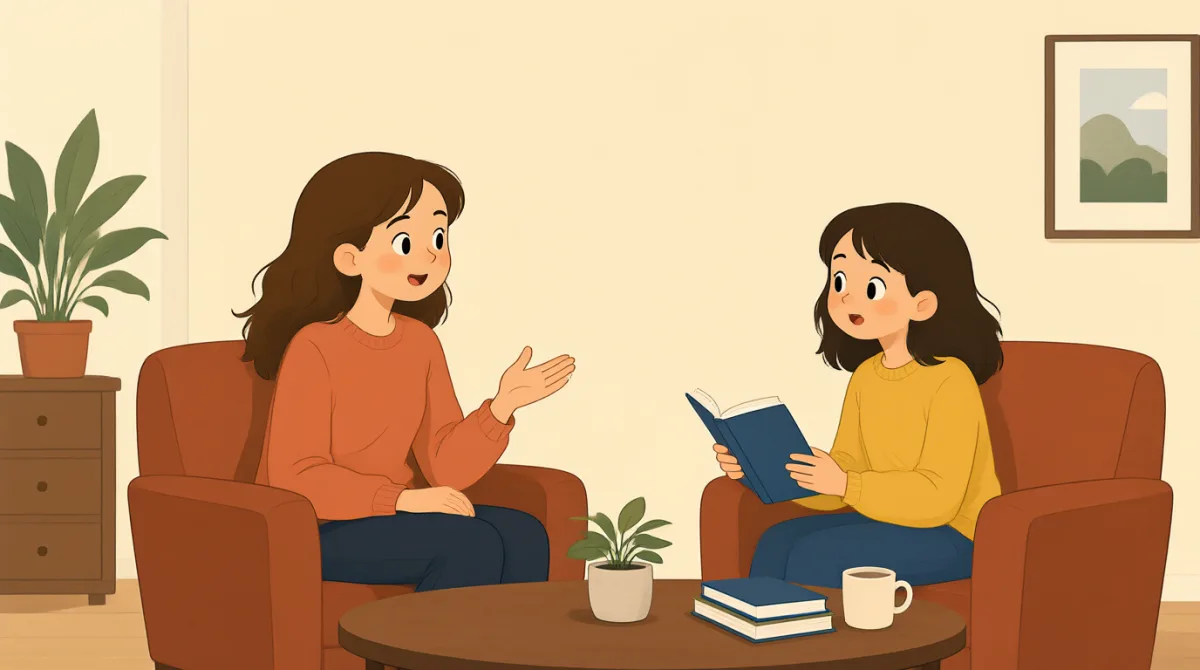
After the interview, Grace and Mia review what went well and where Mia could have been more concise. They discuss how she handled the hostile questions, corrected the statistic, and kept returning to the key message.
Después de la entrevista, Grace y Mia repasan qué salió bien y en qué partes Mia podría haber sido más concisa. Hablan de cómo respondió a las preguntas hostiles, corrigió la cifra y volvió una y otra vez al mensaje clave.
Diálogo11

You held your ground without sounding defensive, especially when Emma framed the recall as proof that we’d ignored customer safety. That was a difficult opening to answer.
Mantuviste tu postura sin ponerte a la defensiva, sobre todo cuando Emma presentó el retiro del producto como prueba de que habíamos ignorado la seguridad de los clientes. Fue difícil responder a esa pregunta inicial.

I tried to acknowledge the concern before addressing the premise. I think that helped, though I may have spent too long explaining the timeline before stating what we know now.
Intenté reconocer la preocupación antes de cuestionar la premisa. Creo que eso ayudó, aunque quizá me extendí demasiado explicando la cronología antes de decir lo que sabemos ahora.
That’s my main note. Your answer was accurate, but the key point arrived late. Lead with the action: we recalled the product, notified customers, and are investigating the cause.
Esa es mi observación principal. Tu respuesta fue precisa, pero tardaste en llegar al punto clave. Empieza por las medidas que tomamos: retiramos el producto, avisamos a los clientes y estamos investigando la causa.
Agreed. I was trying not to sound rehearsed, but I can see how the extra context diluted the message. A concise answer would have left less room for the question to define the issue.
De acuerdo. Intentaba no sonar como si tuviera un discurso preparado, pero veo que el contexto adicional diluyó el mensaje. Una respuesta concisa habría dejado menos margen para que la pregunta definiera el problema.
You also handled the blame question well. You didn’t speculate about an individual’s responsibility; you explained the review process and brought the focus back to protecting customers.
También respondiste bien a la pregunta sobre quién tenía la culpa. No especulaste sobre la responsabilidad de una persona; explicaste el proceso de revisión y volviste a centrar la atención en proteger a los clientes.
That bridge felt natural in the moment. I said accountability matters, then described the safeguards we’ve added. I wanted to answer the concern rather than simply pivot away from it.
Ese puente me salió natural en el momento. Dije que la rendición de cuentas importa y luego describí las medidas de protección que hemos añadido. Quería responder a la preocupación, no simplemente esquivarla.
Exactly. The correction was strong, too. You calmly distinguished the number of units inspected from the number confirmed to be affected, and you labeled the remaining figure as an estimate.
Exactamente. La corrección también fue muy buena. Diferenciaste con calma la cantidad de unidades inspeccionadas de la cantidad cuya afectación se confirmó, y aclaraste que la cifra restante era una estimación.
I’m glad I caught that. The statistic sounded definitive, so I wanted to correct it immediately without implying that the underlying risk was insignificant.
Me alegra haberme dado cuenta. La cifra sonaba definitiva, así que quise corregirla enseguida sin dar a entender que el riesgo de fondo fuera insignificante.
You struck that balance. For next time, give the verified figure first, explain what it measures in one sentence, and then say what remains under review. No need to litigate every detail on air.
Encontraste ese equilibrio. La próxima vez, da primero la cifra verificada, explica en una sola frase qué representa y luego di qué sigue en revisión. No hace falta debatir cada detalle en directo.
Understood. My takeaway is to answer the question plainly, correct the record with a clear distinction between facts and estimates, and return to the customer-safety message without overexplaining.
Entendido. Me quedo con esto: responder claramente a la pregunta, corregir la información distinguiendo con claridad los hechos de las estimaciones y volver al mensaje sobre la seguridad de los clientes sin dar explicaciones de más.
That’s it. You can’t control the framing, but you can control whether your answer is accurate, composed, and useful. Today, you gave viewers a clear account of what we’re doing.
Eso es. No puedes controlar cómo se plantea el tema, pero sí puedes controlar que tu respuesta sea precisa, serena y útil. Hoy les diste a los espectadores una explicación clara de lo que estamos haciendo.
Vocabulario7
- held your groundmantenerse firme
Stayed firm in your position despite pressure or criticism. Use it to describe someone who responds confidently without giving in.
Mantener tu postura pese a la presión o las críticas. Se usa para describir a alguien que responde con seguridad sin ceder.
- acknowledge the concernreconocer la preocupación
Show that you recognize and take a worry seriously. This phrase helps you respond respectfully before explaining your own position.
Demostrar que entiendes una preocupación y que te la tomas en serio. Esta expresión te ayuda a responder con respeto antes de explicar tu postura.
- diluted the messagediluir el mensaje
Made the main point less clear or forceful by adding too much information. Use it when extra detail weakens the impact of what you want to say.
Hacer que la idea principal pierda claridad o fuerza al añadir demasiada información. Se usa cuando los detalles adicionales restan impacto a lo que quieres decir.
- brought the focus back tovolver a centrar la atención en
Redirected attention to the most important subject. This is useful when a discussion is drifting away from your main point.
Dirigir de nuevo la atención hacia el tema más importante. Es útil cuando la conversación se aleja de tu punto principal.
- underlying riskriesgo de fondo
The basic or continuing possibility of harm beneath the details being discussed. Use this phrase to distinguish a real risk from how large or small it may be.
La posibilidad básica o persistente de que se produzca un daño, más allá de los detalles que se están debatiendo. Esta expresión permite distinguir un riesgo real de su magnitud.
- verified figurecifra verificada
A number that has been checked and confirmed as accurate. It is useful when separating established facts from estimates.
Un número que se ha comprobado y confirmado como correcto. Es útil para distinguir los hechos establecidos de las estimaciones.
- litigate every detaildebatir cada detalle
Argue over or examine every small point in great detail. In this context, it means getting drawn into excessive debate during a short interview.
Discutir o analizar minuciosamente cada punto, por pequeño que sea. En este contexto, significa dejarse arrastrar a un debate excesivo durante una entrevista breve.
Frases clave8
- 1
I tried to acknowledge the concern before addressing the premise.
Intenté reconocer la preocupación antes de cuestionar la premisa.
This gives a respectful structure for responding to a challenging question: recognize the concern, then examine the assumption behind it. You can reuse the pattern with other difficult questions.
Esta estructura permite responder con respeto a una pregunta difícil: primero reconoces la preocupación y luego examinas la suposición en la que se basa. Puedes reutilizarla para responder a otras preguntas complicadas.
- 2
Your answer was accurate, but the key point arrived late.
Tu respuesta fue precisa, pero tardaste en llegar al punto clave.
This is concise, constructive feedback about an answer that contains the right information but takes too long to reach its main point. Use it when coaching someone to lead with their conclusion.
Es una forma concisa y constructiva de señalar que una respuesta contiene la información correcta, pero tarda demasiado en llegar a la idea principal. Úsala para aconsejar a alguien que empiece por la conclusión.
- 3
A concise answer would have left less room for the question to define the issue.
Una respuesta concisa habría dejado menos margen para que la pregunta definiera el problema.
This explains why brevity matters when someone else has framed a topic unfairly. You can reuse it to describe the value of answering directly and early.
Esta frase explica por qué conviene ser breve cuando otra persona ha planteado un tema de forma injusta. Puedes reutilizarla para destacar el valor de responder de forma directa y sin rodeos.
- 4
You didn’t speculate about an individual’s responsibility; you explained the review process and brought the focus back to protecting customers.
No especulaste sobre la responsabilidad de una persona; explicaste el proceso de revisión y volviste a centrar la atención en proteger a los clientes.
This sentence models how to address a question about blame without making unsupported claims. It is useful for discussing accountability while keeping attention on practical actions.
Esta frase muestra cómo abordar una pregunta sobre culpabilidad sin hacer afirmaciones sin fundamento. Es útil para hablar de rendición de cuentas sin dejar de centrarse en las medidas concretas.
- 5
You calmly distinguished the number of units inspected from the number confirmed to be affected, and you labeled the remaining figure as an estimate.
Diferenciaste con calma la cantidad de unidades inspeccionadas de la cantidad cuya afectación se confirmó, y aclaraste que la cifra restante era una estimación.
This shows how to correct a statistic precisely by clarifying what each number represents. Reuse this approach whenever verified data and estimates could be confused.
Esta frase muestra cómo corregir una estadística con precisión aclarando qué representa cada cifra. Reutiliza este enfoque cuando puedan confundirse los datos verificados con las estimaciones.
- 6
For next time, give the verified figure first, explain what it measures in one sentence, and then say what remains under review.
La próxima vez, da primero la cifra verificada, explica en una sola frase qué representa y luego di qué sigue en revisión.
This offers a practical sequence for presenting complex information clearly. It can be adapted for interviews, briefings, or other situations where accuracy and brevity matter.
Esta frase propone una secuencia práctica para presentar información compleja con claridad. Puedes adaptarla a entrevistas, informes u otras situaciones en las que importen la precisión y la brevedad.
- 7
My takeaway is to answer the question plainly, correct the record with a clear distinction between facts and estimates, and return to the customer-safety message without overexplaining.
Me quedo con esto: responder claramente a la pregunta, corregir la información distinguiendo con claridad los hechos de las estimaciones y volver al mensaje sobre la seguridad de los clientes sin dar explicaciones de más.
This sentence summarizes a communication strategy in a clear, professional way. Use the structure “My takeaway is to…” to state what you have learned and what you will do next.
Esta frase resume una estrategia de comunicación de manera clara y profesional. Usa la estructura “My takeaway is to…” («Me quedo con esto: …») para explicar qué has aprendido y qué harás a continuación.
- 8
You can’t control the framing, but you can control whether your answer is accurate, composed, and useful.
No puedes controlar cómo se plantea el tema, pero sí puedes controlar que tu respuesta sea precisa, serena y útil.
This balanced sentence distinguishes outside pressures from the choices a speaker can make. It is useful for encouraging composure and focus in difficult conversations.
Esta frase equilibrada distingue entre las presiones externas y las decisiones que puede tomar quien habla. Es útil para animar a alguien a mantener la calma y centrarse en conversaciones difíciles.