Daily Dog Walk & Friendly Chat
พาสุนัขเดินเล่นทุกวันและพูดคุยอย่างเป็นมิตร
A pet owner is out walking their dog in a park and encounters another pet owner. They have a brief, friendly conversation about their pets or the weather.
เจ้าของสัตว์เลี้ยงพาสุนัขไปเดินเล่นในสวนสาธารณะและพบกับเจ้าของสัตว์เลี้ยงอีกคน ทั้งคู่พูดคุยกันสั้น ๆ อย่างเป็นมิตรเกี่ยวกับสัตว์เลี้ยงหรือสภาพอากาศ
บทสนทนา7
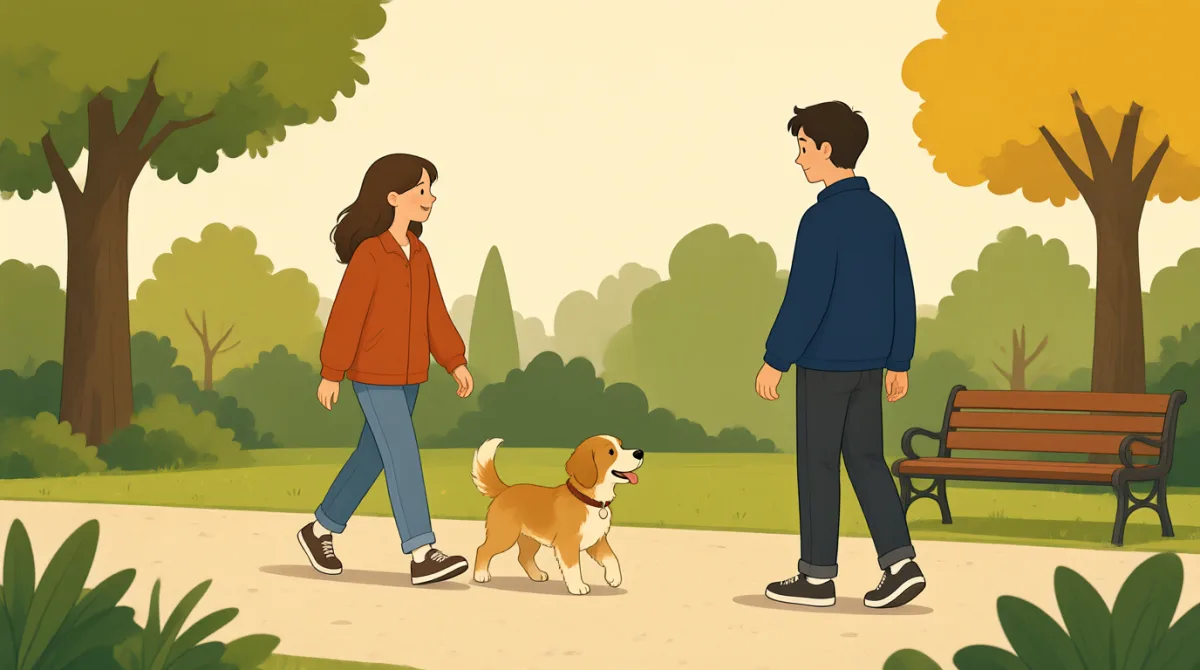

Oh, hi there! Your dog is so beautiful. What's their name?
อ๋อ สวัสดีค่ะ! น้องหมาของคุณสวยมากเลย ชื่ออะไรคะ

Hi! Thanks, this is Buddy. He's a golden retriever. And yours?
สวัสดีครับ! ขอบคุณครับ ตัวนี้ชื่อบัดดี้ เป็นโกลเด้นรีทรีฟเวอร์ครับ แล้วของคุณล่ะครับ
This is Lucy, she's a beagle. She loves sniffing out everything in the park.
ตัวนี้ชื่อลูซี่ค่ะ เป็นบีเกิล ชอบดมสำรวจทุกอย่างในสวนเลยค่ะ
Haha, I can tell! It's a lovely day for a walk, isn't it? Not too hot.
ฮ่า ๆ ดูออกเลยครับ! วันนี้อากาศดีเหมาะกับการเดินเล่นนะครับ ไม่ร้อนเกินไปด้วย
Absolutely! Perfect weather for them to burn off some energy.
ใช่เลยค่ะ! อากาศเหมาะมากให้พวกเขาได้ปล่อยพลังกันหน่อย
Definitely. Well, it was nice meeting you and Lucy!
จริงครับ เอาล่ะ ยินดีที่ได้รู้จักคุณกับลูซี่นะครับ!
You too, Leo! Have a great rest of your walk with Buddy.
ยินดีที่ได้รู้จักเหมือนกันค่ะ ลีโอ! ขอให้คุณกับบัดดี้เดินเล่นต่ออย่างสนุกนะคะ
คำศัพท์6
- beautifulสวยงาม
Means very attractive or pretty. Use it to compliment something like a pet: 'Your dog is beautiful.' It's a polite way to start a conversation.
หมายถึงมีรูปลักษณ์ที่น่าดึงดูดหรือน่ารัก ใช้ชมสิ่งต่าง ๆ เช่น สัตว์เลี้ยงได้ เช่น 'Your dog is beautiful.' เป็นคำชมสุภาพที่ช่วยเริ่มบทสนทนาได้
- golden retrieverโกลเด้นรีทรีฟเวอร์
A popular dog breed known for being friendly and good with families. Say 'My dog is a golden retriever' to describe your pet's type.
สุนัขสายพันธุ์ยอดนิยมที่ขึ้นชื่อว่าเป็นมิตรและเข้ากับครอบครัวได้ดี พูดว่า 'My dog is a golden retriever' เพื่อบอกว่าสัตว์เลี้ยงของคุณเป็นสุนัขพันธุ์อะไร
- beagleบีเกิล
A small hunting dog breed with a great sense of smell. Use it when introducing your dog: 'She's a beagle.' Breeds help people understand your pet better.
สุนัขล่าสัตว์พันธุ์เล็กที่มีประสาทรับกลิ่นดีมาก ใช้คำนี้ตอนแนะนำสุนัขของคุณ เช่น 'She's a beagle.' การบอกสายพันธุ์ช่วยให้คนอื่นรู้จักสัตว์เลี้ยงของคุณมากขึ้น
- sniffingการดมกลิ่น
When a dog smells things with its nose. Dogs do this a lot on walks. Say 'She loves sniffing' to describe playful pet behavior.
หมายถึงการที่สุนัขใช้จมูกดมสิ่งต่าง ๆ สุนัขมักทำแบบนี้บ่อย ๆ เวลาเดินเล่น พูดว่า 'She loves sniffing' เพื่อบรรยายพฤติกรรมน่ารัก ๆ ของสัตว์เลี้ยง
- lovelyน่ารื่นรมย์
Means nice or pleasant. Use for weather or situations: 'It's a lovely day.' It's a positive word to agree or comment casually.
หมายถึงดีหรือน่าพอใจ ใช้พูดถึงสภาพอากาศหรือสถานการณ์ได้ เช่น 'It's a lovely day.' เป็นคำเชิงบวกที่ใช้เห็นด้วยหรือแสดงความคิดเห็นแบบสบาย ๆ
- burn offใช้พลังงาน
Means to use up energy through activity. For pets: 'They need to burn off energy' during walks or play to keep them calm.
หมายถึงใช้พลังงานที่มีไปกับการทำกิจกรรม สำหรับสัตว์เลี้ยง พูดว่า 'They need to burn off energy' เมื่อพวกมันต้องใช้พลังงานระหว่างเดินเล่นหรือเล่น เพื่อให้สงบลง
ประโยคสำคัญ6
- 1
Oh, hi there! Your dog is so beautiful. What's their name?
อ๋อ สวัสดีค่ะ! น้องหมาของคุณสวยมากเลย ชื่ออะไรคะ
This is a friendly greeting and compliment to start a chat. 'Hi there' is casual; 'so beautiful' adds emphasis. Use it when meeting someone with a pet to build rapport. Grammar: Question form with 'What's' for contractions.
เป็นคำทักทายและคำชมที่เป็นมิตร ใช้เริ่มบทสนทนา 'Hi there' เป็นคำทักทายแบบสบาย ๆ ส่วน 'so beautiful' ช่วยเน้นว่าสวยมาก ใช้เมื่อพบคนที่พาสัตว์เลี้ยงมาเพื่อสร้างความเป็นกันเอง ไวยากรณ์: ใช้รูปคำถามที่มี 'What's' ซึ่งเป็นรูปย่อ
- 2
Hi! Thanks, this is Buddy. He's a golden retriever. And yours?
สวัสดีครับ! ขอบคุณครับ ตัวนี้ชื่อบัดดี้ เป็นโกลเด้นรีทรีฟเวอร์ครับ แล้วของคุณล่ะครับ
Polite response with introduction. 'This is [name]' names the pet; 'And yours?' asks back. Useful for reciprocal conversations about pets. Grammar: Possessive 'He's' for he is.
เป็นการตอบอย่างสุภาพพร้อมแนะนำสัตว์เลี้ยง 'This is [name]' ใช้บอกชื่อสัตว์เลี้ยง ส่วน 'And yours?' ใช้ถามกลับ เหมาะกับบทสนทนาที่ผลัดกันพูดถึงสัตว์เลี้ยง ไวยากรณ์: 'He's' เป็นรูปย่อของ he is
- 3
This is Lucy, she's a beagle. She loves sniffing out everything in the park.
ตัวนี้ชื่อลูซี่ค่ะ เป็นบีเกิล ชอบดมสำรวจทุกอย่างในสวนเลยค่ะ
Introduces the pet and shares a habit. 'Loves sniffing out' describes behavior vividly. Say this to make small talk engaging. Grammar: Present simple 'loves' for habits.
เป็นการแนะนำสัตว์เลี้ยงและเล่าพฤติกรรมอย่างหนึ่ง 'Loves sniffing out' ใช้บรรยายพฤติกรรมให้เห็นภาพ ใช้พูดคุยเรื่องทั่วไปให้น่าสนใจขึ้น ไวยากรณ์: ใช้ present simple 'loves' เพื่อพูดถึงนิสัยหรือสิ่งที่ทำเป็นประจำ
- 4
Haha, I can tell! It's a lovely day for a walk, isn't it?
ฮ่า ๆ ดูออกเลยครับ! วันนี้อากาศดีเหมาะกับการเดินเล่นนะครับ
Agrees and comments on weather. 'I can tell' means 'I see/agree'; tag question 'isn't it?' invites agreement. Useful for casual park chats. Grammar: Tag questions soften statements.
เป็นการเห็นด้วยและแสดงความคิดเห็นเกี่ยวกับอากาศ 'I can tell' หมายถึง 'เห็นได้เลย/เห็นด้วย' ส่วนคำถามท้ายประโยค 'isn't it?' ชวนให้อีกฝ่ายเห็นด้วย เหมาะกับการพูดคุยสบาย ๆ ในสวน ไวยากรณ์: คำถามท้ายประโยคช่วยให้คำพูดฟังนุ่มนวลขึ้น
- 5
Absolutely! Perfect weather for them to burn off some energy.
ใช่เลยค่ะ! อากาศเหมาะมากให้พวกเขาได้ใช้พลังงานกันหน่อย
Strong agreement with reason. 'Absolutely' means yes completely; explains benefit for pets. Use to continue positive talk. Grammar: Infinitive 'to burn off' for purpose.
เป็นการเห็นด้วยอย่างเต็มที่พร้อมบอกเหตุผล 'Absolutely' หมายถึงเห็นด้วยอย่างยิ่ง และประโยคนี้อธิบายข้อดีที่มีต่อสัตว์เลี้ยง ใช้ต่อบทสนทนาในเชิงบวก ไวยากรณ์: ใช้ infinitive 'to burn off' เพื่อบอกจุดประสงค์
- 6
Definitely. Well, it was nice meeting you and Lucy!
จริงครับ เอาล่ะ ยินดีที่ได้รู้จักคุณกับลูซี่นะครับ!
Agrees and ends politely. 'Definitely' means yes for sure; 'nice meeting you' is a standard goodbye. Use when wrapping up a short encounter. Grammar: Past 'was' for recent meeting.
เป็นการเห็นด้วยและจบบทสนทนาอย่างสุภาพ 'Definitely' หมายถึงเห็นด้วยแน่นอน ส่วน 'nice meeting you' เป็นคำกล่าวลาตามปกติ ใช้เมื่อกำลังจะจบบทสนทนาสั้น ๆ ไวยากรณ์: ใช้ past tense 'was' เพื่อพูดถึงการพบกันที่เพิ่งเกิดขึ้น